 comparison
Gentle Skin Resurfacing Options for Sensitive Skin
Last Updated: November 6, 2026
Quick Summary
Gentler sensitive skin resurfacing works by rebuilding the skin barrier slowly rather than stripping it quickly, and several non-laser options do that well. Low-irritation choices such as LED light therapy and HydraFacial are usually tolerated first, followed by microneedling and radiofrequency at conservative settings, while peels and IPL generally come later for reactive skin.
- Sensitive skin is a skin type that reacts to products, heat, or friction; reactive skin flares to specific triggers.
- Microneedling for sensitive skin uses shallower depth and fewer passes, with mild pinkness for a day or two.
- Start a chemical peel for sensitive skin at the lowest effective strength and insist on a patch test.
- Radiofrequency and HydraFacial remove no surface skin, so both carry less risk of post-treatment pigment changes.
- Avoid or postpone laser treatment when skin is inflamed, broken, or infected, or if you cannot commit to sun protection.
Table of Contents
- Why Sensitive Skin Resurfacing Needs a Different Plan
- Side-by-Side Comparison of Non-Laser Options
- Microneedling for Sensitive Skin: What to Expect
- Chemical Peel for Sensitive Skin: Choosing the Right Strength
- Radiofrequency and HydraFacial as Low-Irritation Alternatives
- Laser Skin Resurfacing vs Microneedling for Reactive Skin
- Side Effects of Laser Treatment on Face and When to Avoid It
- Planning Your Sensitive Skin Consultation at Lumyn Medspa
- Frequently Asked Questions
Why Sensitive Skin Resurfacing Needs a Different Plan
Not every skin can handle the heat of a laser, and pretending otherwise is how people end up with two weeks of redness and a compromised barrier. If you are searching for alternatives to laser skin resurfacing for sensitive skin, the short answer is this: gentler resurfacing works by rebuilding the skin barrier slowly rather than stripping it quickly, and several non-laser options do that well.
Here is the core tension most guides ignore. Laser resurfacing removes layers of skin to trigger collagen production, which is effective but demanding on a reactive barrier. Sensitive skin needs the same goal, smoother texture and more even tone, achieved with less aggressive exfoliation and more controlled treatment depth.
How to Tell If Your Skin Is Sensitive or Reactive
Sensitive skin is a skin type that reacts quickly to products, heat, or friction with stinging, redness, or tightness, while reactive skin flares in response to specific triggers that change over time. The distinction matters because reactive skin often needs a patch test before any resurfacing, and a careful one at that.
Watch for these signals:
- Stinging or burning within minutes of applying a new product
- Redness that lingers longer than an hour after cleansing
- Flaking or tightness in winter and after sun exposure
- Breakouts or irritation after fragranced products
If several of these sound familiar, tell your provider before booking. Honest disclosure changes the plan.
Side-by-Side Comparison of Non-Laser Options
The right choice depends on how much downtime you can absorb, how reactive your barrier is today, and how much evidence backs the option.
| Option | How It Works | Typical Downtime | Best For | Irritation Risk | Evidence Quality |
|---|---|---|---|---|---|
| Microneedling | Fine needles create controlled micro-injuries to boost collagen | 1-3 days of pinkness | Texture, acne scars, fine lines | Moderate | Good for texture and scars; moderate for fine lines |
| Chemical peel | Acid exfoliates the epidermis to speed cell turnover | 2-7 days depending on strength | Uneven pigmentation, dullness | Moderate to high | Strong for pigmentation; weaker for very reactive skin |
| HydraFacial | Cleanses, exfoliates, and hydrates in one session | None to minimal | Maintenance, hydration | Low | Limited for remodeling; reasonable for maintenance |
| Radiofrequency | Heat delivered below the surface to firm skin | Minimal | Skin firmness, mild laxity | Low to moderate | Moderate for firmness; variable by device |
| Intense pulsed light (IPL) | Broadband light targets pigment and redness | 1-3 days of flushing | Redness, sun damage | Moderate to high on reactive skin | Good for pigment and redness; caution with melasma |
| LED light therapy | Low-level light supports healing and calms inflammation | None | Post-treatment calming, mild redness | Very low | Limited but low-risk; useful as an adjunct |
A common mistake is treating these as interchangeable. They are not. HydraFacial maintains; microneedling rebuilds; peels resurface; radiofrequency tightens; IPL targets color; LED calms. Mixing them up wastes money and patience.
For sensitive skin specifically, the ranking usually shifts. Options that avoid bulk heat and surface removal, such as LED and HydraFacial, tend to be tolerated first. Microneedling and radiofrequency come next, at conservative settings. Peels and IPL are generally considered later in the sequence for reactive skin, because both can trigger post-inflammatory hyperpigmentation.
Watch out: a low-irritation label is not a guarantee. Device settings, operator technique, and your barrier status on the day of treatment matter more than the category name.
Before booking any option, ask three questions: What is the realistic outcome after a full course, not one session? What is the plan if my skin flares? And what evidence supports this specific device for my concern? A provider who answers all three plainly is a better signal than any before-and-after photo.
Microneedling for Sensitive Skin: What to Expect
Microneedling for sensitive skin is usually performed at a shallower depth with fewer passes, which lowers irritation while still encouraging collagen production. Expect mild pinkness for a day or two, not the week-long recovery some laser treatments demand. Keeping the depth and number of passes conservative is central to safe skin needling, especially when sensitive skin is prone to lingering redness.
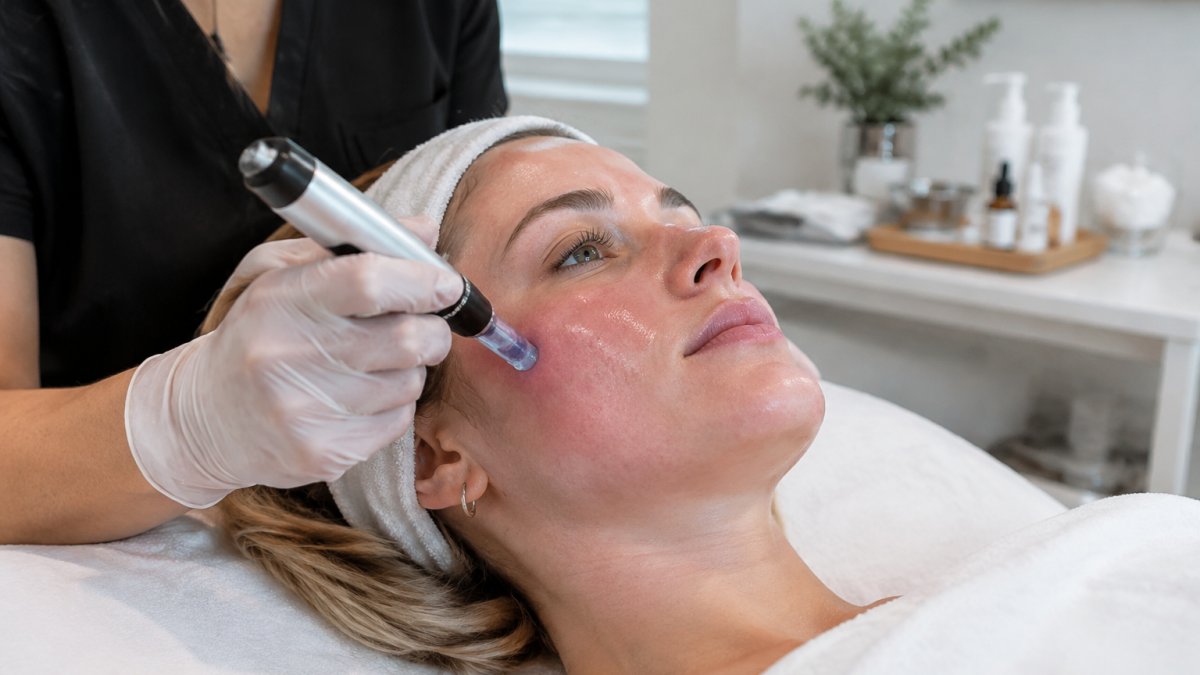
A typical course runs several sessions spaced weeks apart, and your provider will adjust depth as your barrier tolerates it. Pricing depends on the number of sessions, treatment area, and provider, so please contact Lumyn Medspa directly for current pricing or a personalized quote.
Best for: texture concerns and early acne scarring on skin that tolerates light trauma. Skip if: you have an active flare, open lesions, or a history of keloid scarring.
Chemical Peel for Sensitive Skin: Choosing the Right Strength
A chemical peel for sensitive skin should start at the lowest effective strength, often a superficial formula, and build only after your skin proves it can handle it. Stronger is not better here; a peel that leaves your barrier compromised sets you back further than doing nothing.
Before committing, it helps to understand what to expect during your first chemical peel, including the appointment itself and the recovery days that follow. If you are also weighing a peel against light-based rejuvenation, our comparison of laser skin rejuvenation versus chemical peels covers results, downtime, and suitability side by side.
The evidence for peels is solid for pigmentation and texture, but the quality of that evidence drops sharply for very reactive skin. Ask your provider which formula and strength they recommend for your barrier, and insist on a patch test.
Radiofrequency and HydraFacial as Low-Irritation Alternatives
Radiofrequency and HydraFacial sit at the low-irritation end of the spectrum, which makes them the natural first step for a barrier that is currently unstable. Neither removes surface skin, so both carry less risk of the inflammation that drives post-treatment pigment changes.
Radiofrequency delivers heat into the dermis to support firmness and collagen over time, with little to no downtime (The Landscape of Radiofrequency Technology for Skin Rejuvenation). radiofrequency treatments as an alternative to laser resurfacing are worth discussing with a qualified provider, particularly for people weighing skin-tone considerations.
HydraFacial cleanses, gently exfoliates, and hydrates in a single session. It will not remodel scars the way microneedling can, but it keeps sensitive skin calm between more active treatments and gives your provider a low-stakes way to observe how your barrier responds before committing to something stronger.
Watch out: warmth from radiofrequency can feel like a flare to skin that is already inflamed. If your barrier is compromised on the day of treatment, reschedule rather than push through.
Laser Skin Resurfacing vs Microneedling for Reactive Skin
Laser skin resurfacing vs microneedling comes down to intensity versus control: lasers deliver more dramatic remodeling but demand more from a reactive barrier, while microneedling offers a gentler path with a longer runway.
That injury is the point, and it is also the risk. If your skin flares at the first sign of heat, a device that generates heat across the full face is a hard place to begin. For a deeper head-to-head, see our guide to microneedling versus laser resurfacing for skin texture.
Side Effects of Laser Treatment on Face and When to Avoid It
Side effects of laser treatment on face include redness, swelling, temporary pigment changes, and, less commonly, blistering or infection. Most settle with proper aftercare, but sensitive skin raises the odds of prolonged irritation and post-inflammatory hyperpigmentation.
If you do proceed with a laser, plan for the redness. Our guide to managing redness after laser skin treatment walks through practical recovery steps. Should you choose a peel instead, how to manage skin sensitivity after a peel covers calming a reactive barrier.
Avoid laser treatment, or postpone it, when:
- Your skin is currently inflamed, broken, or infected
- You have an active cold sore near the treatment area
- You are pregnant or breastfeeding, unless cleared by your physician
- You have taken isotretinoin recently, which affects healing
- You cannot commit to sun protection during recovery
Watch out: skipping sun protection after any resurfacing is the fastest route to new pigmentation, and sensitive skin pays for it longer than most.
Planning Your Sensitive Skin Consultation at Lumyn Medspa
A good consultation for sensitive skin resurfacing starts with your history, not a device menu. At Lumyn Medspa, we build customized treatment plans around your skin's tolerance, using advanced technology such as the Candela Nordlys® system when light-based care is appropriate, alongside injectables, body contouring, and wellness management under one roof.
Bring these to your appointment:
- A list of products you currently use, including actives
- Photos of past reactions, if you have them
- Your downtime limits around work and events
- Questions about patch testing and expected session counts
Ask directly about licensing and product sourcing before booking.
Sensitive skin does not have to mean settling for dull, uneven texture. The right plan starts gentle, tests tolerance, and builds from there. Lumyn Medspa offers customized treatment plans, a full range of services from injectables to wellness management, and advanced technology like the Candela Nordlys® system to match your skin's needs. Get started with Lumyn Medspa and build a resurfacing plan your barrier can actually handle.
Frequently Asked Questions
What is the best laser treatment for sensitive skin?
Nonablative, fractional lasers such as erbium or pulsed dye lasers are generally gentler than ablative CO2 lasers because they leave the epidermis mostly intact, which shortens recovery and lowers irritation risk. That said, sensitive skin resurfacing with any laser still requires a patch test and a provider who adjusts treatment depth and intensity. Many sensitive-skin patients do better starting with non-laser options like microneedling or low-strength peels before considering a laser.
Are chemical peels suitable for sensitive skin?
Yes, but strength and formulation matter more than the category. A chemical peel for sensitive skin usually means a low-percentage lactic, mandelic, or mild salicylic peel rather than a deep TCA peel. These lighter peels encourage cell turnover with limited downtime, though redness and mild flaking for a few days are common. A provider should confirm your skin type and history of reactions before choosing a peel, and a patch test on a small area is a reasonable first step.
Can microneedling improve skin texture without laser resurfacing?
Microneedling creates controlled micro-injuries that trigger collagen production, which can improve skin texture, fine lines, and some acne scars over a series of sessions. Pricing depends on the number of sessions, treatment area, and provider, so please contact Lumyn Medspa directly for current pricing or a personalized quote. For sensitive skin, a practitioner should use shallower depths and space sessions out to let the skin barrier recover between treatments.
What skin treatments have less downtime than laser resurfacing?
HydraFacial, light chemical peels, and shallow microneedling generally involve less downtime than ablative laser resurfacing, which can leave skin red and raw for one to two weeks. Radiofrequency treatments also tend to have minimal surface disruption because they work below the epidermis. Downtime still varies by intensity, so ask your provider what to expect for your specific skin and schedule around any planned events.
What are the side effects of laser treatment on the face?
Common side effects of laser treatment on face include redness, swelling, irritation, and temporary pigment changes, especially in people with sensitive skin or darker skin tones. More serious complications like scarring or prolonged hyperpigmentation are less common but possible, particularly with ablative or high-intensity settings. A consultation and patch test help identify risk factors, and following aftercare instructions closely reduces the chance of complications.