 how-to
How to Manage Skin Sensitivity After a Peel
Table of Contents
- Chemical Peel Aftercare Routine: Your First 24 Hours
- How Long Does Skin Sensitivity Last After a Chemical Peel?
- Post-Peel Skincare Products to Avoid
- Signs of Chemical Peel Complications
- Soothing Discomfort: Itchiness, Burning, and Redness
- Diet and Lifestyle Support for Skin Recovery
- Managing the 'Ugly Phase': Psychological Tips
- Conclusion
- Frequently Asked Questions
Last Updated: September 23, 2026
Chemical Peel Aftercare Routine: Your First 24 Hours
Learning how to manage skin sensitivity after peel treatments starts with what you do in the first day. The 24 hours after your peel shape the entire recovery.
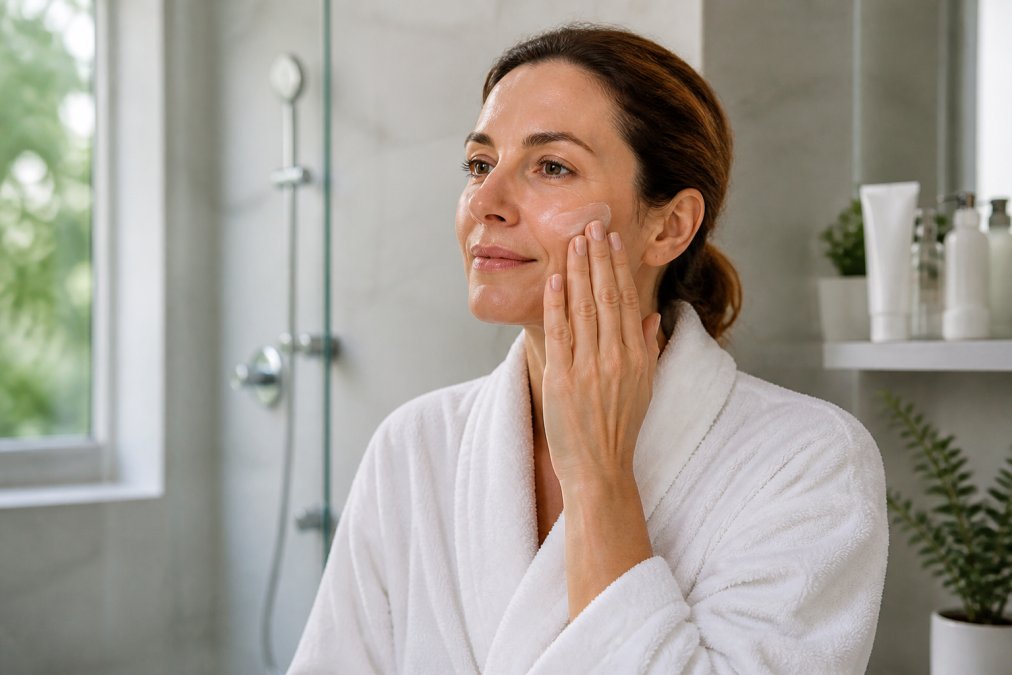
Your skin barrier is temporarily weakened.
Here is your hour-by-hour routine:
- Hours 0-4: Leave skin alone. No washing, no products. Let the peel finish working.
- Hours 4-12: Rinse with cool water only. Pat dry. Do not rub.
- Hours 12-24: Apply a bland moisturizer. Look for ceramides or hyaluronic acid.
- All day: Skip makeup, heat, and direct sun.
How Long Does Skin Sensitivity Last After a Chemical Peel?
Most people see skin sensitivity after peel treatments fade within 3 to 7 days. The exact timeline depends on peel depth, your skin type, and how well you follow aftercare.
Watch for these stages:
- Day 1-2: redness and tightness
- Day 3-5: mild swelling, start of flaking
- Day 5-7: visible peeling and itchiness
- Day 7-10: new pink skin appears
Post-Peel Skincare Products to Avoid
The fastest way to undo a good peel is reaching for the wrong product. Your skin's barrier is compromised, and active ingredients that normally feel fine can now sting, burn, or drive post-inflammatory hyperpigmentation (PIH). The goal for the first 7 to 14 days is not to treat, it is to protect.
The hard-stop list
- Retinoids and retinol (tretinoin, adapalene, tazarotene, retinaldehyde): These accelerate cell turnover. On freshly peeled skin, that means more irritation, more flaking, and a higher risk of PIH. Wait until flaking has fully stopped for at least 3 to 5 days before restarting, and reintroduce at half your previous frequency.
- Exfoliating acids (glycolic, lactic, mandelic, salicylic, malic, and any AHA/BHA blend): They dissolve the very corneocytes your skin is trying to rebuild. Using them during recovery can cause burning, prolonged redness, and raw patches.
- Vitamin C serums (L-ascorbic acid especially): Low-pH formulas sting on a compromised barrier. If you want antioxidant support, wait until the barrier is intact, then start with a gentler derivative such as sodium ascorbyl phosphate or tetrahexyldecyl ascorbate.
- Benzoyl peroxide and high-strength salicylic spot treatments: Both are drying and irritating. If you are acne-prone, ask your provider about a short course of a mild topical antibiotic instead.
- Fragranced products (including "natural" essential oils like lavender, citrus, peppermint, and eucalyptus): Fragrance is the most common cause of contact dermatitis after a peel. Check labels for "fragrance," "parfum," and individual essential oils.
- Physical scrubs, cleansing brushes, washcloths, and facial massage tools: Mechanical friction tears fragile new skin. Use fingertips only.
- Alcohol-based toners, astringents, and aftershave-style products: They strip lipids the barrier needs.
- Waxing, threading, and dermaplaning: Wait at least 2 weeks, or until your provider clears you.
What to use instead
Keep it to three products for the first week:
- A gentle, non-foaming cleanser, cream or lotion texture, no sulfates, no fragrance.
- A bland barrier moisturizer, look for ceramides, cholesterol, squalane, glycerin, panthenol, or hyaluronic acid. Ointment-style balms (petrolatum-based) are fine at night if skin feels tight.
- A mineral sunscreen, zinc oxide or titanium dioxide, SPF 30 or higher, fragrance-free.
That is the entire routine. No serums, no essences, no masks, no devices.
If you accidentally used an active
Do not panic and do not try to "fix" it with more products. Rinse with cool water, apply a plain barrier moisturizer, and skip everything else for 48 hours. If you develop blistering, spreading redness, or pain that worsens rather than eases, contact your provider, that is a signal to be evaluated, not to self-treat.
Restart timeline
A common pattern most practitioners follow:
- Days 1-7: Cleanser, moisturizer, sunscreen only.
- Days 7-14: Add a hydrating serum (hyaluronic acid, panthenol) if skin feels comfortable.
- After flaking stops completely + 3 to 5 days: Reintroduce one active at a time, every third night, for two weeks before increasing frequency.
- Antioxidants and retinoids: Usually last to return. If you are unsure, ask your provider to review your routine before you restart.
Signs of Chemical Peel Complications
Some redness and flaking is normal. A complication is not. The tricky part is that the two can look similar on day 2, so the useful question is not "is this red?" but "is this behaving the way healing should?"
What normal healing actually looks like
- Erythema (redness): Peaks in the first 24 to 48 hours, then gradually fades. It may briefly intensify on day 3 to 5 as flaking begins.
- Tightness and dryness: Expected for the first week, easing as the barrier rebuilds.
- Flaking and desquamation: Starts around day 3 for medium peels, peaks around day 5 to 7, and tapers by day 10.
- Itching: Common and usually mild. Worsens if skin is dry.
- Pink new skin: Appears as flakes lift. It may look shiny or feel sensitive for several more days.
The self-triage framework
Ask three questions:
- Is it getting better, staying the same, or getting worse? Normal healing trends toward improvement day over day. Worsening after day 3 is a signal to call.
- Is it localized or spreading? A patch of flaking is normal. Redness that spreads beyond the treated area, or that crosses a clear boundary, is not.
- Is there pain, heat, or fluid? Discomfort is expected. Pain that requires medication, skin that feels hot to the touch, or any drainage is not.
Call your provider the same day if you notice
- Blistering, open sores, or weeping areas
- Severe or worsening swelling, especially around the eyes or lips
- Intense burning that does not ease with cool compresses
- Redness that spreads or develops a sharp border
- Increasing pain rather than decreasing pain
- Dark patches forming (possible post-inflammatory hyperpigmentation)
- A breakout of tiny bumps clustered in one area (possible contact dermatitis or herpes reactivation)
Seek urgent care if you notice
- Pus, foul smell, or yellow-green drainage
- Fever, chills, or feeling generally unwell
- A rapidly expanding area of redness and warmth
- Difficulty breathing, lip or tongue swelling, or hives (possible allergic reaction)
These are uncommon after a professional peel, but they are the situations where waiting is the wrong move.
What to have ready when you call
Your provider will move faster if you can answer:
- The date, time, and type of peel (including strength or brand, if you know it)
- Every product you have applied since, including cleanser and sunscreen
- When symptoms started and whether they are improving or worsening
- Photos taken in natural light, same angle, same time of day
The U.S. Food and Drug Administration's information on cosmetic products advises checking with a qualified provider if symptoms worsen or last longer than expected. That is the right instinct, a quick call is almost always cheaper and safer than waiting to see what happens.
Soothing Discomfort: Itchiness, Burning, and Redness
Discomfort after a peel is common, and you can ease it at home. The goal is to calm inflammation, not mask it.
Try these steps:
- Apply a cool compress for 5 to 10 minutes
- Use a fragrance-free moisturizer several times a day
- Take an over-the-counter antihistamine for itchiness (Antihistamines for allergies: MedlinePlus Medical Encyclopedia)
- Sleep on a clean pillowcase with your head raised
- Keep the room cool and avoid sweating
Diet and Lifestyle Support for Skin Recovery
What you eat and how you sleep affect how fast your skin heals. This is the part most aftercare guides skip.
Support your barrier repair with:
- Water: aim for steady hydration all day
- Protein: supports tissue repair
- Vitamin C and zinc: help collagen and healing
- Omega-3s: may calm inflammation
- Sleep: 7 to 9 hours for real recovery
Managing the 'Ugly Phase': Psychological Tips
The peeling stage is hard on your confidence. That is normal, and it is temporary.
Here is how to get through it:
- Remind yourself the flaking means the peel is working
- Stay home or work remotely on the worst days
- Keep a light schedule for social plans
- Take progress photos to see real change
- Avoid mirrors for long stretches
Conclusion
Recovering from a peel takes patience and the right habits. The wrong products or too much sun can undo weeks of progress.
Frequently Asked Questions
What's the worst day after a chemical peel?
The worst day for skin sensitivity after a peel is typically 48 to 72 hours post-treatment, when inflammation peaks and visible peeling often begins. During this time, you may notice increased redness, tightness, and mild burning. This is a normal part of the healing process. Keep skin moisturized and avoid picking. If pain is severe or blisters form, contact your provider.
Can I use hydrocortisone cream after a chemical peel?
Do not apply hydrocortisone cream after a peel unless your dermatologist or aesthetician specifically instructs you to. Over-the-counter hydrocortisone can thin the skin and interfere with the controlled inflammatory response that leads to results. For itching or redness, use a gentle, fragrance-free moisturizer or a cool compress. Always consult your provider before using any medicated cream.
What does a bad reaction to a chemical peel look like?
Signs of chemical peel complications include severe pain, blistering, oozing, persistent redness beyond a week, or fever. A normal reaction involves redness, mild burning, and peeling. If you experience intense pain, swelling, or signs of infection like pus, seek medical attention promptly. These symptoms may indicate an infection or an allergic reaction that requires professional care.
How can I tell the difference between normal post-peel sensitivity and a bad reaction?
Normal post-peel sensitivity includes redness, tightness, and mild stinging that improves daily. A bad reaction involves worsening pain, spreading rash, blisters, or fever. Track your symptoms: if they intensify after day three or don't improve by day seven, call your provider. Trust your instincts, if something feels wrong, get it checked.