 comparison
Microneedling vs Laser Resurfacing for Skin Texture
Table of Contents
- Microneedling vs Laser Resurfacing: Quick Comparison
- How Microneedling Works for Skin Texture
- How Laser Resurfacing Works for Skin Rejuvenation
- Microneedling for Acne Scars: Depth and Results
- Laser Resurfacing Recovery Time: What to Expect
- Microneedling vs Fractional Laser: Which Targets Texture Best
- Best Treatment for Uneven Skin Texture: Decision Framework
- Skin Tone, Pigmentation Risk, and Treatment Safety
- Frequently Asked Questions
Last Updated: October 21, 2026
Microneedling vs Laser Resurfacing: Quick Comparison
Microneedling vs laser resurfacing for skin texture is one of the most common decisions patients face when seeking professional skin rejuvenation. Both stimulate collagen and improve texture, but through fundamentally different mechanisms. At Lumyn Medspa, we help patients choose the approach that best matches their skin concerns, recovery timeline, and goals.
The core distinction is straightforward: microneedling uses controlled physical injury to trigger healing, while laser resurfacing uses light-based or thermal energy to resurface the skin. For acne scars and mild texture issues, microneedling often delivers gradual, cumulative results with minimal downtime. For deeper damage, sun-aged skin, and pigmentation concerns, laser resurfacing typically produces faster visible change, though with longer recovery required.
The choice depends on your concern, skin tone, and downtime tolerance. Below, we cover how each treatment works, what results to expect, and which is more likely to deliver your desired outcome.
| Aspect | Microneedling | Laser Resurfacing |
|---|---|---|
| Mechanism | Physical micro-injuries trigger collagen remodeling | Light/thermal energy removes or remodels skin layers |
| Best for | Acne scars, mild texture, fine lines, all skin tones | Sun damage, deep scars, pigmentation, severe texture |
| Downtime | 24-48 hours minimal redness | 5-14 days peeling, redness (varies by laser type) |
| Results Timeline | Gradual over 4-6 sessions | Visible after 1-2 sessions |
| Skin Tone Safety | Safer for darker skin tones | Risk of hyperpigmentation in darker tones (depends on laser) |
| Cost | Generally lower per session | Higher per session; often fewer sessions needed |
| Durability | Results improve with repeated treatments | Single sessions produce lasting improvement |
How Microneedling Works for Skin Texture
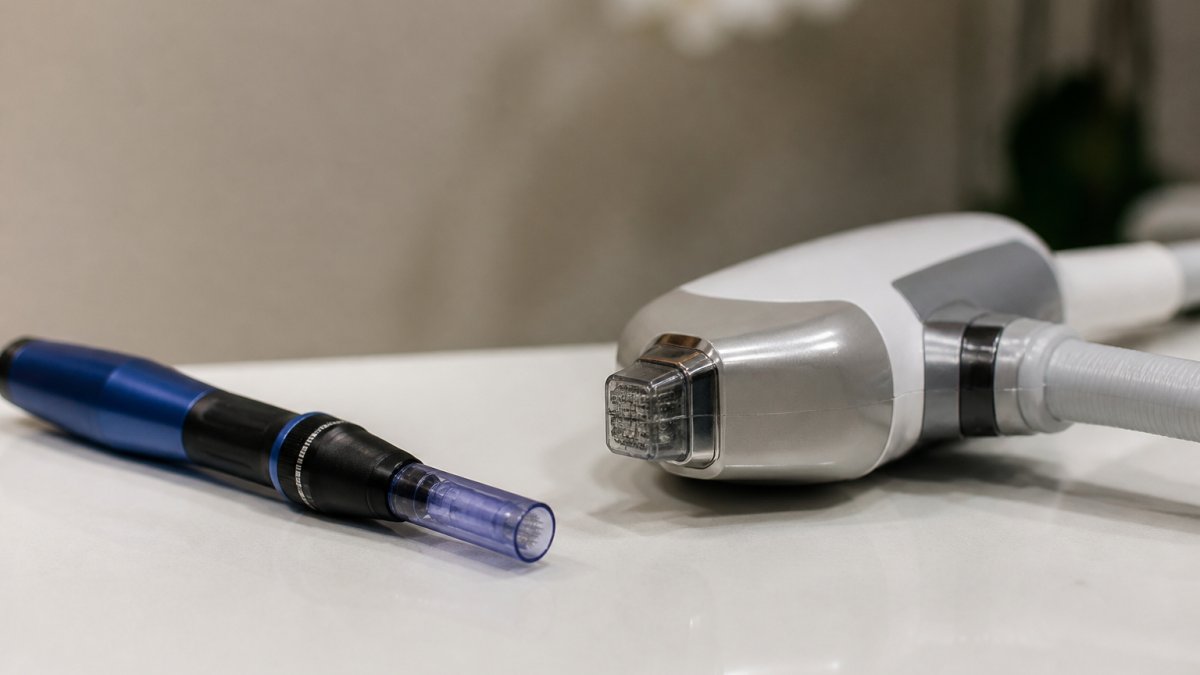
Microneedling creates controlled micro-injuries with fine needles, triggering your body's natural healing response and stimulating collagen production in the dermis, where structural support lives. Unlike lasers that remove tissue, microneedling preserves the epidermis while signaling the body to rebuild skin from within.
The treatment depth determines what concerns it addresses. Superficial microneedling (0.5-1.0mm) improves fine lines and general texture. Medium depth (1.0-1.5mm) targets mild to moderate acne scars and texture irregularities.
Most patients see subtle improvement after one session, but real transformation is cumulative. A typical course is 4-6 sessions spaced 4-6 weeks apart. With each session, skin becomes smoother, pores appear smaller, and atrophic scars gradually fill in as collagen rebuilds.
Microneedling works on all skin tones, making it safer for darker skin than certain lasers that carry higher post-inflammatory hyperpigmentation risk. Healing is predictable: mild redness and swelling for 24-48 hours, then rapid resolution. Most people return to normal activities the next day.
How Laser Resurfacing Works for Skin Rejuvenation
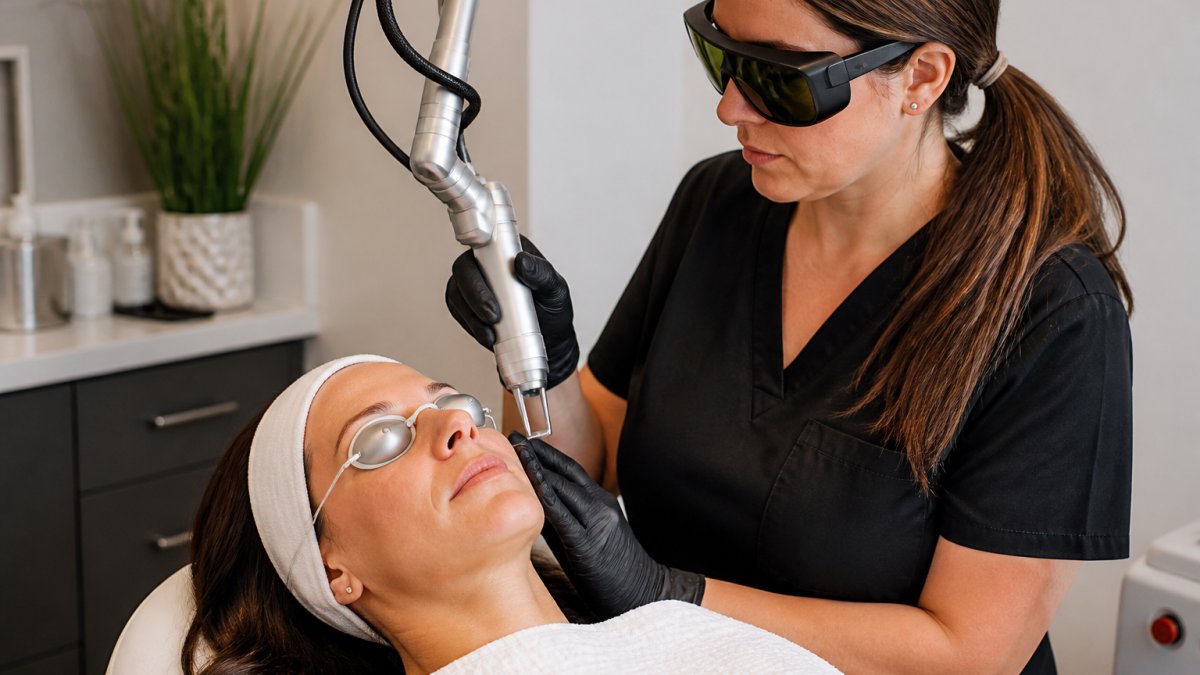
Laser resurfacing uses concentrated light energy to remove or remodel outer skin layers, triggering deeper collagen remodeling and revealing fresher skin beneath. Ablative and non-ablative lasers work differently and produce different recovery profiles.
Ablative lasers (like CO2 and erbium) vaporize the epidermis and upper dermis. This aggressive approach produces dramatic texture improvement, scar revision, and pigmentation correction after just 1-2 sessions, but the trade-off is 5-14 days of visible peeling, redness, and oozing.
Non-ablative lasers (like Nd:YAG and certain fractional options) heat the dermis without removing the epidermis, stimulating collagen without visible skin removal. Results are subtler but downtime is minimal, 24-48 hours of redness.
Laser resurfacing excels at deep sun damage, severe texture irregularities, and pigmentation concerns, targeting melanin and damaged collagen directly. However, the risk of post-inflammatory hyperpigmentation or hypopigmentation is higher in darker skin tones, particularly with certain wavelengths.
Microneedling for Acne Scars: Depth and Results
Acne scars come in different types, and treatment depth determines what works best. Atrophic scars, the depressed, pitted scars most common after severe acne, respond well to microneedling because controlled injury signals the body to fill in the depression with new collagen.
For mild to moderate atrophic scars, standard microneedling at 1.5mm depth over 4-6 sessions produces visible improvement. The scars don't disappear completely, but they become shallower and less noticeable.
Rolling scars (wide, undulating depressions) respond well to microneedling. Boxcar scars (sharper, more defined edges) may need combination treatment, microneedling plus laser or subcision, for optimal results. Ice pick scars (deep, narrow punctures) are the most challenging and often require specialized techniques like TCA cross or surgical subcision alongside microneedling.
The advantage of microneedling for acne scars is its safety across all skin tones and predictable, gradual improvement. Results continue improving for months after your final session as collagen remodeling continues. Most patients see significant scar improvement after a full course.
Laser Resurfacing Recovery Time: What to Expect
Recovery from laser resurfacing varies dramatically between ablative and non-ablative treatment, often the deciding factor for patients with work or social commitments.
Non-ablative laser recovery is minimal: redness and mild swelling for 24-48 hours. You can wear makeup the next day and resume all normal activities immediately. This suits busy professionals, though results require multiple sessions and are subtler.
Fractional ablative laser recovery typically spans 5-7 days of visible downtime. Days 1-2 involve redness, swelling, and oozing; days 3-5 bring intense peeling and flaking. By day 5-7 most peeling has resolved, though redness lingers 2-4 weeks.
Full ablative laser recovery is longest: 10-14 days of significant downtime. The first week involves visible oozing, crusting, and peeling; the second brings continued peeling and redness.
The recovery difference is crucial. If you cannot afford 5+ days of visible peeling, ablative laser isn't realistic; microneedling or non-ablative laser is better. If you can take a week off, fractional ablative laser often delivers results in fewer sessions than microneedling.
Microneedling vs Fractional Laser: Which Targets Texture Best
Both microneedling and fractional laser improve skin texture, but they achieve it differently and at different speeds.
Fractional laser (ablative or non-ablative) treats a fraction of the skin surface at a time, leaving untreated skin between zones for faster healing while still creating significant collagen stimulation.
Microneedling produces gradual texture improvement through repeated collagen remodeling. Texture smoothing becomes visible after 2-3 sessions, with optimal results after 4-6 sessions.
For enlarged pores, both treatments work, but fractional laser often produces faster, more dramatic pore-blurring by directly tightening skin through collagen contraction. Microneedling improves pores more gradually as collagen fills in around the opening.
For uneven skin texture from sun damage or aging, fractional laser excels because it addresses texture irregularity and pigmentation changes simultaneously. Microneedling handles texture well but doesn't target pigmentation as directly.
The choice comes down to your timeline and downtime tolerance. Need results fast and can manage a week of recovery? Fractional ablative laser. Prefer gradual improvement with minimal disruption? Microneedling.
Best Treatment for Uneven Skin Texture: Decision Framework
Choosing between microneedling and laser resurfacing for uneven skin texture means matching your concern to each treatment's strengths.
Choose microneedling if:
- Your primary concern is mild to moderate texture irregularity or acne scars
- You have darker skin tone and want to avoid laser-related pigmentation risk
- You cannot afford significant downtime
- You prefer gradual improvement and lower cost per session
- Your texture issues are diffuse across the face rather than concentrated in one area
Choose fractional laser if:
- You have deeper texture damage, severe sun damage, or significant scarring
- Your texture concerns are accompanied by pigmentation issues (age spots, sun spots, uneven tone)
- You can tolerate 5-7 days of downtime
- You want faster, more dramatic results
- Your skin tone is light to medium (darker tones require careful laser selection)
Choose ablative laser if:
- You have severe texture damage or deep scarring requiring aggressive treatment
- You can manage 10-14 days of visible downtime
- You want maximal results in the fewest sessions
- Your skin tone is light (darker skin requires non-ablative or microneedling)
Consider combination treatment if:
- You have mixed concerns (texture + scarring + pigmentation)
- Previous single-treatment results were incomplete
- You want to extend results over time
At Lumyn Medspa, we assess your skin texture, skin tone, downtime tolerance, and goals to recommend the approach most likely to deliver the results you want.
Skin Tone, Pigmentation Risk, and Treatment Safety
Laser resurfacing carries real risks for darker skin tones, while microneedling remains safe across all skin types.
Why microneedling is safer for darker skin: Microneedling doesn't target melanin; it triggers collagen through physical injury alone, making healing predictable regardless of skin tone.
RF microneedling as a middle ground: Radiofrequency microneedling combines microneedling with thermal energy, producing more aggressive collagen remodeling than standard microneedling while avoiding the laser-melanin interaction that causes pigmentation risk.
Post-inflammatory hyperpigmentation can be permanent or take months to resolve, making prevention far better than treatment.
Fractional laser: Light to medium skin tones; patients with significant sun damage, deep scarring, or pigmentation concerns; those who can tolerate 5-7 days of downtime.
RF microneedling: Darker skin tones seeking faster results than traditional microneedling; patients wanting more aggressive collagen remodeling with lower pigmentation risk.
The decision between microneedling and laser resurfacing for skin texture depends on three factors: your specific skin concern, your skin tone and pigmentation risk profile, and how much downtime you can manage.
At Lumyn Medspa, we combine advanced technology with personalized assessment to determine which approach, or combination of approaches, will deliver the refreshed, radiant skin you're after. Our team evaluates your skin texture, reviews your goals, and recommends a customized treatment plan designed for your unique needs. The American Academy of Dermatology provides evidence-based guidance on skin rejuvenation treatments, and we stay current with the latest research to ensure you receive the most effective care available.
Whether you're addressing acne scars, sun damage, or general texture concerns, the right treatment exists. Book a consultation with us to discuss which option makes sense for your skin and goals.
Frequently Asked Questions
Does microneedling fix textured skin?
Microneedling improves skin texture by triggering collagen production through controlled micro-injuries. Results develop gradually over multiple sessions, typically 3 to 6 treatments spaced 4 to 6 weeks apart. Fine texture, enlarged pores, and mild scarring respond well. Deeper atrophic scars may require combination treatment or laser resurfacing for optimal improvement. Consult a provider to assess your specific texture concerns.
Which treatment is better for acne scars: microneedling or laser resurfacing?
Laser resurfacing typically produces faster visible improvement for moderate to severe atrophic acne scars because it removes damaged tissue and stimulates deeper collagen remodeling. Microneedling works through collagen induction and suits mild to moderate scarring and patients seeking minimal downtime. Many providers combine both treatments for maximum scar revision. Your scar depth and skin tone determine the best approach, a consultation will clarify which suits your scars.
How long does recovery take from laser resurfacing versus microneedling?
Microneedling recovery is minimal: mild redness and swelling fade within 24 to 48 hours, and makeup can usually be applied the next day. Laser resurfacing recovery depends on laser type. Non-ablative fractional lasers cause 3 to 5 days of redness and peeling. Ablative lasers require 1 to 2 weeks of significant downtime with visible peeling and redness. If you have work commitments, microneedling offers faster return to normal appearance.
Is microneedling safer than laser resurfacing for darker skin tones?
Microneedling carries lower post-inflammatory hyperpigmentation risk for darker skin tones because it avoids light-based energy. Laser resurfacing requires careful laser selection and settings to minimize pigmentation changes in deeper skin tones. Non-ablative fractional lasers are generally safer than ablative options for darker skin. However, both treatments can be performed safely on all skin tones when a qualified provider uses appropriate settings. Discuss your skin tone and pigmentation concerns during consultation.
Can you combine microneedling and laser resurfacing for better texture results?
Yes, combination treatment is common and often produces superior results for severe texture and scarring. Treatments are typically spaced 4 to 6 weeks apart to allow healing between sessions. Some providers perform fractional laser first to address deeper damage, then use microneedling to refine remaining texture. Combination approaches require a customized plan from your provider based on your specific concerns, skin type, and healing response.