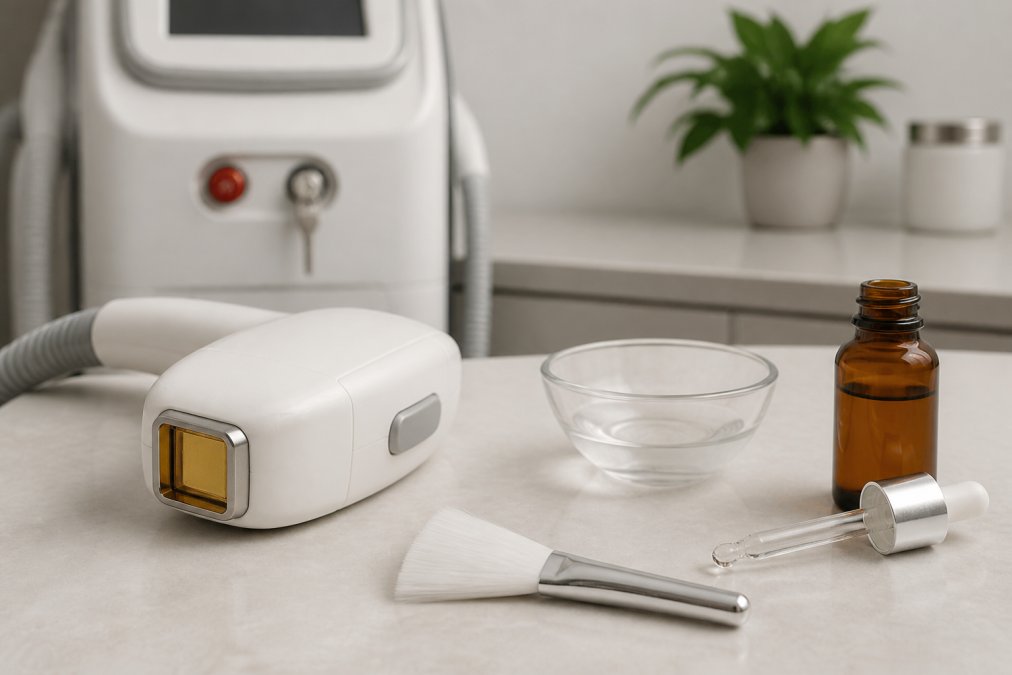
 comparison
Laser Skin Rejuvenation vs Chemical Peels
Table of Contents
- How Laser Skin Rejuvenation Works
- How Chemical Peels Work
- Chemical Peel Depth Levels and What They Treat
- Recovery Time for Laser Skin Resurfacing vs Chemical Peels
- Skin Tone Considerations and Safety
- Cost of Laser Skin Rejuvenation and Chemical Peels
- Which Treatment Should You Choose?
- Frequently Asked Questions
Last Updated: September 18, 2026
How Laser Skin Rejuvenation Works
Laser skin rejuvenation uses focused light energy to create controlled injury to the skin, triggering the body's natural healing response and collagen production. The laser targets specific layers of skin, the epidermis and dermis, depending on the type and intensity of the device used.
How Chemical Peels Work
Alpha-Hydroxy Acids (AHAs): Glycolic acid (from sugar cane) and lactic acid (from milk) are water-soluble and work at the dermal-epidermal junction. Glycolic acid at 20-70% concentration is the most common AHA for superficial peels. It has a small molecular weight, allowing deeper penetration than other AHAs. Lactic acid is gentler and preferred for sensitive or reactive skin types.
The depth of penetration is controlled by:
- Acid concentration: Higher concentrations penetrate deeper (e.g., 70% glycolic acid reaches deeper than 20% glycolic acid).
- pH level: Lower pH increases penetration speed; buffered solutions slow penetration and reduce irritation.
- Contact time: Longer application increases depth; most providers use timed applications (30 seconds to 3 minutes depending on acid type and desired depth).
- Skin preparation: Pre-treatment with retinoids, vitamin C, and gentle exfoliation thins the stratum corneum and increases penetration.
- Neutralization: Acids are neutralized with sodium bicarbonate or water to stop the chemical reaction and prevent over-penetration.
Pre-treatment Preparation (Often Overlooked):
Optimal results may benefit from pre-peel conditioning.
- Retinoid cycling: Discontinue tretinoin, adapalene, or other retinoids 3-5 days before a medium or deep peel to reduce irritation and barrier disruption. For superficial peels, retinoids can continue.
- Vitamin C and hydroquinone: These can be continued up to 24 hours before peeling; they prime the skin for better results and reduce post-inflammatory hyperpigmentation risk.
- Sun protection: Patients must use SPF 30+ daily for 2 weeks pre-peel. Sun-exposed skin has thickened stratum corneum and melanin activation, which increases hyperpigmentation risk post-peel.
- Avoid irritants: Discontinue benzoyl peroxide, glycolic acid cleansers, and physical exfoliation 1 week before treatment.
- Hydration: Increase water intake and use hydrating serums; dehydrated skin is more reactive and heals slower.
- Medication review: NSAIDs, aspirin, and anticoagulants increase bleeding and bruising risk; discuss with your provider 1 week before treatment.
Chemical Peel Depth Levels and What They Treat
Chemical peels are classified into three depth categories, each addressing different skin concerns and requiring different recovery times.
Recovery Time for Laser Skin Resurfacing vs Chemical Peels
Recovery time is one of the most important differences in laser skin rejuvenation vs chemical peels, and it directly impacts your decision.
Skin Tone Considerations and Safety
Laser treatments and chemical peels carry different risk profiles across Fitzpatrick skin types I-VI, and this is the most critical decision factor for patients with darker skin.
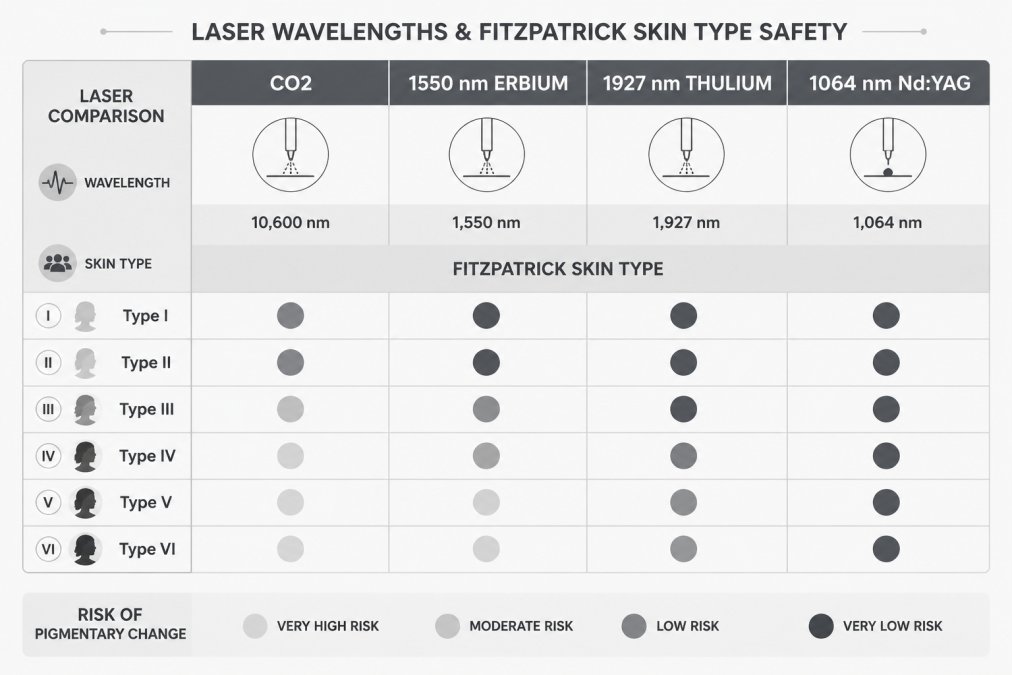
Laser Safety by Fitzpatrick Type:
- Fitzpatrick Types I-II (Fair to Light): Ablative CO2 lasers and non-ablative fractional lasers are safe with standard settings. Risk of post-inflammatory hyperpigmentation (darkening) is low, <5% with proper aftercare.
- Fitzpatrick Type III (Medium): Ablative CO2 lasers require reduced energy settings (lower fluence, longer pulse duration) to minimize melanin disruption. Non-ablative fractional lasers are safer. Post-inflammatory hyperpigmentation risk rises to 10-15%.
- Fitzpatrick Types IV-V (Olive to Brown): Ablative CO2 lasers are generally not recommended; the risk of post-inflammatory hyperpigmentation (20-30%) and permanent hypopigmentation (lightening) is substantial. Non-ablative fractional lasers (1550 nm erbium glass or 1927 nm thulium) are preferred because they bypass the epidermis and reduce melanin interaction. Nd:YAG lasers (1064 nm) are safer for darker skin because they penetrate deeper and have less melanin absorption.
- Fitzpatrick Type VI (Very Dark): Ablative lasers should be avoided entirely. Only non-ablative options (1550 nm fractional erbium, 1927 nm thulium, or 1064 nm Nd:YAG) are appropriate. Even with these, energy settings must be conservative, and treatments should be spaced 4-6 weeks apart (vs. 2-3 weeks for lighter skin) to allow complete healing and prevent cumulative melanin disruption.
Chemical Peel Safety by Fitzpatrick Type:
- Fitzpatrick Types I-III: All peel depths are safe with standard protocols. Superficial and medium peels carry minimal risk (<5%).
- Fitzpatrick Types IV-V: Superficial peels (glycolic acid 20-30%, salicylic acid 20-30%) are safe and recommended. Medium peels (TCA 35-50%) require careful provider selection and extended pre-treatment conditioning; post-inflammatory hyperpigmentation risk is 15-25%. Deep peels (phenol) should generally be avoided due to high hyperpigmentation risk (30-40%) and unpredictable results in melanin-rich skin.
- Fitzpatrick Type VI: Superficial peels only. Medium and deep peels carry unacceptable hyperpigmentation risk (40%+) and should not be performed.
Medication and Condition Contraindications (Often Missed by Competitors):
Absolute contraindications for ablative laser treatment:
- Active herpes simplex virus (HSV) infection or history of severe recurrent HSV (risk of disseminated infection; requires prophylactic antiviral therapy 1 week pre- and 2 weeks post-treatment)
- Isotretinoin (Accutane) use within the past 12 months (impairs wound healing and increases scarring risk)
- Immunosuppression (HIV, organ transplant, systemic corticosteroids >20 mg/day), impaired healing and infection risk
- Unrealistic expectations or inability to comply with strict aftercare
Relative contraindications (require modified protocol or alternative treatment):
- Aspirin, NSAIDs, or anticoagulants (warfarin, apixaban), increase bleeding and bruising; discontinue 1 week pre-treatment if medically safe
- Photosensitizing medications (tetracyclines, thiazide diuretics, NSAIDs), increase photosensitivity post-treatment; require strict SPF 50+ use
- Keloid or hypertrophic scar history, ablative lasers carry 10-15% risk of scar formation; non-ablative or chemical peels preferred
- Active acne or rosacea, may worsen temporarily post-treatment; require pre-treatment with topical or oral antibiotics
- Melasma (especially in Fitzpatrick IV-VI), both lasers and peels can trigger hyperpigmentation; requires aggressive pre- and post-treatment sun protection and may benefit from hydroquinone or combination depigmenting agents
Absolute contraindications for chemical peels:
- Isotretinoin use within 12 months (impaired healing)
- Active HSV infection (risk of dissemination)
- Allergy to peel ingredients (rare but critical to screen)
- Recent facial surgery (<2 weeks) or active wounds
Post-Treatment Hyperpigmentation Prevention Protocol for Darker Skin Types:
For Fitzpatrick IV-VI patients, prevention is essential:
-
Pre-treatment (2-4 weeks before):
- Start hydroquinone 4% or combination depigmenting cream (hydroquinone + tretinoin + fluocinolone) to suppress melanin production
- Daily SPF 50+ mineral sunscreen (zinc oxide or titanium dioxide preferred; chemical sunscreens can irritate post-peel skin)
- Vitamin C serum (L-ascorbic acid 15-20%) to reduce oxidative stress and melanin activation
-
Immediately post-treatment (days 1-7):
- SPF 50+ every 2 hours; avoid sun exposure entirely
- Gentle, fragrance-free moisturizer (ceramide-based)
- Avoid all active ingredients (retinoids, acids, vitamin C) until skin is fully healed
- Oral tranexamic acid (500 mg twice daily) for 1-2 weeks, reduces inflammation and hyperpigmentation risk (evidence-based for darker skin types)
-
Extended post-treatment (weeks 2-12):
- Continue SPF 50+ daily
- Reintroduce hydroquinone 4% at week 2 if skin is fully healed
- Niacinamide serum (4-5%) to strengthen barrier and reduce inflammation
- Avoid heat exposure (hot showers, saunas, exercise) for 2 weeks
Provider Selection for Darker Skin Types:
This is non-negotiable: ask your provider directly:
- "How many patients with my Fitzpatrick type have you treated in the past year?"
- "What is your post-inflammatory hyperpigmentation rate in darker skin types?"
- "Which laser wavelengths do you use for my skin type, and why?"
- "What is your pre- and post-treatment protocol specifically for darker skin?"
Cost of Laser Skin Rejuvenation and Chemical Peels
Cost varies significantly between the two treatments, and the pricing structure is quite different.
Which Treatment Should You Choose?
The best choice depends on your skin concerns, downtime tolerance, skin type, and desired outcome.
| Factor | Laser Skin Rejuvenation | Chemical Peels |
|---|---|---|
| Best for | Deep wrinkles, severe scarring, dramatic results | Superficial concerns, maintenance, gradual improvement |
| Downtime | 1-3 weeks (varies by type) | 1-3 weeks (varies by depth) |
| Sessions needed | 1-5 (fewer for ablative) | 2-6 (more for light peels) |
| Skin tone safety | Higher risk for darker skin | Safer across skin types with precautions |
| Cost per session | $600-$5,000+ | $150-$3,000 |
| Results timeline | Immediate + progressive over 3-6 months | Gradual, visible after 2-3 sessions |
Frequently Asked Questions
Which is better for treating deep wrinkles: laser skin rejuvenation or chemical peels?
Laser skin rejuvenation generally delivers superior results for deep wrinkles because it penetrates deeper into the dermis and stimulates collagen production more effectively. Fractional and ablative lasers create controlled injury that triggers robust healing and long-term remodeling. Chemical peels, especially deeper peels using trichloroacetic acid, can improve wrinkles but work primarily at the epidermal level. For severe wrinkles and significant skin laxity, laser treatments typically require fewer sessions and produce more dramatic results.
What is the typical recovery time for laser skin resurfacing?
Recovery varies by laser intensity. Non-ablative fractional lasers typically involve 2-3 days of mild erythema and swelling, allowing return to work quickly. Ablative CO2 lasers require 7-14 days of significant downtime, with visible peeling and redness lasting 1-2 weeks. Full healing and collagen remodeling continue for 3-6 months. Chemical peels range from minimal downtime for superficial peels (same day) to 7-10 days for deep phenol peels. If downtime is a concern, non-ablative laser or superficial chemical peels are better options.
Are laser skin rejuvenation treatments safe for darker skin tones?
Yes, but laser selection matters significantly. Non-ablative fractional lasers are generally safer for all Fitzpatrick skin types, including darker tones, because they minimize risk of post-inflammatory hyperpigmentation. Ablative CO2 lasers carry higher risk of hyperpigmentation in darker skin and require specialized expertise and modified settings. Chemical peels can also trigger hyperpigmentation in darker skin tones if depth and acid concentration aren't carefully controlled. Always consult with a provider experienced in treating diverse skin types to minimize complications and achieve optimal results.
How do costs compare between laser skin rejuvenation and chemical peels?
Pricing for chemical peels and laser treatments varies depending on treatment depth, area size, and your specific skin concerns. Contact Lumyn Medspa for a personalized quote based on your goals.
What skin concerns do chemical peels handle best?
Chemical peels excel at treating superficial concerns like uneven skin tone, light wrinkles, sun damage, and mild hyperpigmentation. Superficial and medium-depth peels using glycolic acid or trichloroacetic acid effectively address texture irregularities and age spots. Deep phenol peels can treat deeper wrinkles but carry greater risk. Chemical peels are less effective for deep acne scarring, significant skin laxity, or dramatic wrinkle reduction compared to laser resurfacing, which offers superior precision for complex structural concerns.