 ultimate-guide
How Aging Affects Facial Volume and Wrinkles
Last Updated: October 29, 2026
Quick Summary
Aging affects facial volume and wrinkles through several mechanisms at once: bone resorption shrinks the facial frame, deep fat pads thin and descend, superficial fat redistributes downward, and skin thins as collagen and elastin production slows. The visible result is lost facial volume in the temples, midface, and under-eye area, paired with heaviness lower down at the nasolabial folds, marionette lines, and jawline.
- Facial volume loss happens across four layers: bone, deep fat compartments, superficial fat, and skin.
- Collagen decline, elastin loss, and cumulative sun damage are the three main causes of facial wrinkles.
- Genetics, bone structure, sun exposure, smoking, and weight history all shape how your face ages.
- Fillers restore volume but do not tighten loose skin, so match treatment to the layer involved.
- Daily broad-spectrum sunscreen, not smoking, and stable weight help limit photoaging and support facial fat.
Table of Contents
- How Aging Affects Facial Volume and Wrinkles
- Facial Volume Loss With Age: What Changes Beneath the Skin
- Causes of Facial Wrinkles: Collagen, Elastin, and Sun Damage
- How Aging Patterns Vary Between Individuals
- Facial Fillers for Volume Loss: Matching the Treatment to the Layer
- Natural-Looking Dermal Filler Results: What Separates Refreshed From Overdone
- Everyday Prevention and When to Seek Professional Assessment
- Book a Facial Aging Consultation at Lumyn Medspa
- Frequently Asked Questions
How Aging Affects Facial Volume and Wrinkles
Facial volume is the underlying structural fullness that gives the face its contours, and its gradual decline is one of the most consistent features of the aging process. Aging affects facial volume and wrinkles through several distinct mechanisms working at once, not a single cause. The result is a face that doesn't just wrinkle but also flattens, shifts, and loses support.
Below, we'll show you exactly how each layer of the face changes, why two people the same age can look years apart, and how treatment decisions should follow the anatomy rather than the calendar.
Facial Volume Loss With Age: What Changes Beneath the Skin
Facial volume loss with age happens across four layers: bone, deep fat compartments, superficial fat, and skin. Bone resorption shrinks the underlying frame, particularly around the eye sockets, cheeks, and jaw (pubmed.ncbi.nlm.nih.gov). Deep fat pads that once held the cheeks high begin to thin and descend. Superficial fat redistributes downward, and the skin itself thins as collagen and elastin production slows.

The visible outcome is a loss of facial fullness in the temples, midface, and under-eye area, paired with heaviness lower down at the nasolabial folds, marionette lines, and jawline. Treating a single wrinkle in isolation often disappoints, because the wrinkle may be a symptom of volume depletion plus tissue descent. Understanding which layer has changed is the first step toward a treatment plan that actually addresses it.
Causes of Facial Wrinkles: Collagen, Elastin, and Sun Damage
The causes of facial wrinkles come down to three main drivers: collagen decline, elastin loss, and cumulative sun damage, but the mechanisms behind each are what determine which wrinkles you get and when.
Collagen decline. Collagen is the structural scaffolding of the dermis, and the body's production of it falls steadily with age. Fewer collagen fibers mean the skin loses tensile strength and resists creasing less effectively. This is why lines that once appeared only with expression begin to linger after the muscle relaxes.
Elastin loss. Elastin is the protein that lets skin stretch and snap back. With age, elastin fibers fragment and are not replaced efficiently, so skin that was once resilient stays slightly deformed after each movement. Over years of repeated expressions, squinting, smiling, frowning, those micro-deformations become etched lines.
Sun damage (photoaging). Ultraviolet radiation is the most powerful external accelerator of wrinkle formation. UVA penetrates the dermis and generates reactive oxygen species that break down collagen and elastin while impairing new collagen synthesis; UVB drives surface damage and pigmentation. The result is a coarser texture, deeper lines, and a leathery quality concentrated in sun-exposed zones, the forehead, cheeks, nose, and upper lip. Photoaging is cumulative, which is why a lifetime of unprotected exposure shows up decades later.
Dynamic versus static wrinkles. Repetitive muscle movement first creates dynamic lines that appear only during expression. As collagen and elastin weaken and the skin loses the ability to recover, those lines persist at rest and become static wrinkles.
Contributing factors. Dehydration and weight loss make existing lines look sharper by reducing skin turgor and underlying fullness. Smoking constricts blood vessels and degrades connective tissue. Sleep position and repeated friction can create lines on one side of the face. Skin thickness also drops with age, which is why aging skin bruises and creases more easily.
The practical takeaway: wrinkles are not one phenomenon. They are the visible output of collagen loss, elastin fragmentation, photoaging, and repetitive movement acting together, and effective treatment depends on identifying which driver dominates in a given area.
How Aging Patterns Vary Between Individuals
Individual aging patterns vary widely because genetics, bone structure, sun exposure, weight history, and lifestyle all shape how the face changes. Two people can share a birthday and show completely different aging signatures: one loses midface volume first, another develops laxity along the jawline, and a third sees fine lines around the eyes dominate. Rather than implying everyone ages the same way, it helps to think in terms of a practical framework.
The main variables:
- Genetics. Inherited traits influence collagen quality, skin thickness, and where fat compartments thin first. A family history of early midface hollowing or late-onset laxity is a useful clue.
- Facial anatomy and bone structure. People with strong cheekbones and a well-supported midface often show volume loss later than those with a flatter skeletal frame. Bone resorption patterns differ by individual, which changes where hollowing appears.
- Sun exposure. Cumulative UV exposure is the largest external modifier. Someone with decades of unprotected sun time will typically show more texture change and deeper lines than a peer with consistent protection, regardless of age.
- Smoking. Smoking impairs circulation and degrades connective tissue, accelerating both wrinkle formation and skin laxity.
- Weight history. Significant weight loss reduces facial fat, and repeated gain-and-loss cycles can leave the face deflated even when body weight is stable. Stable weight protects facial fat compartments.
- Sleep and expression habits. Side-sleeping and repetitive facial expressions can create asymmetric lines over time.
Why the pattern matters clinically. A treatment matched to the wrong pattern produces either no visible change or an overfilled, unnatural result. A careful assessment maps where volume loss, fat descent, and skin laxity each sit before any injectable or laser is chosen. For example, a patient whose primary change is midface volume loss may benefit from structural support, while a patient whose primary change is jawline laxity may need a tightening approach instead. Treating the pattern, not the age, is what separates a refreshed result from an overdone one.
Facial Fillers for Volume Loss: Matching the Treatment to the Layer
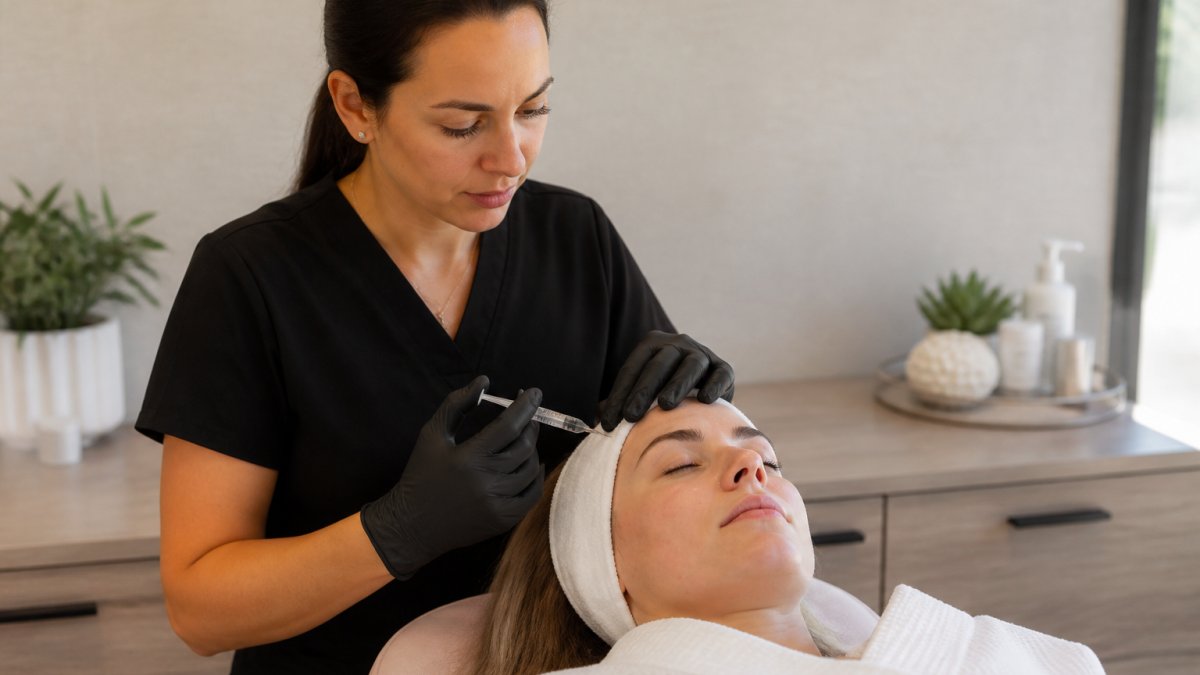
Facial fillers can restore fullness where the face has deflated, most commonly in the cheeks, temples, and under-eye hollows. Dermal fillers add volume and attract water, which can soften folds and contours. Hyaluronic acid fillers add volume and attract water, which can soften folds and contours. Suitable product and placement depend on which layer has changed and should be determined during a consultation.
| Concern | Layer Involved | Typical Approach | What It Addresses |
|---|---|---|---|
| Hollow temples, flat cheeks | Deep fat, bone | Structural filler placement | Lost facial fullness |
| Under-eye hollows | Superficial fat | Soft filler, conservative volume | Shadows and hollowness |
| Nasolabial folds | Fat descent | Support plus volume | Fold depth |
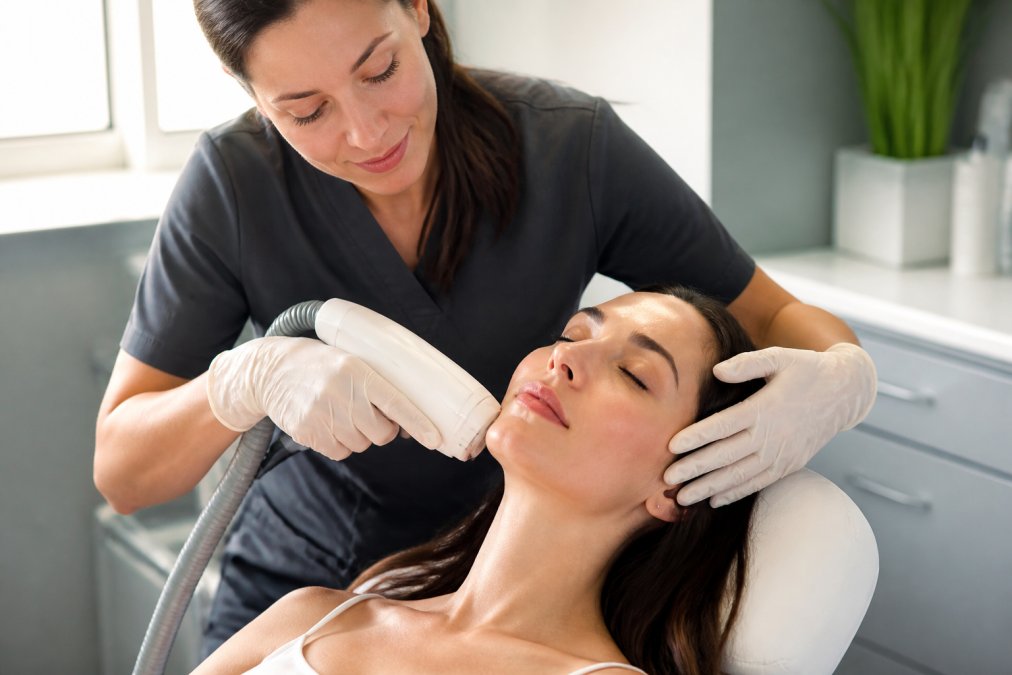
| Jawline laxity | Skin, connective tissue | Tightening or lifting options | Sagging skin |
Fillers restore volume; they do not tighten loose skin. For a deeper look, see laser skin tightening vs fillers for aging skin. Knowing that distinction prevents the most common disappointment.
Natural-Looking Dermal Filler Results: What Separates Refreshed From Overdone
Natural-looking dermal filler results generally depend on treating specific areas with conservative volumes and respecting the face's existing proportions. The face should look rested, not different.
Chasing volume everywhere at once is a common mistake. If looking frozen is your concern, discuss your goals and expected volume with a qualified provider during a consultation. Learn more about how to avoid looking frozen after fillers.
Everyday Prevention and When to Seek Professional Assessment
Daily broad-spectrum sunscreen, gentle cleansing, moisturizer, and retinoid use where tolerated may help limit photoaging. Not smoking and maintaining stable weight also support facial fat and skin quality.
Seek professional assessment when volume loss or wrinkles begin to affect how you feel about your appearance, when folds persist at rest, or when laxity changes your facial contours. A qualified provider can distinguish what skincare can address from what needs intervention. Establishing a consistent regimen of corrective skincare treatments often serves as a foundational step in managing the structural changes that occur as the skin loses its natural elasticity.
Book a Facial Aging Consultation at Lumyn Medspa
Understanding how aging affects facial volume and wrinkles gives you a real advantage: you can ask better questions and recognize a plan built on anatomy rather than guesswork. Lumyn Medspa uses advanced technology, including the Candela Nordlys® platform, and offers customized treatment plans spanning injectables, laser skin rejuvenation, and wellness management.
Get started with Lumyn Medspa and book your anti-aging consultation.
Frequently Asked Questions
Why does the face lose volume with age?
Facial volume loss with age comes from several changes happening at once. The deep and superficial fat compartments shrink and shift downward, collagen and elastin production slows, and the jawbone slowly resorbs. Together these changes reduce the structural support under the skin, so cheeks flatten, temples hollow, and nasolabial folds deepen. The pace varies widely between people and is influenced by genetics, sun exposure, weight history, and smoking.
How does facial volume loss contribute to wrinkles?
When the fat pads and connective tissue that hold the face up begin to descend, the skin above them folds rather than stretches flat. That is why marionette lines and nasolabial folds appear even on skin with few fine lines. At the same time, thinning collagen and elastin make the skin less able to bounce back. Restoring facial volume can soften those folds, but wrinkles caused by sun damage or repeated muscle movement may need a different treatment.
Can facial volume loss be reversed?
Some of it can be improved, not erased. Facial fillers for volume loss can replace support in specific areas, and other surgical and non-surgical options exist. Skin quality responds to lasers and topical retinoids. No treatment stops the aging process, and results are temporary, so a realistic plan includes maintenance. A licensed provider can assess which layers of your face are driving the change before recommending anything.
How do I get natural-looking dermal filler results?
Natural-looking dermal filler results depend less on the product than on the plan. A conservative approach adds small amounts over time, treats the midface and temples before chasing individual lines, and respects your existing proportions. When considering any provider, ask about their qualifications and what product they plan to use and why.