 ultimate-guide
How Long Does Collagen Banking Last for Skin Elasticity?
Table of Contents
- What Collagen Banking Really Means for Skin Elasticity
- How Collagen Stimulating Treatments for Face Build Structural Support
- Realistic Timelines: How Long Results Last by Treatment Type
- Benefits of Collagen Banking for Women Over 40
- Creating a Collagen Banking Maintenance Schedule That Works
- Cost-Benefit Analysis: Is Collagen Banking Worth the Investment?
- Frequently Asked Questions
Last Updated: September 26, 2026
What Collagen Banking Really Means for Skin Elasticity
Collagen banking is the practice of investing in collagen-stimulating treatments and habits before visible aging accelerates, so your skin retains more structural support later. This guide from Lumyn Medspa explains what that actually means for skin elasticity, and how long the results realistically last.
The honest answer up front: collagen banking is not a bank account you deposit into once and withdraw from for a decade. It is closer to maintaining a garden. You plant, you tend, and you keep tending. Results from a single collagen-stimulating treatment typically build over two to three months and then gradually fade if you stop, which is why the "banking" framing, while useful for motivating early action, oversells permanence.
Here's what most guides get wrong: they treat collagen banking as a one-time procedure with a fixed expiry date. In practice, how long results last depends on the treatment type, your age, your baseline collagen density, and, critically, your maintenance schedule. Below, we break down realistic timelines by treatment, the biological ceiling on what any intervention can achieve, and how to build a maintenance plan that holds your results steady.
The Banking vs. Maintenance Distinction
The term "banking" implies you can stockpile collagen and draw on it later. That framing is misleading, and it is the single biggest source of disappointment for people starting collagen-stimulating treatments.
What you are actually doing is stimulating fibroblasts, the cells in the dermal matrix responsible for producing collagen synthesis. That new collagen is real, but it is also subject to the same natural collagen degradation as the collagen you already have. You are not freezing your skin in time. You are raising the baseline from which the aging process continues.
The practical distinction matters for planning. Banking is the early, proactive phase, when you still have plenty of skin resilience and are working to slow decline. Maintenance is the ongoing phase, where you schedule treatments and habits to preserve what you have built. Skip maintenance, and you are effectively making withdrawals from a balance that only shrinks.
How Collagen Stimulating Treatments for Face Build Structural Support
Collagen stimulating treatments for face work by provoking a controlled wound-healing response in the dermis, triggering fibroblasts to lay down new collagen and rebuild skin scaffolding. The result is improved firmness, dermal density, and structural integrity over time, not immediately.
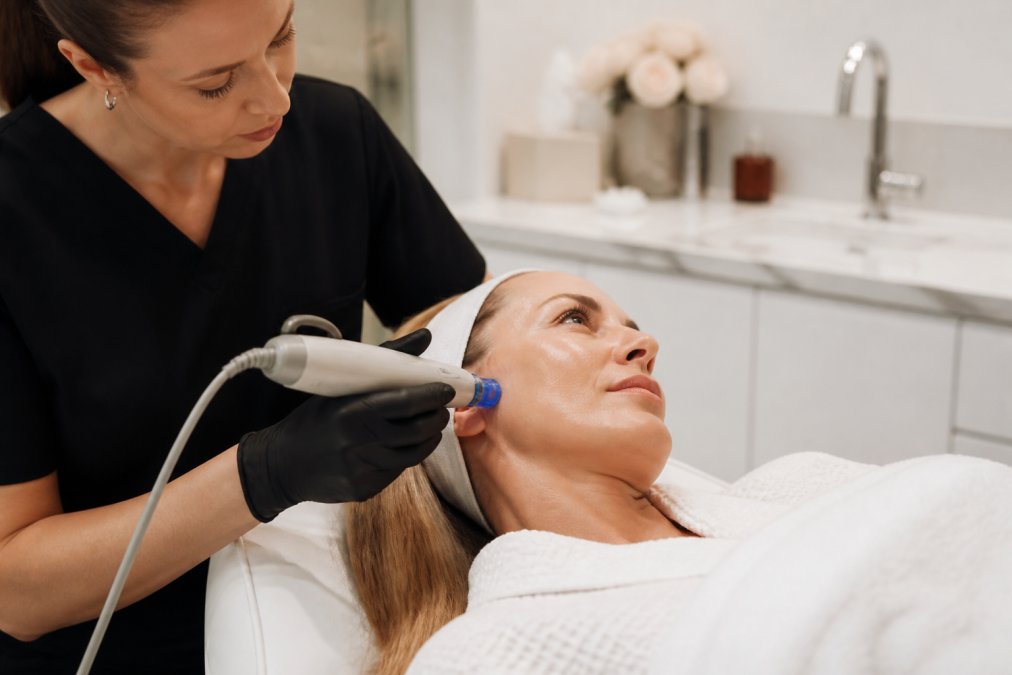
Different modalities reach the dermis differently. Energy-based devices deliver controlled heat to stimulate collagen synthesis. Injectable collagen peptides and biostimulators prompt a longer remodeling cycle. Topical peptides and retinoids support the process from the surface, improving epidermal hydration and skin barrier function but reaching the dermis only partially.
Realistic Timelines: How Long Results Last by Treatment Type
How long collagen banking lasts varies widely by treatment. The table below summarizes typical timelines based on how each modality stimulates collagen synthesis and how quickly the body remodels that new collagen.
| Treatment Type | Results Start | Peak Effect | Typical Duration | Maintenance Cadence |
|---|---|---|---|---|
| Energy-based collagen stimulation | 4-6 weeks | 3-6 months | 6-12 months | Every 6-12 months |
| Injectable biostimulators | 6-8 weeks | 3-6 months | 12-24 months | Every 12-24 months |
| Topical retinoids and peptides | 8-12 weeks | 6 months | Ongoing with use | Daily use |
| Professional facials and microneedling | 2-4 weeks | 2-3 months | 3-6 months | Every 4-8 weeks |
Treat these as general ranges, not promises. Your provider can give you a more specific estimate based on your skin and history.
Biological Limits of Collagen Stimulation
No treatment can push collagen production beyond what your fibroblasts are biologically capable of. This is the ceiling competitors rarely mention.
As we age, collagen depletion accelerates, and fibroblast activity declines. Stimulation can wake up that activity, but it cannot restore it to age 25 levels. A woman in her 50s will generally see less dramatic results from the same treatment than a woman in her 30s, not because the treatment is weaker, but because the biological response is smaller.
This is why the proactive aging argument for starting earlier holds up. It is not that early treatment locks in results forever. It is that you are working with more responsive fibroblasts while you still have them.
Benefits of Collagen Banking for Women Over 40
For women over 40, the benefits of collagen banking for women over 40 center on slowing visible decline rather than reversing it. At this stage, skin elasticity drops more noticeably, skin texture changes, and firmness loss becomes harder to ignore.
A realistic approach combines:
- Photoprotection daily, since UV exposure is a leading driver of collagen degradation
- Antioxidant defense through topical vitamin C and a diet rich in colorful produce
- Professional collagen stimulating treatments for face on a schedule your provider sets
- Metabolic support through sleep, protein intake, and consistent movement
The goal is not to look 30 again. It is to keep the skin you have looking as firm and even as possible for as long as possible, which is a more achievable and more honest target.
Creating a Collagen Banking Maintenance Schedule That Works
A collagen banking maintenance schedule should match your treatment type, your budget, and your skin's response. But before you build one, you need to understand what happens when you stop, because that is the question most guides avoid.
The withdrawal phase is real. When you discontinue collagen-stimulating treatments, the collagen your body built does not vanish overnight, but it stops being replenished and resumes the same natural collagen degradation as everything else in the dermis. In practice, most people see the visible firming from a treatment cycle begin to recede over the same window the treatment was expected to last. A biostimulator that holds 12 to 24 months does not fall off a cliff at month 24; it tapers, and the taper is gradual enough that many people do not notice until they compare photos.
The important nuance is that daily habits behave differently from procedures. Photoprotection, retinoids, adequate protein intake, and sleep support collagen synthesis continuously, and their effect fades more slowly when interrupted than a single procedure's does. This is why a plan built on procedures alone produces a spike-and-return pattern, while a plan built on procedures plus habits produces a higher, flatter line.
With that in mind, here is a framework that accounts for both.
- Establish a baseline: get a professional skin assessment before starting anything, so you have a reference point to measure against
- Choose one primary collagen-stimulating modality rather than stacking several at once, since stacking past the saturation point adds cost without adding collagen
- Schedule your first maintenance session at roughly 80% of the expected duration window, not at the end, so you top up before the decline is visible
- Keep daily habits (photoprotection, retinoids, sleep, protein) running continuously, since these are the floor your procedures build on
- Reassess with your provider every 6 to 12 months and adjust based on measured results, not on how your skin feels that week
The 80% rule is the one most people skip. If a treatment typically lasts six months, book your next session around month four to five.
Cost-Benefit Analysis: Is Collagen Banking Worth the Investment?
Weigh three factors: how many years you intend to maintain, how responsive your skin is to stimulation, and whether the daily habits that support collagen synthesis are realistic for you. If the plan depends on habits you will not sustain, the treatment results will fade faster than the timeline suggests.
Frequently Asked Questions
Does collagen banking actually work for long-term skin elasticity?
Collagen banking can support skin elasticity by stimulating your skin's own collagen production before significant loss occurs. Treatments like microneedling, radiofrequency, and certain injectables create controlled micro-injuries that trigger fibroblasts to produce new collagen. However, results depend on your age, skin health, and consistency. It's not a permanent fix, but a proactive approach that can slow visible aging. A consultation with a qualified provider helps set realistic expectations based on your skin.
How long does it take to see results from collagen stimulating treatments for face?
Most people notice initial improvements in skin texture and firmness within 4 to 6 weeks after collagen stimulating treatments for face. Full results typically develop over 3 to 6 months as new collagen matures. The timeline varies by treatment type and individual biology. Your provider can give you a more specific estimate during your consultation.
What does a typical collagen banking maintenance schedule look like?
A collagen banking maintenance schedule usually involves an initial series of treatments spaced 4 to 6 weeks apart, followed by maintenance sessions every 6 to 12 months. Your provider will tailor the plan to your skin's response and goals. Consistent sun protection and a healthy lifestyle support longer-lasting results. Skipping maintenance can allow collagen levels to gradually decline again.
Can collagen banking reverse existing sagging skin?
Collagen banking is most effective as a preventative strategy for maintaining skin elasticity. It can improve mild sagging by rebuilding structural support, but significant laxity may require additional interventions like fillers or surgical consultation. Results are gradual and depend on the extent of collagen loss. A qualified provider can assess your skin and recommend the most appropriate approach.