 ultimate-guide
Non Invasive Skin Tightening Procedures: 2026 Guide
Table of Contents
- How Non Invasive Skin Tightening Procedures Work
- Energy-Based Technologies Compared: RF, Ultrasound, Lasers, and IPL
- What Is the Best Non-Invasive Skin Tightening for Face?
- Who Is a Good Candidate and Who Should Skip These Treatments
- What to Expect During Treatment and How Long Recovery Takes
- How Long Does Skin Tightening Last and How to Maintain Results
- Non-Surgical Skin Tightening Cost: What Drives the Price
- Combination Therapy and Setting Realistic Expectations
- Frequently Asked Questions
Last Updated: September 22, 2026
How Non Invasive Skin Tightening Procedures Work
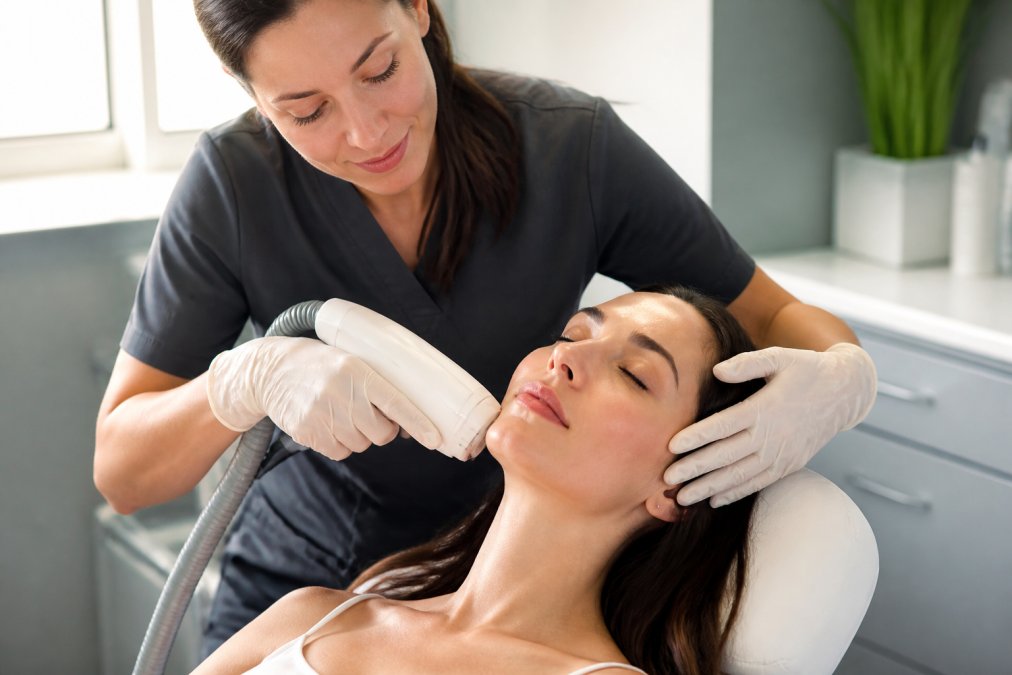
Non invasive skin tightening procedures are treatments that use controlled energy to heat tissue beneath the skin's surface, prompting collagen contraction and new collagen formation without cuts, stitches, or general anesthesia. This guide from Lumyn Medspa breaks down how each technology works, who benefits, and what results are realistic.
Energy-Based Technologies Compared: RF, Ultrasound, Lasers, and IPL
Each device type reaches a different depth and targets a different layer, so the "best" technology depends on your concern rather than a universal winner.
| Technology | Target Depth | Best For | Typical Downtime |
|---|---|---|---|
| Radiofrequency | Dermis and subcutaneous tissue | Skin laxity, mild to moderate sagging | None to minimal |
| Microfocused ultrasound | Deeper structural layers | Brow and jawline lifting | None to a few days |
| Fractional laser | Dermal layers via micro-beams | Skin texture, fine lines | Several days of redness |
| Intense pulsed light | Superficial pigment and vessels | Tone and redness, not firmness | Minimal |
Radiofrequency and Fractional Devices
Radiofrequency devices deliver thermal energy through the skin to heat the dermis while cooling the surface, an approach called epidermal protection. Fractional technology divides the beam into tiny columns, leaving untreated skin between them to speed healing. A common mistake is choosing fractional resurfacing for laxity alone; it excels at texture and tone but does less for structural sagging than RF or ultrasound.
Ultrasound, Laser, and Light-Based Options
Microfocused ultrasound bypasses the surface entirely and deposits energy at precise depths, which is why it is often chosen for the brow and jawline. Laser resurfacing and intense pulsed light work closer to the surface. IPL is frequently marketed for tightening, but its real strength is pigment and vascular correction, not skin laxity. Knowing that distinction prevents an expensive mismatch.
What Is the Best Non-Invasive Skin Tightening for Face?
The best non-invasive skin tightening for face depends on the layer causing the problem: RF for overall laxity, microfocused ultrasound for early jowling and brow descent, and fractional laser for texture and fine lines.
- Loose skin, no volume loss: radiofrequency or ultrasound
- Crepey texture with fine lines: fractional laser
- Redness and sun spots with mild laxity: IPL plus RF, not IPL alone
- Early jowling with good skin quality: microfocused ultrasound
Who Is a Good Candidate and Who Should Skip These Treatments
Most guides list contraindications as a flat set of bullets. The more useful question is why each one matters, because the mechanism determines whether you need to wait, switch devices, or skip the category entirely.
Absolute Contraindications (Skip the Category)
- Pregnancy or breastfeeding. No controlled safety data exists for fetal or infant exposure, and the hormonal shifts of pregnancy alter skin healing. Providers defer treatment until after breastfeeding ends.
- Active infection, open wounds, or severe acne in the treatment area. Heat can spread infection and delay wound closure. Treat the infection first.
- Active skin disease in the area (eczema flare, psoriasis plaque, active herpes simplex). Thermal injury can trigger a flare or Koebner response, where trauma causes new lesions in previously clear skin.
- History of keloid or hypertrophic scarring. The controlled thermal injury that drives neocollagenesis can trigger the same exaggerated scarring response.
- Implanted electronic devices in the treatment path (pacemaker, defibrillator, neurostimulator, insulin pump). Radiofrequency current can interfere with device function. This applies to RF systems specifically; ultrasound and laser do not carry the same risk, so a device switch may be possible.
- Isotretinoin use within the past 6 to 12 months. The medication impairs re-epithelialization, and fractional laser in particular carries a higher risk of scarring and delayed healing.
Relative Contraindications (Modify or Delay)
- Photosensitizing medications. Tetracyclines, fluoroquinolones, thiazides, and some acne treatments increase risk with laser and IPL. A provider may stop the medication for a window before treatment or switch to a non-light-based device.
- Autoimmune conditions (lupus, scleroderma, active rheumatoid arthritis). Healing response is unpredictable, and some conditions are worsened by thermal stress. A rheumatology clearance is often requested.
- Anticoagulant or antiplatelet therapy. Bruising risk rises with RF and ultrasound. Not an absolute bar, but timing matters.
- Uncontrolled diabetes or significant vascular disease. Impaired perfusion slows healing and raises infection risk.
- Recent fillers or neuromodulators in the same area. Heat can accelerate filler degradation or shift product. Most providers wait 2 to 4 weeks after fillers and 1 to 2 weeks after neuromodulators.
- Metal implants or dental hardware in the treatment zone. Not a blanket exclusion, but some RF systems require avoiding the area or using a different handpiece.
- Very dark skin tones (Fitzpatrick V to VI) with laser or IPL. Higher risk of post-inflammatory hyperpigmentation and hypopigmentation. RF and microfocused ultrasound are generally safer choices for these skin types because they bypass melanin absorption.
The Skin-Quality Screen
Beyond medical history, providers assess laxity grade, dermal thickness, and sun damage. A useful rule of thumb: if you can pinch more than about an inch of skin off the cheek and it does not snap back, non-invasive tightening will produce modest improvement at best. If you can pull the skin forward and it stays, surgical consultation is the more honest recommendation.
What to Expect During Treatment and How Long Recovery Takes
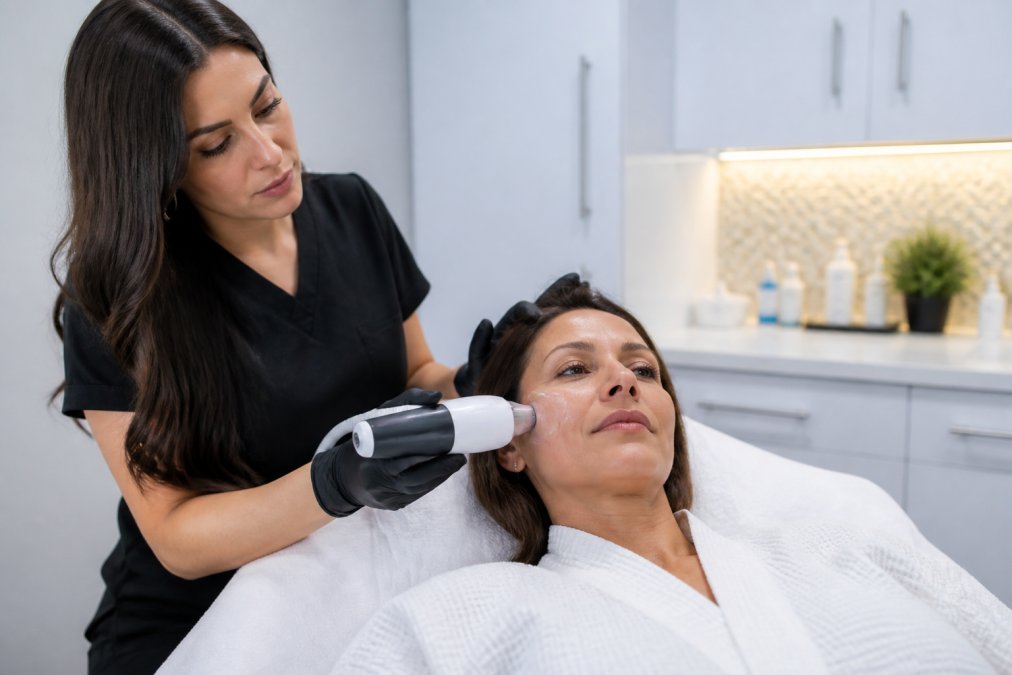
Most sessions run 30 to 90 minutes depending on the area and device. Your provider may apply topical anesthesia, though many RF and ultrasound treatments need none. You will feel brief heat or a prickling sensation as the device passes over the skin.
How Long Does Skin Tightening Last and How to Maintain Results
Results typically last six months to two years, depending on the technology, the area treated, and how your skin continues to age. How long does skin tightening last is the question providers hear most, and the honest answer is that no treatment stops the aging process.
Treating tightening as a one-time purchase is the most common reason people feel disappointed. Without maintenance and sun protection, results fade faster than expected.
Non-Surgical Skin Tightening Cost: What Drives the Price
Non-surgical skin tightening cost depends on the technology used, the number of sessions, and the size of the treatment area. A single small-area RF session and a full-face ultrasound series sit at very different price points, and the spread between them is wide enough that a written quote is the only reliable number.
Typical Price Bands by Technology
Most practices price by session or by a bundled series.
| Technology | Typical Per-Session Range | Typical Series | Notes |
|---|---|---|---|
| Radiofrequency (monopolar or bipolar) | $300 to $1,000 | 3 to 6 sessions | Full-face series often $1,500 to $4,000 |
| Microfocused ultrasound | $1,500 to $4,000 | 1 to 2 sessions | Single-treatment device; jawline and brow priced separately |
| Fractional laser (non-ablative) | $500 to $2,500 | 1 to 3 sessions | Ablative versions cost more and carry longer downtime |
| Intense pulsed light | $200 to $600 | 3 to 5 sessions | Priced as a pigment/vascular treatment, not tightening |
Compare the total cost of the recommended plan instead.
What Actually Moves the Number
- Device and consumables. Microfocused ultrasound cartridges are single-use. RF handpieces are reusable.
- Number of sessions. RF and IPL typically require a series; ultrasound is usually one and done. A cheap single RF session is not comparable to a full series.
- Treatment area. Full face, face and neck, and abdomen are priced separately.
- Provider type. Supervision requirements vary by state.
- Geography.
- Bundling. Many practices offer discounts when you prepay a series, but prepaid packages are usually non-refundable.
Financing, Insurance, and Red Flags
These procedures are cosmetic and are not covered by health insurance. Most practices offer third-party financing, often with promotional no-interest periods if paid in full within the promo window. Read the deferred-interest terms carefully; if the balance is not cleared by the deadline, interest is typically charged retroactively from the purchase date.
Combination Therapy and Setting Realistic Expectations
Combining modalities often outperforms any single device. Pairing RF for laxity with IPL for pigment, or ultrasound for lifting with a fractional laser for texture, addresses multiple layers at once. Clinical efficacy data generally supports staged combinations over stacking everything in one session.
Frequently Asked Questions
Is there a skin tightener that actually works?
Devices that deliver controlled thermal energy to the dermal layers, such as radiofrequency, microfocused ultrasound, and fractional lasers, can stimulate collagen production and improve mild to moderate skin laxity. Results are gradual and typically appear over two to six months as new collagen forms. They firm and tighten skin, but they do not remove excess skin the way a surgical lift does. A consultation can confirm whether your specific concern is likely to respond.
How much does non-surgical skin tightening cost?
Non-surgical skin tightening cost depends on the technology used, the size and number of treatment areas, the number of sessions in your plan, and the credentials of the provider. Single sessions are generally less expensive than packages, and treating the face only costs less than treating face plus neck or body. Because pricing varies by clinic and protocol, request a personalized quote from Lumyn Medspa.
Can saggy skin be tightened without surgery?
Mild to moderate sagging often responds to non invasive skin tightening procedures, especially on the face, neck, and under the chin. Significant excess skin, deep folds, or advanced laxity usually needs surgical evaluation. Energy-based treatments work best when skin still has some elasticity and the underlying issue is collagen loss rather than large volumes of redundant skin. A provider can assess your skin quality and set realistic expectations.
How long do results from non-invasive skin tightening last?
Most people see improvement that lasts roughly six to twelve months after a completed series, though this varies with age, skin condition, and lifestyle. Collagen remodeling continues for several months after treatment, and maintenance sessions at intervals your provider recommends can extend the effect. Sun protection, gentle skincare, and avoiding smoking help preserve results. Plan on periodic touch-ups rather than a one-time permanent fix.
Are there any side effects to non-surgical skin tightening?
Common, temporary effects include redness, mild swelling, tenderness, and warmth in the treated area, usually resolving within hours to a few days. Less common risks include blisters, burns, pigment changes, or small areas of numbness, which is why treatment should be performed by a qualified provider using a device cleared by the FDA for its intended use. Serious complications are uncommon but possible. Report anything unusual to your provider promptly.
How many sessions will I need and how far apart are they?
Most protocols involve two to four sessions spaced about four to six weeks apart, allowing collagen production to progress between visits. Some ultrasound treatments need only one session with a longer follow-up window. Your provider may recommend maintenance sessions every six to twelve months. The right schedule depends on the device, the treatment area, and how your skin responds, so follow the plan set at your consultation.
Do these treatments hurt, and is anesthesia used?
Sensations range from a warm, prickling feeling to brief heat or zaps, depending on the technology. Many practices apply topical anesthesia before ultrasound or fractional laser sessions, while radiofrequency treatments often need none. Discomfort is usually tolerable and short-lived. Tell your provider if the sensation becomes sharp or unbearable so settings can be adjusted during the appointment.
Can I combine skin tightening with injectables or body contouring?
Combination therapy is common and can address multiple concerns at once. For example, a provider may pair skin tightening with neuromodulators or dermal fillers to soften lines and restore volume, or with body contouring for stubborn fat. Timing matters because some treatments should not overlap on the same day. A single provider coordinating your plan reduces the risk of scheduling conflicts and helps results look natural.
Skin laxity rarely resolves on its own, and choosing among the available technologies can feel like guesswork without an assessment. Lumyn Medspa builds customized treatment plans around advanced technology, including the Candela Nordlys® platform, and pairs skin tightening with injectables, laser rejuvenation, and wellness management when your goals call for it. Book Now with Lumyn Medspa and start with a plan built around your skin, not a device.