 how-to
How to Choose the Right Laser for Brown Spots
Last Updated: October 31, 2026
Quick Summary
The right laser for brown spots is the one matched to your pigment type, pigment depth, and skin tone, not a single best device. Start with a skin assessment to confirm whether you have sun spots, melasma, or post-inflammatory hyperpigmentation, then choose the wavelength and settings accordingly.
- Sun spots, age spots, and liver spots are the same flat, epidermal patches caused by years of sun exposure.
- Melasma is broad, blotchy, and heat-sensitive, so many practitioners avoid aggressive laser and start with topical and gentle light approaches.
- Fitzpatrick skin types IV-VI need longer wavelengths, longer pulse durations, conservative fluence, and a test spot.
- IPL uses broad-spectrum light across many wavelengths, while a laser uses one precise wavelength for more control.
- Get any spot checked first if it is asymmetric, has irregular borders, mixes colors, or is changing.
Table of Contents
- Start With the Spot: Identifying What You're Treating
- How Laser and Light Treatments Target Pigment
- The Best Laser for Brown Spots Depends on Pigment Depth
- IPL vs Laser for Brown Spots: What Actually Differs
- Laser Treatment for Brown Spots on Dark Skin
- Brown Spot Laser Treatment Recovery and Aftercare
- When a Brown Spot Needs Medical Evaluation First
- Book a Skin Assessment at Lumyn Medspa
- Frequently Asked Questions
Start With the Spot: Identifying What You're Treating
Choosing the right laser for brown spots starts with naming the spot correctly. At Lumyn Medspa, clients often book a laser for brown spots, then point to pigment that light energy will not clear, or will make worse.
Hyperpigmentation is the umbrella term for skin that has produced extra melanin in one area, creating a patch darker than the surrounding tone. Melanin is the pigment your skin makes to defend itself.
Not all dark spots behave the same way. Two questions decide almost everything:
Get those two answers and the best laser for brown spots becomes obvious. Skip them and you waste money on sessions that cannot work.
Sun Spots, Age Spots, and Liver Spots
Sun spots, age spots, and liver spots are the same thing under three names: flat, tan to dark brown patches on skin that has seen years of sun.
These spots sit in the epidermis, the top layer of skin. That shallow position is good news.
You will usually find them on the face, hands, shoulders, and chest.
One note on the name: "liver spots" has nothing to do with your liver. It is an old label that stuck.
Melasma and Post-Inflammatory Hyperpigmentation
Melasma is a different animal, and it is where laser decisions go wrong most often.
Post-inflammatory hyperpigmentation is darkening left behind after skin injury or inflammation, such as acne, a burn, or a harsh reaction to a product.
Here is the part most guides miss: melasma and post-inflammatory hyperpigmentation often sit deeper and behave unpredictably.
So before you look at devices, get a skin assessment. A qualified provider can tell you which of these three you have.
American Academy of Dermatology guidance on hyperpigmentation
How Laser and Light Treatments Target Pigment
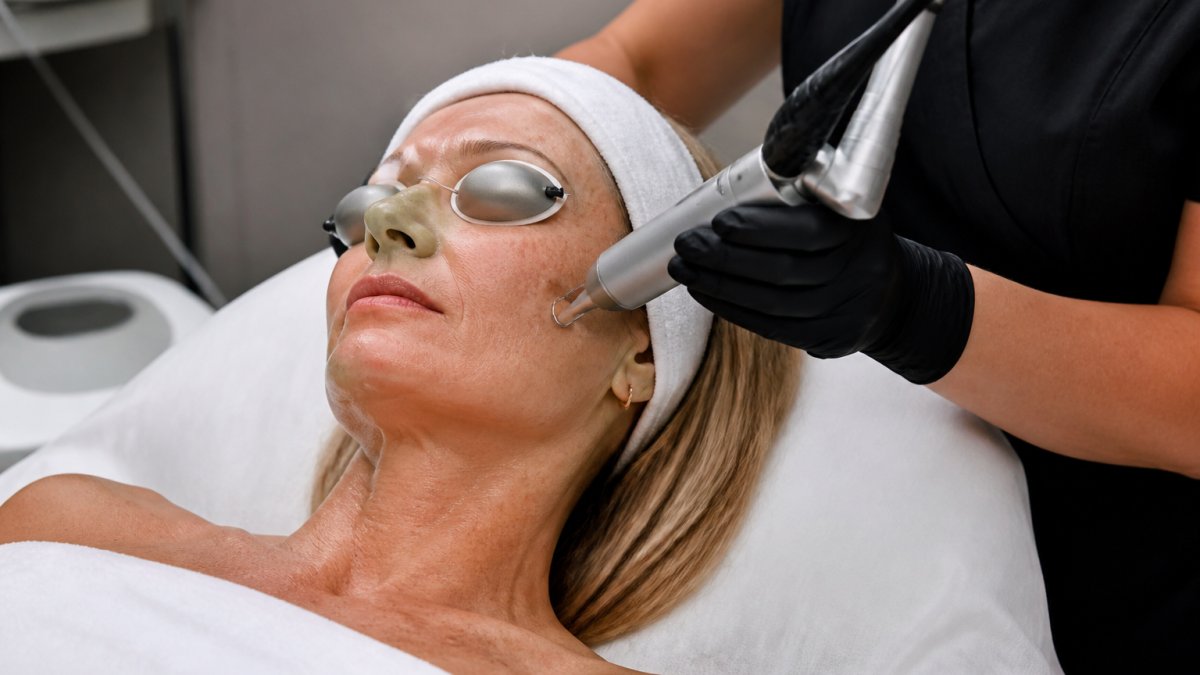
Laser and light treatments clear brown spots by targeting melanin and heating it in short bursts, leaving the surrounding skin largely untouched.
Three variables decide whether it works:
- Wavelength. Different wavelengths reach different depths. Shorter wavelengths hit surface pigment. Longer ones reach deeper.
- Pulse length. Short pulses hit pigment fast and hard. Longer pulses spread heat over a wider area.
- Cooling. Built-in cooling protects the outer skin while the energy works below it.
The skill is matching those settings to the spot. Too little energy and nothing changes.
This is why the same device can produce great results on one person and a bad outcome on another. The laser is a tool.
The Best Laser for Brown Spots Depends on Pigment Depth
The best laser for brown spots is the one matched to how deep your pigment sits and how your skin responds to heat. There is no single winner. A device that clears surface sun spots beautifully can be the wrong choice for melasma or deeper skin tones. Work through a short decision sequence instead of memorizing device names.
A Practical Decision Tree for Choosing a Treatment
Use these questions in order. Each answer narrows the field before you ever discuss price or downtime.
Step 1: Is the spot safe to treat cosmetically? If the lesion is asymmetric, has irregular borders, mixes colors, is larger than a pencil eraser, or is changing, stop (How to Spot Skin Cancer).
Step 2: What type of pigment is it?
- Sun spots and age spots: flat, well-defined, epidermal. Good candidates for light-based treatment.
- Melasma: broad, blotchy, symmetrical. Heat-sensitive; many practitioners avoid aggressive laser and start with topical and gentle light approaches.
- Post-inflammatory hyperpigmentation: follows injury or inflammation. Often improves with time and gentle settings; aggressive treatment can worsen it.
Step 3: How deep is the pigment? Epidermal pigment sits in the top layer and responds to shorter wavelengths, intense pulsed light, and Q-switched lasers.
Fitzpatrick skin types IV-VI carry a higher risk of post-inflammatory hyperpigmentation and require longer wavelengths, longer pulse durations, conservative fluence, and a test spot.
Step 5: How much downtime can you tolerate?
- Minimal: intense pulsed light, Q-switched, low-fluence pigment-targeting lasers.
- Moderate: non-ablative fractional lasers.
- Significant: ablative fractional CO2.
Ask how many sessions are typical, the interval between them, and what maintenance looks like.
If you remember one thing: safety screen first, pigment type second, depth third, skin tone fourth, downtime fifth, budget last. Reversing that order is how people waste money or worsen their pigment.
Fractional, Q-Switched, and Pigment-Targeting Lasers
Fractional lasers treat the skin in tiny columns, leaving untreated skin between them. That design speeds healing.
Q-switched lasers deliver very short, high-energy pulses and are commonly used for epidermal pigment. They shatter melanin into fine particles your body can clear.
Pigment-targeting lasers are built specifically around melanin absorption. Some providers use them in low-fluence passes to treat pigment gently across a broader area.
Ablative vs Non-Ablative Options
Ablative means the laser removes tissue. Non-ablative means it works through intact skin.
| Option | How It Works | Downtime | Best For |
|---|---|---|---|
| Non-ablative fractional | Heats below the surface | Days of redness | Mild pigment, texture, darker skin tones |
| Ablative fractional (CO2) | Removes top skin layer | About a week of healing | Stubborn surface spots, sun damage |
| Q-switched | Very short pigment-shattering pulses | Minimal to a few days | Epidermal spots, mixed pigment |
| Intense pulsed light | Broad-spectrum light, not a true laser | Minimal | Scattered sun spots on lighter skin |
Ablative options carry more risk of discoloration, especially in medium and deep skin tones. Non-ablative and Q-switched paths are usually safer starting points for those skin types.
How to Tell Sun Spots from Melasma and Post-Inflammatory Pigmentation
This distinction matters because heat and light can worsen melasma and some post-inflammatory pigmentation. A quick self-check before your consultation:
- Sun spots: discrete, flat, tan-to-brown patches with clear edges on sun-exposed areas. Usually uniform in color.
- Melasma: symmetrical, blotchy patches on cheeks, forehead, upper lip, or jawline. Often triggered by hormones, sun, or heat. No clear border between individual spots.
- Post-inflammatory hyperpigmentation: darkening exactly where acne, a burn, or irritation occurred. Often in medium and deeper skin tones.
If you are unsure, do not guess. A skin assessment with a qualified provider is the fastest way to avoid a treatment that backfires.
IPL vs Laser for Brown Spots: What Actually Differs
IPL vs laser for brown spots comes down to precision. IPL uses broad-spectrum light across many wavelengths at once.
IPL suits scattered, superficial sun spots on lighter skin. It covers a wide area quickly.
Lasers offer more control. A provider can dial in wavelength and pulse to match your pigment depth and skin tone.
For a fuller side-by-side of the two paths, read our breakdown of fractional laser vs IPL for hyperpigmentation. If IPL looks like your route, you can review the clinic's intense pulsed light treatment details.
A common mistake is assuming IPL is the "gentle" option and therefore always safer. Not true.
Laser Treatment for Brown Spots on Dark Skin
Laser treatment for brown spots on dark skin is safe when the provider chooses the right device and settings, and risky when they do not. The margin for error is smaller because darker skin holds more melanin throughout the epidermis. A laser cannot always distinguish target pigment from normal background pigment. That overlap raises the risk of burns, blistering, and post-inflammatory hyperpigmentation.
Why the Risk Is Higher, and What Lowers It
The mechanism is straightforward: melanin absorbs laser energy. In darker skin, melanin is present in both the target spot and the surrounding epidermis. When the laser fires, it can heat normal skin along with the spot. The result is not just discomfort; it can be a new patch of dark pigment that takes months to fade.
What lowers the risk:
- Longer wavelengths that bypass surface melanin and reach pigment more selectively.
- Longer pulse durations that spread heat over time rather than concentrating it.
- Conservative settings and a test spot before a full session.
The Test Spot: What It Is and Why It Matters
A test spot is a small treated area, often behind the ear or on a less visible part of the treatment zone, used to observe how your skin responds before committing to a full session. Practitioners typically allow time for the result to show before deciding on a full session.
Ask for a test spot if it is not offered. It is a reasonable request and a sign of a careful provider.
Timing After Sun Exposure and Tanning
Recent tanning raises risk on any skin tone, but especially on darker skin. If you have been in the sun or used a tanning bed in the past few weeks, tell your provider.
A common pattern is to wait until the tan has faded and the skin has returned to its baseline tone before treatment. Your provider will give you a specific window based on the device and your skin.
Preparation and Aftercare for Darker Skin Tones
Before treatment:
- Disclose all skin history, including prior burns, cold sores, keloids, and reactions to previous treatments.
- Avoid sun exposure and tanning for at least two weeks before your appointment, or as directed.
- Stop actives like retinol and exfoliating acids as instructed.
After treatment:
- Keep the area clean and moisturized with gentle, fragrance-free products.
- Apply broad-spectrum sunscreen daily and reapply.
- Avoid picking or scrubbing any flaking skin.
Post-inflammatory hyperpigmentation can appear days after treatment, not just immediately. If you notice new darkening, contact your provider before treating it yourself with more laser or harsh products.
Be honest about your history. Prior burns, cold sores, keloids, or a bad reaction to a previous treatment all change the plan. A provider who skips those questions is a provider to walk away from.
Brown Spot Laser Treatment Recovery and Aftercare
Brown spot laser treatment recovery ranges from a few hours of redness to about a week of visible healing, depending on the device.
What to expect in the first days:
- Warmth and tightness in the treated area
- Darkening of the spots before they flake off
- Mild swelling, especially around the eyes
Aftercare decides a lot of the outcome. Follow these steps:
- Keep the skin clean and moisturized with a gentle, fragrance-free product.
- Skip actives like retinol, acids, and exfoliants until cleared.
- Apply broad-spectrum sunscreen daily and reapply.
- Avoid direct sun and tanning completely during healing.
- Do not pick or scrub flaking skin.
Sun protection is not optional. Newly treated skin is highly sensitive, and unprotected sun exposure can bring the pigment straight back.
For a realistic timeline, see our guide to laser skin rejuvenation recovery. If redness is your main worry, this resource on managing redness after laser treatment walks through calming aftercare.
When a Brown Spot Needs Medical Evaluation First
Some brown spots need a doctor before a laser.
Watch for the ABCDE signs:
- Asymmetry: one half does not match the other
- Border: ragged, blurred, or irregular edges
- Color: mixed shades of brown, black, red, or white
Also get checked if a spot bleeds, itches, crusts, or does not heal.
These signs can point to skin cancer, including melanoma. A laser aimed at a melanoma would delay diagnosis.
The Skin Cancer Foundation's guidance on warning signs is a good reference. When in doubt, see a dermatologist first. Cosmetic treatment can wait.
Book a Skin Assessment at Lumyn Medspa
The right laser for brown spots starts with the right assessment. At Lumyn Medspa, we build a plan around your skin tone, pigment type, and goals rather than a one-device-fits-all menu.
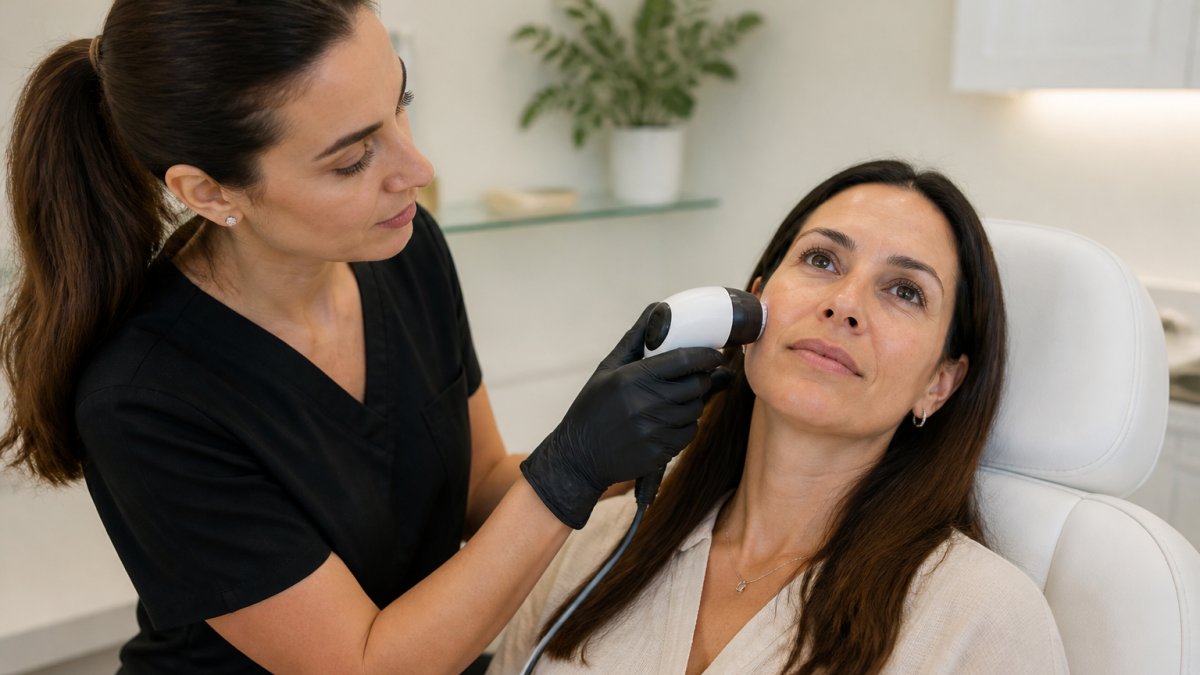
Every plan is customized to your skin and your goals.
Ask a qualified provider to walk you through the assessment, treatment planning and aftercare options before any device is chosen.
Explore the full services menu to see how laser skin rejuvenation fits with our other treatments.
Frequently Asked Questions
What type of laser is best for brown spots?
There is no single best device for every spot. Q-switched and pigment-targeting lasers suit discrete, well-defined sun spots and age spots, while fractional lasers are often chosen when pigment sits deeper or comes with texture concerns. IPL, which is light-based rather than a true laser, can work well on flat sun damage across broader areas. The right laser for brown spots depends on pigment depth, your skin tone, and how much downtime you can accept, so a skin assessment should come before any device is chosen.
How do I know which laser is right for my skin type?
Your Fitzpatrick skin type and recent sun exposure guide the choice. Lighter skin tones generally tolerate a wider range of wavelengths and higher settings. Deeper skin tones carry a higher risk of discoloration from heat-based devices, so providers favor longer wavelengths, conservative settings, and thorough cooling. Tell your provider about any recent tanning, self-tanner, or sunless products, since those change how your skin responds. A consultation with a qualified professional is the only reliable way to match a device to your skin.
Can laser treatment make brown spots worse?
It can if the device or settings do not match your pigment type or skin tone. Heat-based treatments on melasma or on recently tanned skin can trigger post-inflammatory hyperpigmentation, leaving spots darker than before. That risk is why a provider should confirm what kind of pigmentation you have before treating, and why sun protection before and after matters. Ask what cooling the device uses and what the plan is if your skin reacts. Honest providers will discuss this risk rather than promise a perfect result.
How many laser treatments are needed for brown spots?
Most plans involve a series rather than a single session, often three to six treatments spaced several weeks apart, though the exact number depends on pigment depth, the device used, and how your skin responds. Some spots fade noticeably after one session, while deeper pigment or melasma needs a longer, gentler approach. Ask your provider for a realistic estimate and a review point partway through the series, so you can judge progress before committing to the full plan.
Brown spots rarely fade on their own, and the wrong device can make them worse. The fix is a plan built on your actual skin, not a guess. Get started with Lumyn Medspa and book a skin assessment to find the laser that fits your pigment, your skin tone, and your life.