 how-to
Cryotherapy for Muscle Soreness Recovery: What Works
Last Updated: October 29, 2026
Quick Summary
Cryotherapy for muscle soreness uses controlled cold exposure to reduce pain, swelling, and stiffness after hard training by slowing surface blood flow and calming overactive nerve endings. Research supports it for short-term pain relief and perceived soreness, though evidence for faster muscle function recovery or strength gains is weaker.
- Whole-body cryotherapy sessions run two to four minutes in a chamber chilled with liquid nitrogen vapor.
- Keep an ice or gel pack on one spot for about 10 to 20 minutes with skin protection.
- Cold-water immersion usually runs 10 to 15 minutes at cold but tolerable temperatures.
- Routine cold right after strength training may blunt some of the adaptation you are training for.
- Stop if you notice numbness that does not fade, burning, heavy shivering, or dizziness.
Table of Contents
- How Cold Therapy Eases Muscle Soreness After Exercise
- Whole-Body Cryotherapy for Sore Muscles: What to Expect
- Cryotherapy vs. Ice Packs for Recovery: Which to Choose
- How Long to Use Cold Therapy for Sore Muscles
- Cryotherapy Risks and Side Effects to Screen For
- Recovery Trade-Offs: When Cold Therapy Works Against You
- Planning Your Recovery Session at Lumyn Medspa
- Frequently Asked Questions
How Cold Therapy Eases Muscle Soreness After Exercise
Cryotherapy for muscle soreness recovery is the use of controlled cold exposure to reduce pain, swelling, and stiffness after hard training. Cold slows blood flow at the surface and calms overactive nerve endings, which is why a sore leg feels better fast.
What Happens in the Muscle After a Hard Session
Hard exercise, especially eccentric exercise like downhill running or heavy lowering reps, creates tiny tears in skeletal muscle fibers. That sets off exercise-induced muscle damage and low-grade inflammation. Delayed-onset muscle soreness, the ache that peaks a day or two later, follows (Time course of muscle soreness following different types of exercise). Cold exposure narrows surface blood vessels, which can ease limb swelling and take the edge off pain.
Where the Evidence Is Strong and Where It Thins Out
The science is mixed. Clinical research supports cold therapy for short-term pain relief and perceived soreness reduction. The case gets weaker for faster muscle function recovery or real gains in strength. Study protocols differ wildly in water temperature, treatment duration, and timing. Many businesses and athletes find cold helps them feel better; whether it speeds true tissue repair is still debated.
Whole-Body Cryotherapy for Sore Muscles: What to Expect
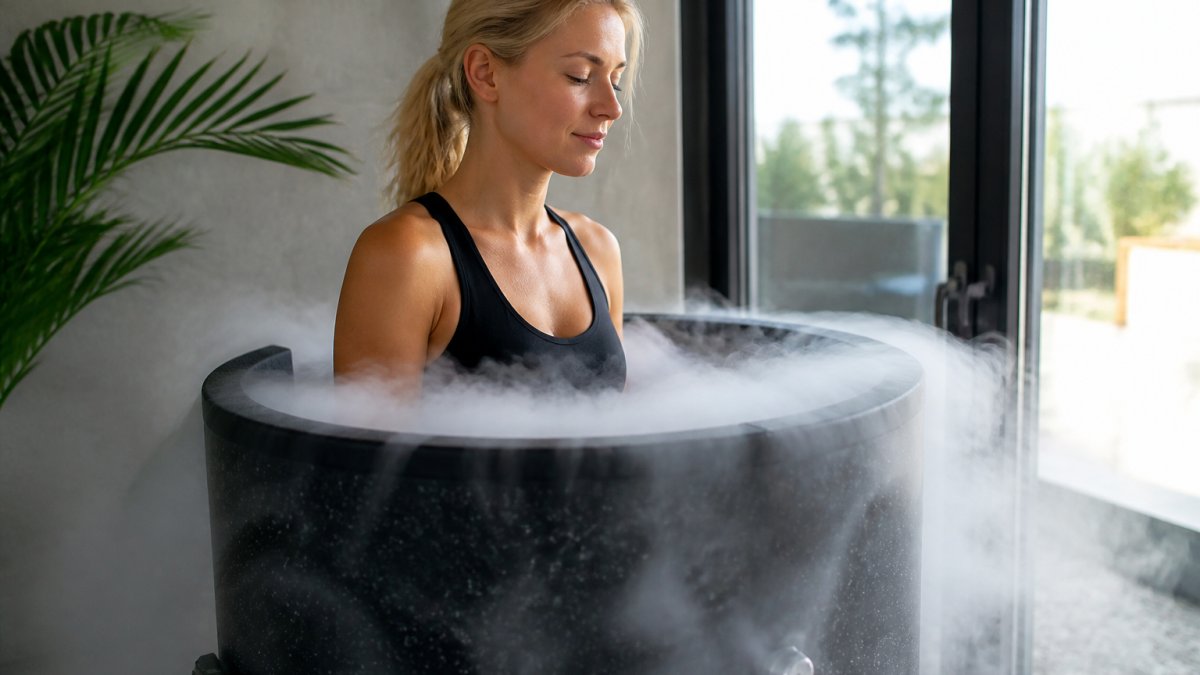
Whole-body cryotherapy places you in a chamber chilled with liquid nitrogen vapor for two to four minutes. You wear gloves, socks, and protective coverings. Sessions are short, and you step out quickly. It is a different experience from an ice bath: colder air, shorter time, no water.
Here is what the session looks like in practice:
- A team member checks your health history and screens for contraindications
- You remove metal jewelry and dry your skin fully
- You enter the chamber in protective clothing and stand or slowly rotate
- The session runs two to four minutes at very cold air temperatures
- You warm up gradually afterward
Do not expect instant proof of faster recovery. For local options and costs, see this Cryotherapy San Antonio provider review.
Cryotherapy vs. Ice Packs for Recovery: Which to Choose
The right choice depends on three things: where the soreness is, what kind of training you did, and what you can actually access. Most ranking guides list the methods but stop short of telling you how to pick.
Start With the Location and Size of the Soreness
- One joint or a small patch (knee, elbow, calf knot, a single sore spot): an ice pack or gel pack wins. You get direct control, targeted cold, and the lowest cost. A bag of frozen peas wrapped in a thin towel works as well as a commercial pack.
- Both legs or the whole lower body after a long run, ride, or leg day: cold-water immersion is the practical choice. It surrounds the tissue evenly, which a pack cannot do.
- Full-body soreness or a need for speed: whole-body cryotherapy suits people who want a dry, two-to-four-minute session and can tolerate extreme cold air. It is the least targeted option and the most dependent on facility access.
Match the Method to the Training
Eccentric-heavy work, downhill running, heavy lowering reps, sprinting, produces the most delayed-onset muscle soreness, and that is where cold therapy is most often used. For a single sore muscle group, local cold is enough. For systemic fatigue after a long endurance session, immersion or whole-body exposure fits better. If your soreness is mild and you are not limited in daily movement, passive recovery and sleep may be all you need; cold is a tool for when soreness is interfering, not a mandatory step.
A Side-by-Side Comparison
| Method | Best For | Typical Duration | Temperature Guidance | Watch For |
|---|---|---|---|---|
| Ice or gel pack | Small, targeted areas | 10-20 minutes | Cold enough to feel intense but not painful; always over a thin cloth | Frostbite or cold burn on bare skin |
| Cold-water immersion | Whole legs, post-run | 10-15 minutes | Cold but tolerable; many practitioners use roughly 50-59°F | Numbness, heavy shivering |
| Whole-body cryotherapy | Full-body, quick session | 2-4 minutes | Very cold dry air, facility-controlled | Cold shock, dizziness |
Access and Cost Realities
Ice packs are the cheapest and most available option, you can use them at home with no appointment. Cold-water immersion needs a tub or a facility with a plunge pool. Whole-body cryotherapy requires a clinic visit and is the highest-cost, highest-friction option. If you are choosing purely on convenience and control, local cold wins; if you want a fast full-body session and have access, whole-body cryotherapy is the fit. You can also compare TriaWave Microcurrent Therapy as an alternative recovery modality at the same medspa.
How Long to Use Cold Therapy for Sore Muscles
There is no single correct number, but general guidance is consistent. Keep direct cold on one spot to about 10-20 minutes at a time, with skin protection. Cold-water immersion usually runs 10-15 minutes. Whole-body cryotherapy sessions are much shorter, at two to four minutes. Repeat a few times in the first day or two after a hard session, then taper as soreness fades.
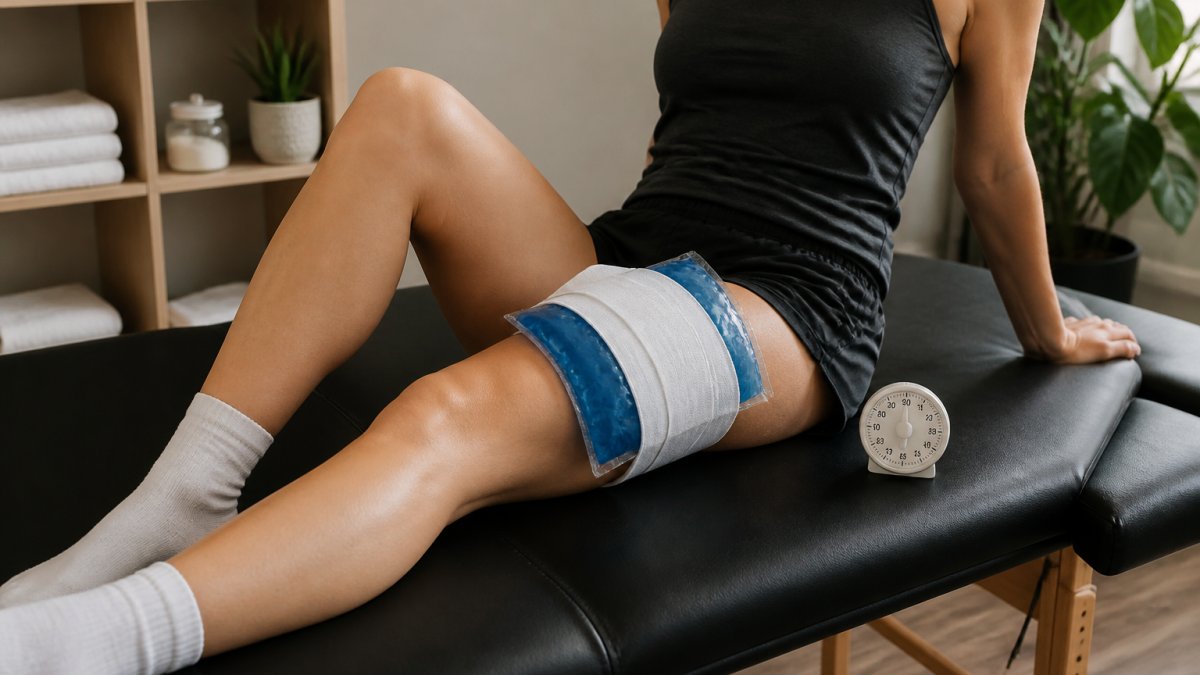
Watch out: leaving an ice pack on bare skin far longer than recommended can cause cold burns. Always wrap the pack in a thin cloth.
A Simple Protocol by Method
Use this as a starting point, not a rigid rule:
- Ice or gel pack: 10-20 minutes, every few hours, skin protected
- Cold-water immersion: 10-15 minutes at cold but tolerable water temperature
- Whole-body cryotherapy: 2-4 minutes per session, follow staff guidance
- Timing: use within the first day or two after intense training, then reduce
Stop if you feel numbness, burning, or heavy shivering. Warm up slowly.
Cryotherapy Risks and Side Effects to Screen For
Cold therapy is generally low-risk for healthy adults, but the safety details are where most guides get vague. This section covers warning signs that mean stop.
Who Should Get Medical Clearance First
Talk to a qualified professional before any cold treatment if any of these apply:
- Poor circulation or a history of blood clots, cold further narrows blood vessels and can worsen peripheral circulation.
- Heart or blood pressure conditions, whole-body cold triggers a sudden cardiovascular response, including a rise in blood pressure and heart rate.
- Raynaud's phenomenon or cold allergy (cold urticaria), cold can trigger painful vasospasm or hives.
- Open wounds, broken skin, or active infection in the treatment area.
- Pregnancy, unless cleared by a doctor.
- Diabetes with peripheral neuropathy, reduced sensation means you may not feel a cold burn developing.
If any of these apply, do not self-treat. Get clearance and adjust the plan.
Warning Signs to Stop Immediately
Stop the session and warm up gradually if you notice:
- Numbness that does not fade within a few minutes of removing the cold
- Burning, stinging, or pain rather than a dull ache
- Heavy, uncontrollable shivering
- Dizziness, lightheadedness, or nausea (more common with whole-body sessions)
- Skin that turns white, waxy, or hard, a possible sign of cold injury
Skin-Protection Practices
- Never place an ice pack directly on bare skin. Wrap it in a thin cloth or towel.
- Keep direct cold on one spot to about 10-20 minutes at a time.
- Check the skin every few minutes during local cold; you should see pink, not white or blotchy skin.
- Dry skin fully before whole-body cryotherapy, and remove metal jewelry.
- Do not use cold therapy on numb skin or skin you cannot feel.
If skin stays white, waxy, or numb after you remove the cold, or if you feel faint during a whole-body session, stop and seek medical advice. Cold burns and cold shock are uncommon but real.
How We Screen Before a Session
We review health history, ask about the conditions above, and check the treatment area before any cold exposure. If a client is unsure, we default to the least aggressive method or refer for medical clearance. Screening is not a formality, it is the step that keeps a recovery tool from becoming an injury.
Recovery Trade-Offs: When Cold Therapy Works Against You
Cold is not always your friend. If your goal is building muscle and strength, routine cold exposure right after strength training may blunt some of the adaptation you are training for. Cold can reduce inflammation, and some inflammation is part of the signal that tells muscle to grow. Save aggressive cold work for when soreness is limiting you, not after every lift.
A common mistake is overusing cold as a crutch. Use it to manage pain, then let the body do its repair work. When cold therapy is counterproductive, consider LED Light Therapy as a non-cold recovery option.
Planning Your Recovery Session at Lumyn Medspa
A recovery plan works best when it matches your training and your body. You can check Memberships to see whether recurring recovery sessions can be bundled. You can review the Cryo T-Shock Treatment offered at Lumyn Medspa to see the service and book a session. For clinical context on how cold affects tissue, see peer-reviewed sports medicine research on cold-water immersion.
Frequently Asked Questions
Does cryotherapy actually help with muscle soreness after a workout?
Cold therapy can reduce the soreness you feel in the day or two after hard exercise, and it can take the edge off swelling. What it does less reliably is speed up actual muscle repair. Studies on cryotherapy for muscle soreness recovery show modest drops in perceived soreness and fatigue, especially after eccentric or strenuous exercise. Treat it as a comfort tool that helps you move and sleep better, not a shortcut that rebuilds tissue faster.
Is whole-body cryotherapy better than an ice pack for sore muscles?
Not automatically. Whole-body cryotherapy for sore muscles exposes more skin to extreme cold for two to four minutes, which some people find easier than sitting with an ice pack for 15 minutes. Ice packs and cold-water immersion, by contrast, cool the specific area that hurts and cost far less. If one knee or shoulder is the problem, local cold wins on practicality. If you want a full-body reset after intense training, a chamber session may suit you better.
How long should I use cold therapy on sore muscles?
For an ice or gel pack, keep it on for 10 to 15 minutes at a time, with the pack wrapped in a thin towel, and leave at least an hour between applications. Cold-water immersion typically runs 10 to 15 minutes at 10 to 15 degrees Celsius (50 to 59 Fahrenheit). Whole-body sessions last two to four minutes. Stop sooner if skin goes numb, stings sharply, or turns bright red.
Are there risks to using cryotherapy for muscle recovery?
Yes, and they are worth screening for. Cryotherapy risks and side effects include skin burns and frostbite from prolonged direct cold, numbness, and a short-term blood pressure rise. People with uncontrolled high blood pressure, heart conditions, Raynaud's phenomenon, cold urticaria, or neuropathy should talk to a physician first. Never use cold therapy on broken skin, and never sit in a cryo chamber alone or without trained supervision. A consultation at Lumyn Medspa can help you decide if it fits your health history.
Sore muscles after hard training are frustrating, and guessing at the right recovery method wastes time. At Lumyn Medspa, we build a plan around your health history, your training, and your goals, using Cryo T-Shock treatment, customized treatment plans, and a full range of wellness services. Get started with Lumyn Medspa and recover smarter, not harder.