 blog
Fractional Laser vs IPL for Hyperpigmentation
Last Updated: October 26, 2026
Quick Summary
In the fractional laser vs IPL choice for hyperpigmentation, IPL treats pigment broadly across the surface while fractional laser creates controlled columns of injury deep into the skin to force a repair response. IPL suits flat sun-driven spots with minimal downtime, while fractional laser reaches dermal pigment and acne marks but needs a series and more recovery.
- IPL light energy absorbs into melanin, and spots darken and flake away over roughly a week to ten days.
- Fractional laser creates microscopic treatment zones at a controlled depth, prompting collagen rebuilding and pigment turnover.
- Expect redness and a sunburn-like sensation for the first day or two after fractional laser, with pinkness fading over days 3-5.
- Melasma is heat-sensitive, so the same energy that clears a sun spot can irritate it and make it darker.
- On deeper skin tones, fractional laser with the right wavelength is generally safer since it can be tuned to protect melanin.
Table of Contents
- How Fractional Laser and IPL Treat Hyperpigmentation Differently
- IPL for Hyperpigmentation: What It Does Well and Where It Falls Short
- Fractional Laser for Hyperpigmentation: Depth, Precision and Limits
- Fractional Laser Downtime: What Recovery Actually Looks Like
- IPL for Melasma: Why Caution Matters
- Matching the Treatment to Your Skin Type and Condition
- Book a Consultation to Build Your Hyperpigmentation Plan
- Frequently Asked Questions
How Fractional Laser and IPL Treat Hyperpigmentation Differently
Fractional laser vs IPL for hyperpigmentation comes down to one core distinction: IPL treats pigment broadly across the surface, while fractional laser creates controlled columns of injury deep into the skin to force a repair response.
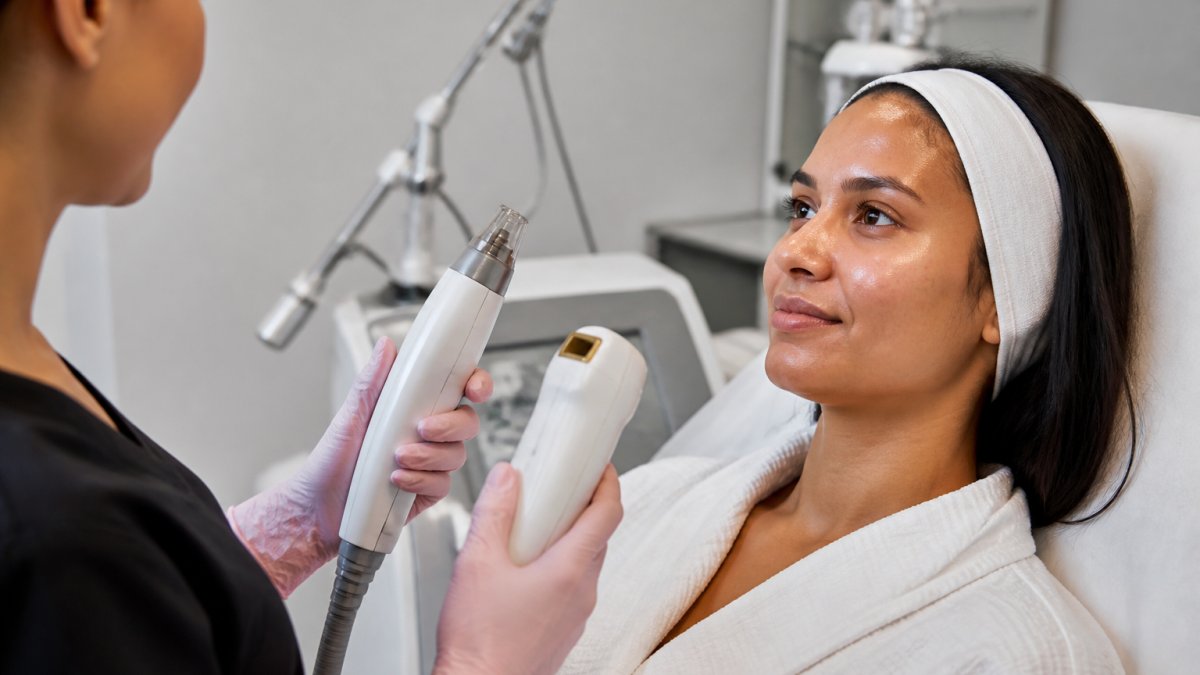
IPL is intense pulsed light, a broad-spectrum light device that targets melanin near the skin's surface. Fractional laser delivers heat in narrow, evenly spaced columns, leaving untreated skin between them to speed healing. One works on the surface layer. The other reaches the dermis, where stubborn pigment and sun damage often sit.
That single difference shapes everything else: how many sessions you need, how much downtime you face, and which types of hyperpigmentation each device can realistically clear.
Below, we break down where each option performs, where it falls short, and how to match the choice to your skin.
IPL for Hyperpigmentation: What It Does Well and Where It Falls Short
IPL performs best on flat, sun-driven pigment: freckles, sun spots, and the diffuse discoloration left by years of UV exposure. You can explore our laser skin rejuvenation service to check availability and next steps. The light energy absorbs into melanin, and those spots darken and flake away over roughly a week to ten days.
Where IPL wins:
- Speed and comfort. Sessions run short, and most patients describe the sensation as a quick snap against the skin.
- Minimal downtime. Many people return to normal activity the same day, with mild pinkness that fades within hours to a couple of days.
- Broad coverage. A single pass treats a wide area of the face, neck, or chest evenly.
Where it falls short: IPL is a surface-level device, so pigment sitting deeper in the dermis often survives treatment. It also struggles with melasma, where heat can trigger a flare rather than clear it. And on darker skin tones, the risk of burns or post-inflammatory hyperpigmentation rises, because IPL cannot always distinguish between the pigment you want gone and the melanin you want to keep.
Fractional Laser for Hyperpigmentation: Depth, Precision and Limits
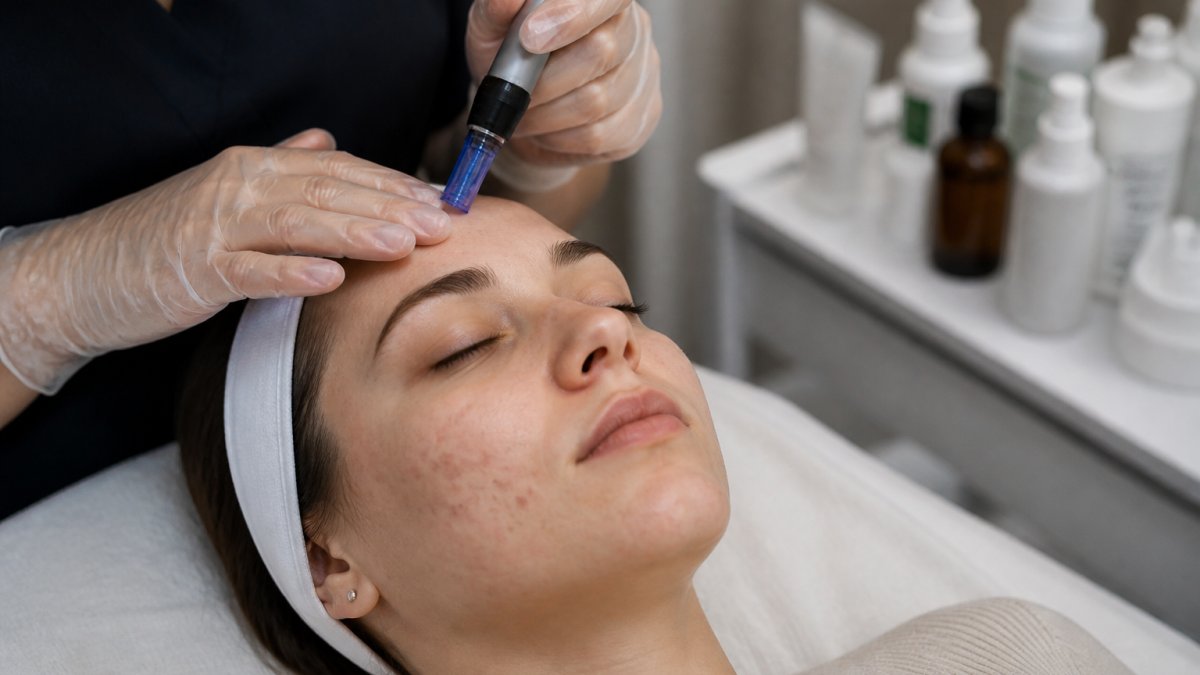
Fractional laser for hyperpigmentation reaches where IPL cannot. See our laser skin resurfacing service to check availability and book. The device creates microscopic treatment zones at a controlled depth, and the body responds by rebuilding collagen and turning over pigmented cells (pubmed.ncbi.nlm.nih.gov). Because the columns are fractional, untreated skin bridges the gaps and recovery moves faster than with fully ablative resurfacing.
What it handles well:
- Dermal pigment that surface light cannot reach
- Post-inflammatory hyperpigmentation from acne, which often sits deeper than sun spots
- Texture and tone together, since collagen remodeling also softens fine lines and scarring
The limits matter just as much. Fractional laser is not a single procedure. Most patients need a series, spaced weeks apart, and results build gradually. It carries more downtime than IPL. And on darker skin tones, the wrong device or wrong settings can cause burns or new pigmentation, which is why provider selection matters more than the brand name on the machine.
Fractional Laser Downtime: What Recovery Actually Looks Like
Fractional laser downtime is real, and anyone who tells you otherwise is selling something. Expect redness and a sunburn-like sensation for the first day or two, followed by a few days of visible pinkness and mild swelling. Our guide to managing redness after laser treatment covers aftercare for calming post-laser erythema. Some patients see light bronzing or flaking as treated pigment surfaces.
A realistic timeline:
- Days 1-2: Redness, warmth, tightness. Gentle cleansing and heavy moisturizing.
- Days 3-5: Pinkness fades, flaking begins. Makeup is often acceptable by the end of this window, depending on depth.
- Week 1-2: Skin looks close to normal, though sensitivity lingers.
IPL for Melasma: Why Caution Matters
IPL for melasma is where we tell most patients to slow down. Melasma is heat-sensitive. The same energy that clears a sun spot can irritate melasma and make it darker, because the condition is driven partly by inflammation and hormonal triggers, not just sun exposure. Managing this delicate balance often requires shifting focus toward topical interventions like dark spot correctors that stabilize pigment production without the thermal risks associated with light-based therapies.
That does not make IPL useless for melasma, but it makes it a narrow tool. In some patients, gentle, low-fluence settings help. In others, the treatment backfires. A provider who treats melasma needs to recognize the pattern on your skin before reaching for any device, and often a topical plan comes first.
The honest answer: melasma is one of the hardest pigment conditions to treat, and anyone promising a quick fix with a single IPL session is overselling.
Matching the Treatment to Your Skin Type and Condition
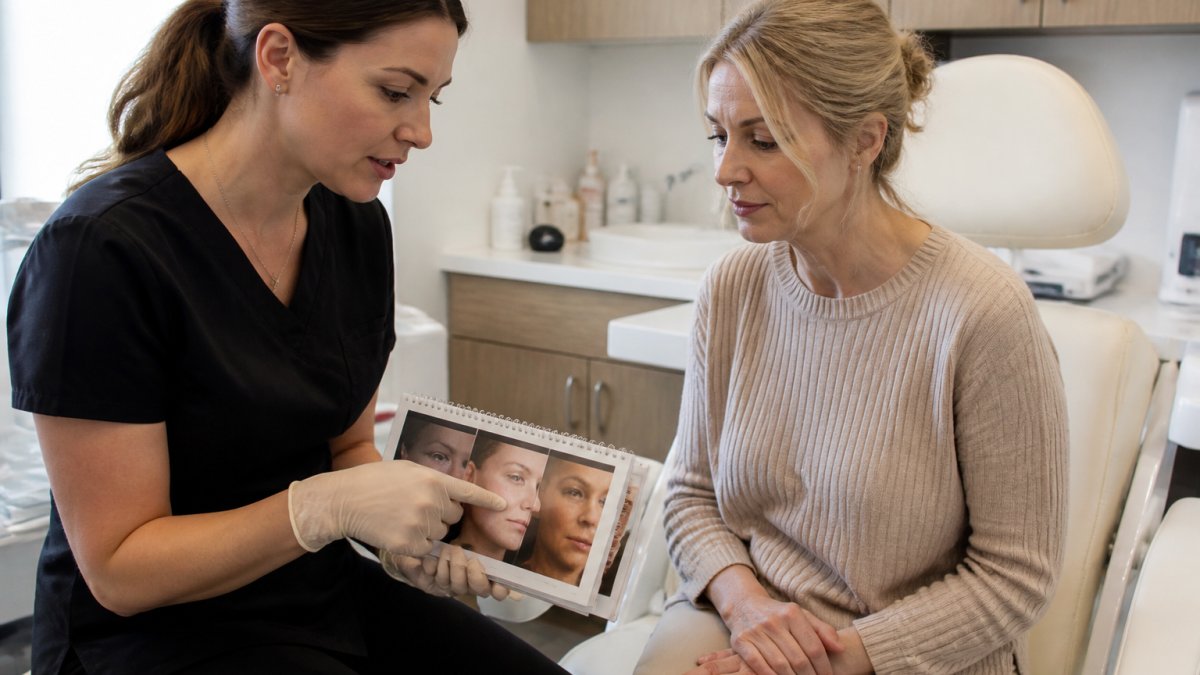
Skin type decides more of this than the device brochure does. On lighter skin with sun-driven spots, IPL is often the efficient first choice. On deeper skin tones, fractional laser with the right wavelength is generally safer, since it can be tuned to protect melanin-rich skin.
A simple way to frame the decision:
| Your situation | Likely better fit | Why |
|---|---|---|
| Sun spots, lighter skin | IPL | Surface pigment, low downtime |
| Acne-related dark marks | Fractional laser | Reaches dermal pigment |
| Melasma | Neither as a first step | Heat can worsen it |
| Deeper skin tones | Fractional laser, carefully | Tunable to protect melanin |
| Texture plus pigment | Fractional laser | Remodels collagen too |
If you have melanin-rich skin, read our guide to safe laser treatments for dark skin before booking anything.
Book a Consultation to Build Your Hyperpigmentation Plan
No article can tell you which device fits your face. Pigment type, skin tone, medical history, and how your skin has responded to past treatments all shape the plan, and that requires an in-person assessment. Before your visit, learn how to prepare skin for laser treatments with a timeline-based guide.
At Lumyn Medspa, we build customized treatment plans around your skin rather than a single device, using advanced technology like the Candela Nordlys® platform and a full range of services from injectables to wellness management.
Get started with Lumyn Medspa.
Frequently Asked Questions
Is IPL or fractional laser better for hyperpigmentation?
Neither wins outright. IPL for hyperpigmentation works well on flat, sun-driven dark spots and freckling across larger areas, with minimal downtime. Fractional laser for hyperpigmentation reaches deeper and suits stubborn pigment, acne scarring and texture concerns, but recovery takes longer. A provider should assess your skin type, the cause of the pigment and your schedule before recommending one.
Can IPL make hyperpigmentation worse?
It can if the treatment is applied to the wrong skin type or the wrong condition. IPL for melasma is risky because heat and light can trigger rebound darkening, particularly in deeper skin tones. That is why a patch test and an honest skin assessment matter more than the device itself. A qualified provider will tell you when IPL is not the right choice.
How long does fractional laser downtime last compared with IPL?
Fractional laser downtime typically runs several days to about a week, with redness, mild swelling and a bronzed or flaking look as skin renews. IPL usually causes redness for a few hours to a couple of days. Plan fractional sessions around your calendar, and ask your provider for aftercare instructions that suit your skin.
Is fractional laser safe for darker skin tones?
It can be, but device choice and settings matter enormously. Some wavelengths carry a higher risk of post-inflammatory hyperpigmentation in deeper skin tones, so a provider experienced with your skin type should select the technology and test a small area first. Never book a treatment without a consultation and patch test.