 How-to
Benefits of Preventative Botox in Your 40s
Last Updated: November 19, 2026
Quick Summary
Preventative botox in your 40s softens dynamic wrinkles by temporarily reducing the muscle contractions that crease your skin, so forehead lines, frown lines, and crow's feet appear softer. Results typically last three to four months, and conservative dosing keeps your expression natural. It softens movement-driven lines but does not restore volume or erase static lines.
- Botox blocks the nerve signal that tells a facial muscle to contract, softening the lines above it.
- Results are temporary, typically lasting three to four months, so maintenance is ongoing.
- Classify your lines as dynamic, mixed, or static before booking, since Botox alone will not erase static lines.
- Treatment is often repeated every 12 to 16 weeks, adjusted to how your result fades.
- Do not judge your result on day one; effects develop over several days to two weeks.
Table of Contents
- What Preventative Botox Means in Your 40s
- How Facial Aging Changes in Your 40s
- The Real Benefits of Preventative Botox for Forehead Lines, Frown Lines, and Crow's Feet
- Should I Get Botox at 40? A Decision Guide
- Is Preventative Botox Worth It? Weighing Evidence, Cost, and Expectations
- How Often Should You Get Botox in Your 40s?
- Botox at 40 Before and After: What Results Realistically Look Like
- Risks, Aftercare, and When to Call Your Provider
- Frequently Asked Questions
What Preventative Botox Means in Your 40s
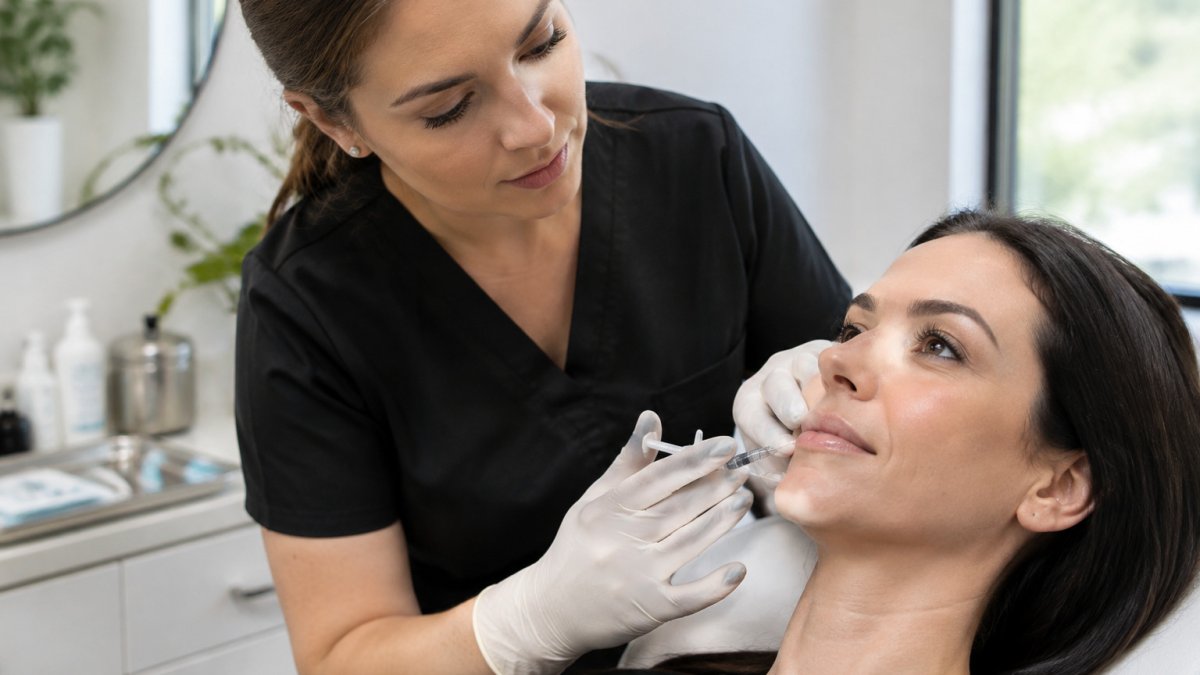
Preventative Botox is the use of botulinum toxin injections to soften dynamic wrinkles, the lines that form from repeated facial movement, before they settle into static lines at rest.
The logic is straightforward. Every time you raise your brows or squint, the muscles beneath the skin crease it. In your 40s those creases start holding their shape after the muscle relaxes.
How Botulinum Toxin Interrupts Dynamic Wrinkles
Botulinum toxin blocks the nerve signal that tells a specific facial muscle to contract. With less contraction, the skin above it stops folding into the same groove, and existing lines appear softer. The effect is temporary because the body gradually restores normal nerve signaling, which is why repeat treatments are part of the plan.
How Facial Aging Changes in Your 40s
Facial aging in your 40s is a volume story as much as a line story. Collagen and elastin production slows, the fat pads that give cheeks their lift begin to descend, and skin loses some of its spring.
That combination matters for treatment planning. Botox addresses the muscle-driven part of the equation. For a fuller picture of what changes beneath the surface, our guide on how aging affects facial volume and wrinkles walks through the anatomy.
The Real Benefits of Preventative Botox for Forehead Lines, Frown Lines, and Crow's Feet
The benefits of preventative Botox in your 40s come down to three treatment areas. Forehead lines respond to relaxing the frontalis muscle. Frown lines between the brows respond to the muscles that pull the brow inward. Together, these areas show how non-surgical Botox procedures can address expression lines across the forehead, brow, and eye area.
What most guides miss is that dosing for these areas is not interchangeable. A conservative dose in the forehead keeps expression intact; too much flattens it. The goal is muscle relaxation that still lets you raise your brows and smile naturally. Subtle results read as rested, not treated.
Should I Get Botox at 40? A Decision Guide
Should you get Botox at 40? The honest answer is that it depends on what your face is already doing and what you want to change. Starting in your 40s is common and reasonable, but it is a different decision than starting at 30, because by your 40s some lines have already converted from movement-only to static. That changes what Botox can and cannot do for you.
Use this age-specific framework to decide.
Step 1: Classify Your Lines
Look in a mirror with a neutral face, then repeat each expression.
- Dynamic only: the line appears when you raise your brows, frown, or squint, and disappears at rest. Botox is well suited to this pattern.
- Mixed: the line is faint at rest but deepens sharply with movement. Botox softens the movement-driven component; the resting line may need a different treatment.
- Static: the line is visible at rest and does not change much with expression. Botox alone will not erase it. A provider may suggest combining neuromodulator treatment with skin resurfacing or fillers, depending on the cause.
If most of your lines are static, preventative Botox is the wrong framing for your goals. You are treating existing lines, not preventing new ones.
Step 2: Match Treatment to Your Goal
- Softer lines in photos and in the mirror: Botox is a reasonable first step for dynamic forehead lines, frown lines, and crow's feet.
- A more rested look without looking treated: conservative dosing is the right approach; discuss starting low and adjusting at follow-up.
- Correction of deep resting lines, lost volume, or sagging: Botox is not the tool. Ask about the alternatives before you book.
Step 3: Check Suitability
Botox is not appropriate for everyone. You should not receive treatment if you are pregnant or breastfeeding, have a known allergy to the product or its components, or have an active infection at the injection site. Use caution and get medical clearance if you have a neuromuscular condition such as myasthenia gravis or Lambert-Eaton syndrome, or if you take medications that affect neuromuscular transmission.
Step 4: Set Realistic Expectations Before You Book
- Results are temporary, typically three to four months.
- Maintenance is ongoing; there is no finish line.
- Botox softens movement-driven lines; it does not resurface skin, restore volume, or lift sagging tissue.
Step 5: Choose the Right Provider
Botox is a prescription product and should be administered by a licensed medical professional working in an appropriate setting (the FDA). Ask who will perform the injection, what product they use, and what follow-up is included. A provider who promises you will never develop a wrinkle is overselling; a provider who explains limitations and offers a conservative starting plan is giving you a realistic picture.
If you are weighing the broader age-40 approach, our guide to preventative aesthetic care for age 40 covers the surrounding decisions.
Is Preventative Botox Worth It? Weighing Evidence, Cost, and Expectations
Is preventative Botox worth it? The answer depends on which claim you are buying. The evidence for softening existing dynamic wrinkles is solid. The evidence for preventing wrinkles that have not formed yet is weaker and largely observational, so any provider who promises you will never develop a line is overselling. A balanced way to think about it is that Botox reliably reduces how often a muscle creases the skin, which may slow the deepening of movement-driven lines, but it does not stop collagen loss, volume shifts, or sun damage.
What the Evidence Supports and What It Does Not
- Established: botulinum toxin temporarily reduces the contraction of treated muscles, softening dynamic lines and reducing the appearance of existing frown lines, forehead lines, and crow's feet.
- Less certain: that regular treatment in your 40s prevents static lines from ever forming. This is a reasonable hypothesis supported by how the product works, but it is not proven by large long-term trials.
- Not supported: that Botox prevents facial aging overall, replaces lost volume, or eliminates the need for other treatments.
If your goal is softer lines now, the value case is straightforward. If your goal is permanent prevention, the value case is speculative.
The Cost Mechanics You Should Understand
Botox pricing depends on several variables:
- Units per area. Forehead lines, frown lines, and crow's feet each require a different number of units, and the total depends on your muscle strength and line depth.
- Price per unit. Providers set their own per-unit rate. Ask for the per-unit quote and the estimated units for your treatment plan.
- Frequency. Most people repeat treatment every three to four months. Over a year, that is roughly three to four visits, so the annual cost is the per-visit cost multiplied by the number of visits, not the single-visit price.
Dose choices can affect how often treatment is needed, so the annual total may vary depending on your plan and the interval between visits.
A Practical Value Framework
Ask yourself these questions before committing to a maintenance plan:
- What am I trying to change? If the answer is dynamic lines that bother you, the value is measurable. If the answer is a different face, Botox will not deliver it.
- Can I sustain the schedule and the budget? Maintenance is ongoing. Plan for the annual cost, not the first visit.
- Am I comfortable with temporary results? The effect fades; that is the design, not a failure.
Pricing depends on the treatment plan and the number of units required. Please contact Lumyn Medspa through its website for current pricing or a quote.
For readers comparing timing, the parallel guide on whether preventative Botox is worth it in your 30s covers the same trade-offs at an earlier stage.
How Often Should You Get Botox in Your 40s?
Treatment is often repeated every few months. The interval depends on factors such as the dose used and how strong the treated muscles are, so your provider should set your schedule individually.
Two things shorten the interval in practice. Higher muscle strength in the treated area clears the effect faster, and a lower starting dose may wear off sooner. Planning for ongoing maintenance also means planning the budget, and our breakdown of the hidden costs of long-term injectable maintenance is worth reading before you commit.
| Question | Short answer | What to plan for |
|---|---|---|
| How soon do results show? | Several days to two weeks | Do not judge the result on day one |
| How long do results last? | Roughly three to four months | Book the next visit before it fully fades |
| How often in your 40s? | Every 12 to 16 weeks | Adjust to how your result fades |
| When to stop? | Your choice, anytime | Muscles return to baseline over time |
Botox at 40 Before and After: What Results Realistically Look Like
Botox results typically show softer lines at rest rather than a new face, and your expressions should still work naturally. Your provider can set realistic expectations based on your goals.

What you should not expect is correction of static lines etched deeply into the skin, lifted jowls, or restored cheek volume. Those need different tools. A common mistake is judging results at day three, before the effect has fully developed.
Risks, Aftercare, and When to Call Your Provider
Common side effects include bruising at injection sites, mild swelling, and temporary headache.
General aftercare guidance commonly includes staying upright for a few hours and avoiding rubbing or massaging the treated areas. Follow the specific instructions your provider gives you.
Call your provider promptly for eyelid drooping, difficulty swallowing, vision changes, or signs of infection. If you are managing a reaction, our guide on how to manage side effects of anti-aging treatments covers what helps and what to avoid.
Choosing where to start in your 40s is the real decision, and it deserves a face-to-face assessment rather than a package price.
Frequently Asked Questions
Is preventative Botox a myth, or does it actually work?
The evidence for preventative Botox is more limited than some marketing suggests. Botulinum toxin is well established for softening dynamic wrinkles caused by muscle movement, and regular treatment can keep those lines from deepening over time. What is less certain is whether starting early permanently changes how skin ages. Most dermatologists frame it as a maintenance strategy rather than a guaranteed long-term prevention. A consultation with a qualified injector can help you set realistic goals for your skin.
Will I look older when Botox wears off?
No. When the effects fade, usually over three to four months, your muscles return to their prior activity and your face looks as it did before treatment. Some people feel they look older because they grew used to a smoother appearance. Others notice lines seem more visible simply because muscle movement resumes fully. There is no evidence that stopping Botox accelerates aging. If you discontinue, your skin returns to its natural baseline rather than a worse one.
How often should a 40-year-old get Botox?
Maintenance treatment intervals vary with your metabolism, dose, and the areas treated; your provider will recommend a schedule. Some people in their 40s find they can stretch to four or five months once a consistent schedule is established. Others need more frequent touch-ups. Your injector will adjust the interval based on how your muscles respond and how the results settle. Keeping a simple log of treatment dates helps you spot your personal pattern.
What should I know before getting Botox for the first time at 40?
Ask about the injector's credentials, confirm the product is FDA-approved, and be clear about your goals. Expect a consultation that covers your medical history, medications, and any neuromuscular conditions. Mild bruising or swelling is common and usually fades within days. Results appear gradually over one to two weeks, so give it time before judging. Skip alcohol and blood thinners for a few days beforehand if your provider advises it.