 comparison
Is Preventative Botox Worth It in Your 30s? A 2026 Guide
Table of Contents
- Preventative Botox vs. Corrective Treatment: What's the Real Difference?
- The Case for Starting in Your 30s: Benefits and Limitations
- How Much Does Botox Cost Per Unit? A Financial Breakdown
- Botox Longevity and Maintenance: Building a Realistic Schedule
- How to Choose a Qualified Injector: Safety and Credentials
- The Psychological Impact: Body Dysmorphia and Natural Results
- Conclusion: Is Preventative Botox Worth It for You?
- Frequently Asked Questions
Last Updated: September 29, 2026
Preventative Botox vs. Corrective Treatment: What's the Real Difference?
The difference between preventative Botox and corrective treatment comes down to timing, not product. Preventative Botox is neuromodulator treatment started while lines are still dynamic, meaning they appear only during facial expressions and fade when the face is at rest. Corrective treatment addresses static lines that remain visible even when muscles are relaxed. (Source: research on the long-term efficacy of neuromodulators for wrinkle prevention)
How Neuromodulators Target Dynamic Wrinkles
Neuromodulators work by temporarily blocking the nerve signals that tell specific facial muscles to contract. When those muscles move less, the skin above them creases less, which softens expression lines at the forehead, glabella, and crow's feet. Results typically appear within a few days, and the effect is temporary because the body gradually metabolizes the product.
When Prevention Becomes Correction
Prevention becomes correction once a line stays visible at rest. At that point, the wrinkle has moved from a muscle-movement problem to a skin-quality problem. Injectables can still help, but they often need to be combined with treatments that support collagen production and skin elasticity. That is why a dermatological consultation matters more than the label on the syringe.
The Case for Starting in Your 30s: Benefits and Limitations
Starting neuromodulators in your 30s can slow the transition from dynamic wrinkles to static lines, but it will not stop facial aging. Many patients in this age group use conservative dosing to soften expression lines while keeping a natural appearance. The goal is subtle results, not a frozen look.
How Much Does Botox Cost Per Unit? A Financial Breakdown
Botox pricing depends on three variables: the per-unit rate your provider charges, how many units your treatment areas require, and how often you need to re-treat. Because dosing varies by muscle strength and aesthetic goals, the total cost of a treatment plan is best confirmed at a consultation rather than estimated from a generic chart. That said, understanding the mechanics lets you walk into that consultation with realistic expectations instead of sticker shock.
The Three Numbers That Determine Your Annual Cost
Every neuromodulator budget reduces to the same equation:
Per-unit rate × units per session × sessions per year = annual cost
A few practical notes on each variable:
- Per-unit rate. This is set by the provider, not the manufacturer, and it varies widely by market and by clinic overhead. Some clinics bundle pricing by area instead of by unit, which can make comparison shopping harder, always ask which model they use.
- Units per session. Unit counts depend on muscle mass and how much movement you want to keep. A lighter dose in a smaller area costs less per visit but may need to be repeated sooner.
- Sessions per year. Most patients re-treat every three to four months, which works out to roughly three to four sessions annually. Someone with a faster metabolism or stronger muscles may land at the higher end.
The Long-Term ROI Question Most Guides Skip
This is where the "is it worth it" decision actually gets made. Neuromodulators are a recurring expense, not a one-time purchase. If you treat three areas every three to four months, you are committing to a maintenance schedule, not a single procedure. The financial case for starting in your 30s only holds if you can sustain that cadence without stretching your budget.
| Factor | What It Affects | Why It Matters |
|---|---|---|
| Per-unit rate | Total treatment cost | Varies by provider and product |
| Units per area | Total treatment cost | Depends on muscle strength and goals |
| Maintenance frequency | Annual cost | Usually every 3-4 months |
| Treatment areas | Total treatment cost | More areas means more units |
| Combination treatments | Corrective-phase cost | Static lines often need skin-quality procedures too |
Botox Longevity and Maintenance: Building a Realistic Schedule
Botox longevity typically ranges from three to four months, though individual metabolism of product, muscle strength, and dosing all shift that window. A realistic maintenance schedule is built around your response, not a fixed calendar.
- First treatment: note the date results fully settle
- Track the fade: mark when movement starts returning
- Book before full return: most patients rebook around month three
- Adjust over time: dosage and interval often change as muscles adapt
How to Choose a Qualified Injector: Safety and Credentials
Ask to see the product vial and confirm the brand before injection. Reputable clinics welcome this. If a provider is evasive about what they are injecting or who is performing the treatment, that is your answer.
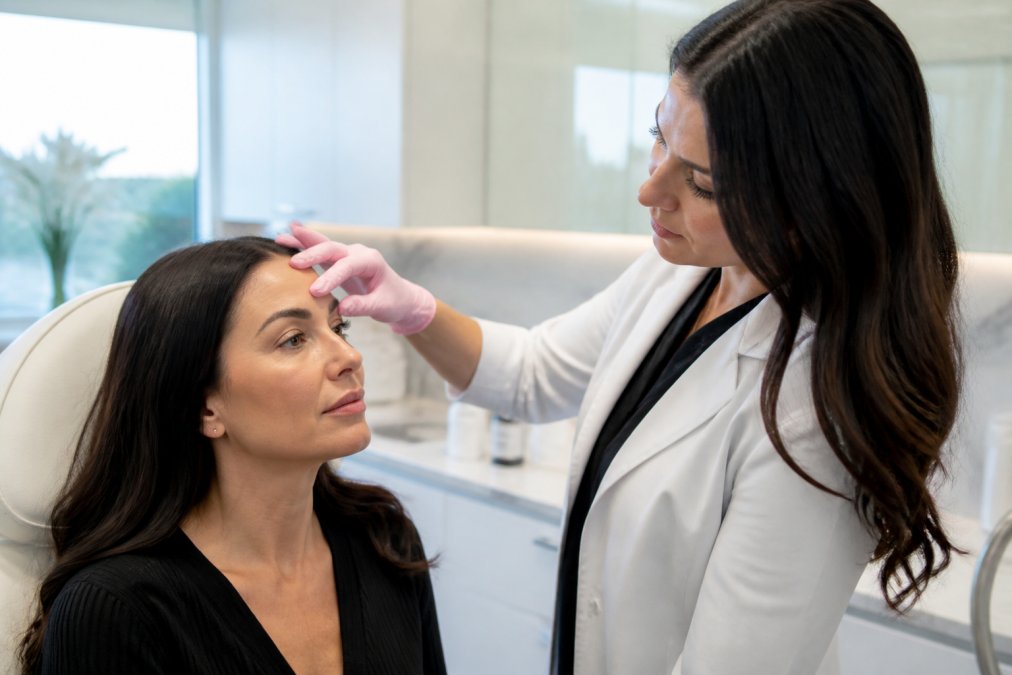
The American Academy of Dermatology and other professional bodies recommend treatment by licensed, trained medical providers, and patients can verify credentials through state medical boards. Conservative dosing is the other half of safety: a provider who starts low and adjusts protects your natural appearance.
The Psychological Impact: Body Dysmorphia and Natural Results
The psychological side of injectables gets far less attention than the needles, and that omission is a real gap in most guides. Starting aesthetic treatment in your 30s often coincides with a period of intense comparison, social media, workplace pressure, major life transitions, and that context shapes how people experience results. Understanding the mental-health dimension is not soft advice. It is part of deciding whether preventative Botox is worth it for you specifically.
What "Botox Dysmorphia" Actually Describes
The term is informal, not a clinical diagnosis, but it describes a recognizable pattern: a patient becomes fixated on perceived flaws and pursues repeated treatments that never produce lasting satisfaction. The cycle is self-reinforcing. Each appointment delivers a temporary sense of control, the feeling fades within weeks, and the next appointment becomes the fix. Over time, the goal shifts from "look refreshed" to "feel okay," and no dose achieves that.
Warning Signs Worth Taking Seriously
A common pattern practitioners watch for includes:
- Wanting more product to feel satisfied even after objectively good results
- Booking appointments earlier and earlier, or clinic-hopping when a provider declines to increase dosing
- Measuring self-worth against filtered or edited images rather than your own baseline
- Feeling anxious or distressed between appointments rather than simply noticing movement returning
- Difficulty accepting a provider's recommendation to wait, reduce, or skip a session
None of these alone means something is wrong. Together, they are worth raising with your provider, and possibly with a mental health professional.
Why Natural Results Protect More Than Your Appearance
Natural appearance should be the default, not an afterthought. Subtle results that soften lines while preserving facial expressions usually age better than aggressive dosing that erases movement entirely. There is also a psychological argument for conservatism: when results are subtle, you are less likely to scrutinize them daily, and less likely to escalate dosing to chase a feeling that product cannot deliver.
When to Pause Treatment
If you notice the warning signs above, the responsible move is not necessarily to stop forever, it is to pause and reassess. A good provider will support a slower schedule, a lower dose, or a break entirely. If appearance concerns are causing distress, avoidance of social situations, or persistent anxiety, that is a signal to talk to a mental health professional rather than to add another syringe to the plan.
Conclusion: Is Preventative Botox Worth It for You?
Preventative Botox in your 30s is worth it for patients who want to soften dynamic wrinkles early, understand that results are temporary, and can commit to a maintenance schedule. It is not worth it for anyone expecting permanent change, skin-quality improvement, or a substitute for sun protection and collagen-supporting treatments.
Frequently Asked Questions
Is it a good idea to start using Botox at 30 years old?
Starting preventative Botox at 30 can be a reasonable choice if you have visible dynamic wrinkles that bother you. The goal is to soften muscle contractions that create lines before they become static. However, it is not medically necessary for everyone. A consultation with a licensed provider can help you decide based on your facial anatomy, skin elasticity, and aesthetic goals.
How often do you need preventative Botox treatments?
Most patients schedule maintenance every three to four months. The exact interval depends on your metabolism, the product used, and the treatment area. Some people notice results fading sooner in areas like the glabella. Your injector can adjust the maintenance schedule over time. Consistent, conservative dosing often helps extend the interval between sessions compared to waiting for full muscle movement to return.
Will my facial muscles weaken if I start Botox in my 30s?
Neuromodulators temporarily reduce muscle activity, but they do not permanently weaken muscles. Over time, some patients notice that treated muscles appear less defined because they are not being used as much. This is reversible if you stop treatments. The effect on muscle strength is temporary and does not cause long-term damage when administered by a qualified injector using conservative dosing.
What are the common side effects of Botox injections?
Common side effects include temporary bruising, swelling, or redness at injection sites. Some patients experience a mild headache after treatment. Rarely, the product can spread to nearby muscles and cause temporary eyelid drooping or an uneven smile. These effects usually resolve within weeks. Choosing a qualified injector and following post-treatment instructions can lower your risk of complications.
How does preventative Botox differ from corrective treatment?
Preventative Botox is used on dynamic wrinkles that appear only when you make facial expressions. Corrective treatment addresses static lines that are visible at rest, often caused by years of muscle movement and collagen loss. Preventative care aims to slow wrinkle formation, while corrective care focuses on softening existing lines. Some patients need a combination of both approaches for the best outcome.
If you are weighing whether preventative Botox fits your goals, the deciding factor is a proper assessment, not a price list. Lumyn Medspa offers comprehensive injectable and skin rejuvenation services with customized treatment plans designed around your face and your budget. Book a consultation to discuss your options and get a plan built for you.