 How-to
What to Expect During a Facial Treatment: A Step-by-Step Guide
Quick Summary
A facial treatment is a noninvasive appointment, usually about an hour, that cleanses, exfoliates, and nourishes the skin's surface. It typically starts with a skin assessment and moves through cleansing, exfoliation, and often extractions, massage, and a mask.
- Standard facials typically last about 45 to 60 minutes, while longer sessions run 75 to 90 minutes.
- Your esthetician begins with a consultation and skin assessment that sets the plan for the session.
- Extractions can cause brief discomfort, so tell your esthetician right away if anything hurts.
- Avoid retinoids, strong acids and scrubs for 24 to 48 hours after treatment, and wear SPF 30 or higher daily.
Table of Contents
- What a Facial Treatment Is and What It Does
- How to Prepare Before Your Appointment
- A Timed Walkthrough of a Professional Facial
- Consultation and Skin Assessment (5-10 minutes)
- Cleansing and Makeup Removal (5-10 minutes)
- Exfoliation (5-15 minutes)
- Steam or Skin-Softening (5-10 minutes)
- Extractions and Pore Care (5-15 minutes)
- Facial Massage (5-15 minutes)
- Mask and Targeted Treatment (10-20 minutes)
- Serum, Moisturizer, and Sunscreen (5-10 minutes)
- Why Steps Get Skipped
- How Long a Facial Treatment Takes and What Affects It
- Risks, Discomfort and When to Speak Up
- Aftercare, Results Timeline and a Realistic Expectation of Change
- Booking Your First Facial at Lumyn Medspa
- Frequently Asked Questions
What a Facial Treatment Is and What It Does
Last Updated: November 18, 2026
Most people book a facial treatment hoping their skin will look clearer and feel refreshed.
A facial is a noninvasive treatment. It works on the surface of the skin and the pores, not beneath it.
Here is what most facials aim to do:
- Clear surface debris from pores and the skin's top layer
- Soften and refresh the skin's texture and tone
- Hydrate dry or dull areas with serums and moisturizers
The steps you receive depend on your skin needs. For deeper acne scarring that a facial alone may not address, you can read about the Sculptra for acne scars option and how it compares.
How to Prepare Before Your Appointment
Good preparation helps your esthetician get accurate results and keeps your skin comfortable during the session. Start a few days before your visit.
- Avoid harsh exfoliants such as scrubs, retinoids, or strong acids for several days beforehand
- Skip waxing or hair removal on the face for at least a day or two
- Arrive without makeup if possible, or bring a simple remover you can use
Wear comfortable clothing that does not need to be pulled over the face. Many clients also find it helpful to arrive a few minutes early so they can settle in before treatment begins.
A Timed Walkthrough of a Professional Facial
Most facials follow the same general order, but the total appointment is really a series of short blocks. Knowing the approximate duration of each block helps you plan your day and understand why your esthetician may skip or shorten a step.
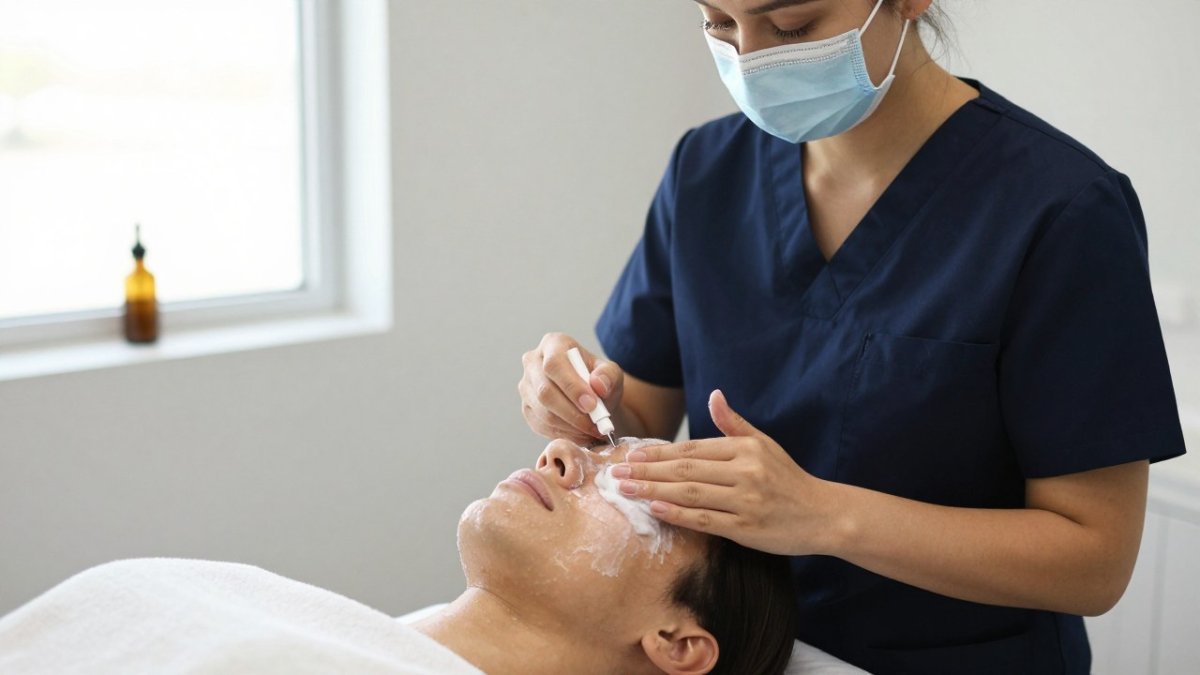
!An esthetician in scrubs gently applying a cleanser to a relaxed client's face in a calm, softly lit treatment room
Consultation and Skin Assessment (5-10 minutes)
The appointment opens with a conversation. Your esthetician asks about your skin history, current products, medications, recent treatments, and concerns such as breakouts, redness, or dryness, then examines your skin under good light and may use a magnifying lamp. This block sets the plan for everything that follows, including which steps will be skipped. Be honest about irritation, past reactions, and what you hope to change; a disclosed history of cold sores, recent isotretinoin use, or a fresh chemical peel can change the entire sequence.
Cleansing and Makeup Removal (5-10 minutes)
Makeup is removed and the skin is cleansed, using a product suited to your skin type. This is also when they confirm the assessment from the consultation. If you arrived with heavy or long-wear makeup, expect the upper end of that range.
Exfoliation (5-15 minutes)
Exfoliation loosens dead skin cells so later products absorb evenly. It may be physical (a gentle scrub or brush), chemical (an enzyme or mild acid), or both. The type and strength depend on your skin: sensitive or reactive skin usually gets a milder enzyme, while oily, resilient skin may get a stronger acid. This is one of the steps most likely to be shortened or skipped.
Steam or Skin-Softening (5-10 minutes)
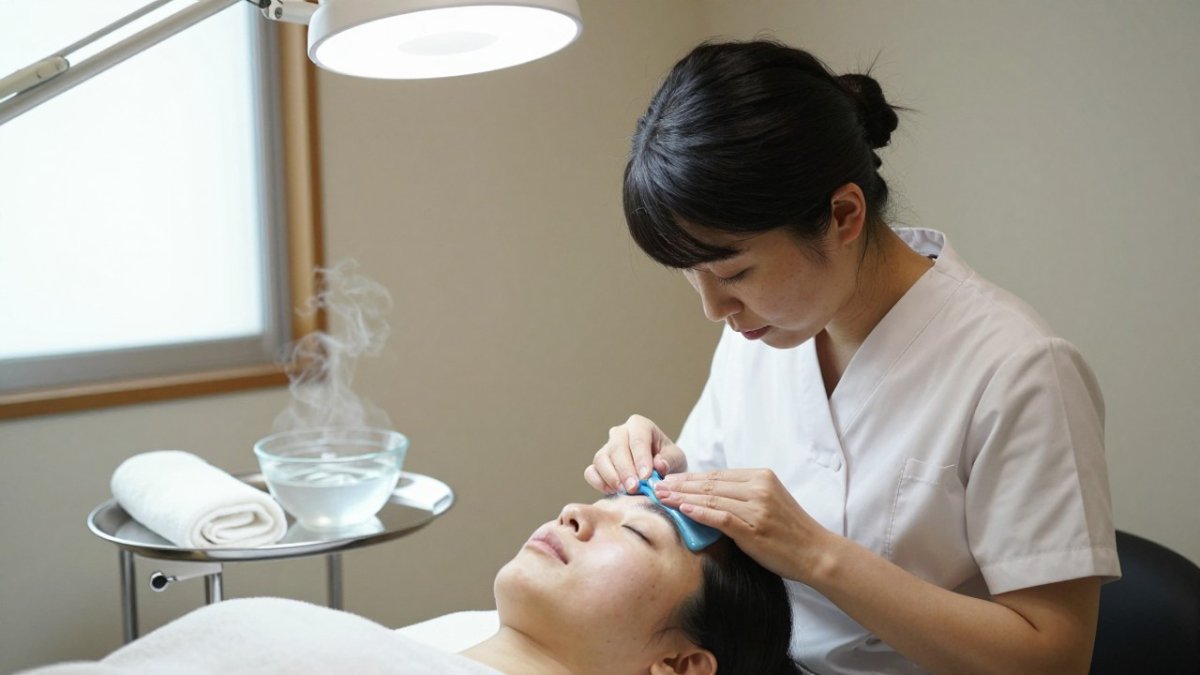
Some facials add warm steam to soften the skin and prepare pores for extractions. Steam is not mandatory. Steam may be skipped for clients with heat sensitivity or visible redness. If steam makes you feel flushed or lightheaded, say so, the esthetician can remove it immediately.
Extractions and Pore Care (5-15 minutes)
If your skin shows congestion, your esthetician may perform gentle extractions to clear blackheads or whiteheads, typically with gloved hands or a metal extractor. This is the step most likely to cause discomfort, and it is also the step most likely to be skipped: extractions are not appropriate for inflamed cystic acne, very sensitive skin, or skin that has been recently exfoliated or treated with retinoids. Watch out: if pressure feels sharp or burning rather than brief and tolerable, speak up, an esthetician should stop or adjust rather than push through.
Facial Massage (5-15 minutes)
A facial massage often follows extractions to relax the face, neck, and shoulders and to support circulation. Massage is usually the most relaxing block and the easiest to extend in a longer appointment. Tell your esthetician if you have sinus pressure, recent facial injury, or jaw pain so they can modify pressure and direction.
Mask and Targeted Treatment (10-20 minutes)
A mask matched to your skin, hydrating, clarifying, calming, or exfoliating, is applied and left on for a set time, often while you receive hand or arm massage. Some facials use a single mask; others layer a targeted serum or treatment under it. This block is where customization is most visible: a hydrating mask for dry skin looks very different from a clay or sulfur mask for congested skin.
Serum, Moisturizer, and Sunscreen (5-10 minutes)
The session finishes with serum, moisturizer, and, for daytime appointments, broad-spectrum sunscreen. It helps to ask what was applied and what to avoid at home afterward. Ask for product names if you plan to repurchase, and note anything that tingled or stung so you can report it next time.
Why Steps Get Skipped
A facial is not a fixed checklist. Estheticians routinely skip steam, extractions, strong exfoliation, or even massage when your skin is reactive, when you have an active breakout or cold sore, when you have had recent waxing, laser, or chemical peels, or when you simply decline a step.
The table below summarises the approximate time each block of a typical customized facial takes, as described above.
| Step | Typical time | Can it be skipped? |
|---|---|---|
| Consultation and skin assessment | 5-10 minutes | Set the plan; steps are adjusted from it |
| Cleansing and makeup removal | 5-10 minutes | Confirmed during assessment |
| Exfoliation | 5-15 minutes | Often shortened or skipped for sensitive skin |
| Steam or skin-softening | 5-10 minutes | Not mandatory |
| Extractions and pore care | 5-15 minutes | Skipped for inflamed or very sensitive skin |
| Facial massage | 5-15 minutes | Easy to extend or modify |
| Mask and targeted treatment | 10-20 minutes | Chosen to match your skin |
| Serum, moisturizer and sunscreen | 5-10 minutes | Ask what was applied and what to avoid |
Typical time
How Long a Facial Treatment Takes and What Affects It
Many standard facials last 45 to 60 minutes. Longer sessions of 75 to 90 minutes may include extra massage, a deeper treatment, or added steps for specific concerns.
Several factors affect total time:
- Skin concerns that need extra attention, such as congestion
- Whether extractions or steam are part of your plan
- The number of masks or serums applied during the session
Plan for a few extra minutes at check-in and paperwork, especially on your first appointment. For current pricing, check with Lumyn Medspa directly.
Risks, Discomfort and When to Speak Up
A facial is generally gentle, but you may feel some discomfort. Extractions can sting, and exfoliation may cause temporary pinkness. Mild redness after treatment usually fades within hours.
Tell your esthetician right away if you notice:
- Burning or stinging that does not ease
- Hives, swelling, or itching
- Pain during extractions or massage
Your comfort matters more than finishing every step. Speak up, and ask for a lighter approach or a pause at any point. Clients with a history of skin conditions, recent procedures, or medications that affect the skin should disclose these before treatment.
Aftercare, Results Timeline and a Realistic Expectation of Change
Good aftercare protects your results and prevents the irritation that can undo a good treatment. The guidance below reflects what most estheticians recommend after a standard customized facial; your provider may adjust it based on what was actually used on your skin.
The First 24 Hours
- Makeup: Skip foundation and heavy makeup for at least 24 hours if possible. If you must wear makeup, choose a gentle, non-comedogenic formula and remove it thoroughly that night.
- Active ingredients: Pause retinoids, strong acids (glycolic, salicylic, lactic), benzoyl peroxide, and physical scrubs for 24 to 48 hours, or longer if your esthetician advises. Resume one product at a time rather than all at once.
- Sun protection: Apply broad-spectrum sunscreen with SPF 30 or higher every day, and reapply if you are outdoors (the American Academy of Dermatology). Freshly treated skin is more sensitive to ultraviolet exposure, and sun exposure is the most common reason results fade faster than expected.
Temporary Redness and Sensitivity
Mild pinkness or warmth is normal after exfoliation, extractions, or massage, and most people see it fade within a few hours. Some clients stay slightly flushed for up to 24 hours, especially after extractions or stronger exfoliation. Watch out: if redness is accompanied by swelling, hives, blistering, or pain that worsens rather than eases, contact your provider the same day rather than waiting it out.
Returning to Your Normal Routine
Many people reintroduce their usual skincare gradually, one product at a time, over a few days. Start with your gentlest cleanser and moisturizer, then add sunscreen, then actives. If a product stings or burns on reintroduction, stop and wait another day. Clients who had extractions may need 48 hours before restarting retinoids or acids on the treated areas.
Results Timeline
A facial can leave skin looking fresher right after treatment. Lasting change builds over weeks, not hours. Results vary by person, and skin concerns such as congestion often benefit from repeated visits paired with a consistent home routine. Results vary with skin type, home care, and how often you book.
When to Call Your Provider
Reach out if you experience persistent redness beyond 48 hours, swelling, blistering, a rash that spreads, or a breakout that worsens rather than settles. These are uncommon after a standard facial but are worth reporting so your esthetician can adjust future treatments and rule out a reaction to a specific product.
Booking Your First Facial at Lumyn Medspa
Your first facial is a good chance to meet the team and talk through your goals. Lumyn Medspa offers customized treatment plans built around your skin type and concerns, and you can see the clinic's work in its portfolio archive. If you are curious about advanced options beyond a standard facial, you can explore the exosome therapy offered at Lumyn.
Bring a list of your skin concerns, current products, and any questions about the process. Your provider can explain each step before it happens.
Frequently Asked Questions
What should you not do before a facial?
Avoid waxing, chemical peels, or retinoid use in the days before your appointment, since freshly treated skin can be more sensitive to exfoliation and steam. Skip sunburn-prone outdoor exposure and let your esthetician know about any recent procedures, active breakouts, or new medications. Arrive without heavy makeup so the consultation and cleansing steps can start right away. If you are unsure whether a product or treatment could interfere, ask your provider before your visit rather than guessing.
How long does a facial treatment take?
Facial length depends on the treatment plan and your skin needs. Time spent on consultation and skin assessment varies, and appointments with extractions can take longer. Your provider can confirm the timing when you book, and you should plan for a few extra minutes to check in and review aftercare.
What should you wear to a facial appointment?
Wear loose, comfortable clothing that is easy to remove or pull over your head. Avoid necklaces, large earrings, and scarves that may get in the way during the treatment. Come with your face clean and free of makeup if possible, and remove contact lenses if you prefer. Bring a jacket or layer for the treatment room, as some clients feel cool while lying still.
Can you wear makeup after a facial?
Many clients can apply makeup after a facial, though many providers suggest waiting several hours, especially if extractions or exfoliation were performed. Freshly treated skin may be more sensitive, so use gentle, non-irritating products and avoid heavy layers. Choose a clean, lightweight base and keep your brushes and tools clean to reduce the chance of irritation. If your skin feels tender or looks red, give it extra time and follow the aftercare guidance your esthetician provides.