 Ultimate guide
What Is a Photofacial? IPL Treatment Explained
Last Updated: November 13, 2026
Quick Summary
A photofacial treatment is a nonsurgical, light-based procedure that uses intense pulsed light (IPL) to reduce sun damage, uneven pigmentation, and visible redness on the skin. It typically requires a series of sessions, and results develop gradually as the body clears treated pigment and vessels.
- Photofacials target sun damage, age spots, uneven skin tone, and redness from broken capillaries or rosacea.
- IPL works by sending light that pigment and small blood vessels absorb and convert into heat.
- Medications that increase photosensitivity, such as certain antibiotics and retinoids, must be disclosed beforehand.
- A fresh tan or recent sun exposure is a common reason to reschedule treatment.
- Results are not permanent, so daily sun protection is the largest factor in how long they last.
Table of Contents
- What a Photofacial Treatment Is
- How Intense Pulsed Light Works on the Skin
- Skin Concerns a Photofacial Can Address and Who Is a Good Candidate
- What Happens During a Session and How Many You Need
- IPL Photofacial Pros and Cons, Side Effects, and Recovery
- How Long Does a Photofacial Last and What to Expect Over Time
- Cost of IPL Treatment for Face and Booking Your Consultation at Lumyn Medspa
- Frequently Asked Questions
What a Photofacial Treatment Is
A photofacial treatment is a nonsurgical, light-based procedure that uses intense pulsed light, or IPL, to reduce sun damage, uneven pigmentation, and visible redness on the skin. American Academy of Dermatology overview of intense pulsed light therapy While IPL targets pigmentation and redness with pulses of broad-spectrum light, an LED light therapy facial uses a different light-based approach to support skin care.
The term "photofacial" is a branded-style name, not a single medical device. It describes a broad-spectrum light treatment applied to the face, neck, chest, or hands, and it is typically performed by a trained provider using an IPL system.
Many people use the word "photofacial" and "IPL" interchangeably. The distinction is useful, though: IPL is the technology, and the photofacial is the treatment built on it. Providers adjust filters, pulse settings, and treatment areas to match each patient's skin.
How Intense Pulsed Light Works on the Skin
IPL delivers multiple wavelengths of light in short pulses. Pigment in the skin, such as melanin from sun exposure, and hemoglobin in small blood vessels absorb that light and convert it into heat.
The result is a controlled thermal effect beneath the surface. Over the following days and weeks, the body clears the affected pigment and the treated vessels, which is why results tend to appear gradually rather than all at once.
Because IPL is a broad-spectrum light, the provider's filter selection matters. Different wavelengths target different chromophores, so a treatment plan that works well for sun spots may need adjusting for rosacea or spider veins.
Skin Concerns a Photofacial Can Address and Who Is a Good Candidate
Photofacials are most often used for sun damage, age spots, brown spots, uneven skin tone, and redness linked to broken capillaries or rosacea. They can also soften the look of photodamaged skin texture over a series of sessions.
Candidacy is where most online explanations stay vague, and that vagueness is a problem because IPL is not a single setting applied the same way to every face. Suitability depends on your skin tone, your medical history, your medications, and your recent sun exposure. The guidance below is general; only an in-person consultation with a qualified clinician can confirm whether a photofacial is appropriate for you.
Skin tone and pigment risk
IPL targets melanin, which means it cannot fully distinguish between the pigment you want removed and the pigment that gives your skin its natural color. Lighter skin tones with light-to-medium pigment and a clear contrast between the spot and the surrounding skin typically respond best. For a fuller plan to fade dark spots permanently, including options beyond a single photofacial, read our realistic face treatment guide. Patients with darker skin tones, or with a recent tan, carry a higher risk of hypopigmentation (lightening) or hyperpigmentation (darkening) because the device may heat background pigment along with the target.
Medical history that changes the plan
Some conditions are relative cautions rather than absolute stops. A history of keloid scarring, active eczema or psoriasis in the treatment area, or a compromised skin barrier may call for delaying treatment or adjusting aftercare. Patients who are pregnant are usually advised to postpone elective light treatments. Anyone with a history of skin cancer or pre-cancerous lesions should have those evaluated first, because IPL is not a skin cancer screening or treatment tool. Autoimmune conditions, bleeding disorders, and a history of cold sores in the treatment area are also worth raising at consultation, since the heat and stress of treatment can trigger flares in some patients.
Medications and photosensitivity
This is the most commonly overlooked factor. Several drug classes increase photosensitivity and raise the risk of burns or unpredictable pigment changes: certain antibiotics (including tetracyclines), isotretinoin and other retinoids, some acne medications, certain diuretics, and some antidepressants and antifungals (the FDA). Herbal supplements such as St. John's wort can also increase sensitivity. The safe approach is to bring a complete medication list, including over-the-counter drugs and supplements, to your consultation and to follow your provider's instructions on how long to pause anything that increases sensitivity. Do not stop a prescribed medication on your own.
Recent tanning and sun exposure
A fresh tan, whether from sun or a tanning bed, adds background melanin that competes with the target pigment. Most practitioners ask patients to avoid tanning and heavy sun exposure for at least two weeks before treatment and to use broad-spectrum sunscreen daily. Arriving with a sunburn or a fresh tan is a common reason to reschedule. The same logic applies to self-tanners and spray tans, which should be fully faded before a session.
When IPL is not the right choice
IPL is a poor fit for deep wrinkles, significant skin laxity, or textural scarring that requires resurfacing rather than pigment clearance. It is also not a treatment for active acne cysts, though it can help with the redness left behind. Patients whose primary concern is a single distinct vessel or a very precise spot may get a better result from a targeted laser.
Watch out: if a provider offers a photofacial without asking about your medications, your recent sun exposure, or your history of scarring and cold sores, that is a reason to pause and seek a second opinion.
What Happens During a Session and How Many You Need
Sessions generally begin with a consultation and skin assessment, and your provider will explain the specific steps for your treatment. Before your first appointment, you can learn how to prepare your skin for laser treatments.
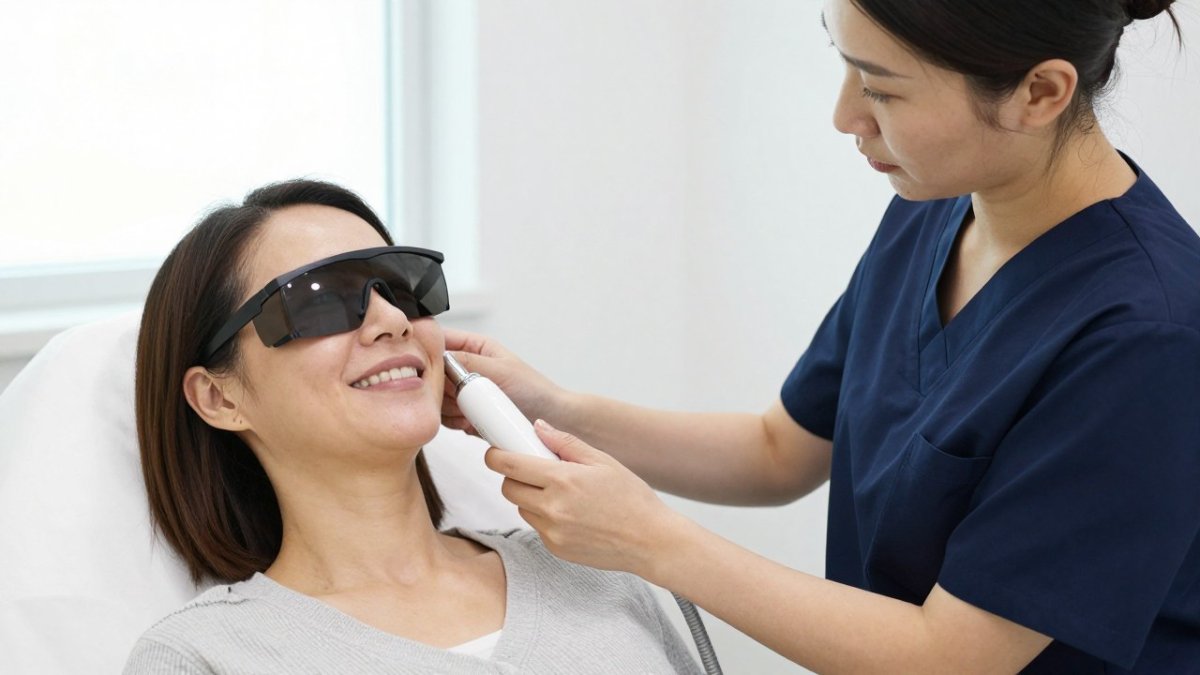
Session length depends on the treatment area and your provider's plan. Treatment series vary, and your provider can recommend a plan based on your concerns and how your skin responds.
A common mistake is expecting one session to finish the job. Pigment and vessel changes build across visits, so plan for the full series your provider recommends rather than judging the result after a single appointment.
IPL Photofacial Pros and Cons, Side Effects, and Recovery
The main advantages are minimal downtime, a relatively short session, and the ability to address several concerns in one visit. Some redness or warmth in the treated area can occur for a day or two after treatment. The drawbacks are real: results are gradual, multiple sessions are usually needed, and IPL is less precise than some laser treatments for certain concerns.
IPL versus laser and other light-based options
The clearest way to understand the trade-offs is to separate IPL from lasers. IPL devices emit broad-spectrum light across a range of wavelengths, so a single pulse can be absorbed by both melanin and hemoglobin. That breadth is why IPL can treat sun spots and redness in the same session, but it is also why IPL is less selective than a laser, which emits a single, precise wavelength tuned to one target. To weigh the two directly for hyperpigmentation, see our side-by-side comparison of fractional laser and IPL.
Expected side effects and how long they last
Temporary redness and mild swelling usually settle within a day or two. Pigmented spots may darken and then flake off over roughly one to two weeks, which is a normal part of the clearing process rather than a complication. Mild bruising is possible around vessels. Less commonly, blistering, burns, or changes in skin pigment can occur, and the risk of pigment change is higher in darker skin tones and in patients with recent sun exposure.
Warning signs that warrant prompt care
Most reactions are temporary and self-limited. Seek prompt medical advice if you develop blistering, severe or worsening pain, spreading redness or warmth that suggests infection, fever, or any change in skin color that persists beyond a few weeks. Contact your provider the same day if you are unsure whether a reaction is expected.
A time-based aftercare checklist
- First 24 hours: keep the area cool, use a gentle cleanser and moisturizer, and avoid makeup over treated skin if your provider advises it. Skip strenuous exercise, hot tubs, and saunas.
- First week: use broad-spectrum sunscreen every day, avoid direct sun, and do not pick or exfoliate flaking spots. Picking can cause scarring or pigment change.
- First two weeks: continue daily sunscreen and gentle skincare. Avoid retinoids, acids, and other active ingredients until your provider clears them.
- Ongoing: maintain sun protection, since new sun exposure is the largest driver of recurring pigment and redness.
Watch out: a provider who does not give you written aftercare instructions or a way to reach the clinic after hours is a red flag, because the first 24 to 48 hours are when questions most often come up.
The article summarises the main side effects and what to expect as you recover, as follows.
| Aspect | Typical experience | Notes |
|---|---|---|
| Redness or warmth | Settles within a day or two | Common and expected after treatment |
| Pigmented spots | Darken, then flake off over one to two weeks | Normal part of the clearing process |
| Mild bruising | Possible around treated vessels | Usually temporary |
| Blistering, burns or pigment change | Less common | Higher risk in darker skin tones and with recent sun exposure |
| Warning signs | Blistering, severe pain, spreading redness, fever | Seek prompt medical advice |
How Long Does a Photofacial Last and What to Expect Over Time
The effects of a photofacial are not permanent in the way many people hope. Treated pigment and vessels can be cleared, but new sun exposure, hormonal changes, and aging can bring concerns back over time.
Results are gradual, and how long they last depends on factors such as sun protection and skin changes over time. Periodic maintenance sessions are sometimes recommended, and your provider can outline a realistic schedule based on your skin.
Over time, the largest factor in how long results last is how well you protect your skin from the sun. Treatment works best as part of a broader routine rather than a standalone fix.
Cost of IPL Treatment for Face and Booking Your Consultation at Lumyn Medspa
Pricing depends on the treatment area, the number of sessions recommended, and your provider's assessment of your skin. For current prices or a quote, visit the Lumyn Medspa website or book a consultation. You can book your IPL consultation at Lumyn Medspa.
Before you commit, you can also browse our portfolio of treatment results to see the kinds of outcomes our clinic works toward. A consultation is the right place to ask about session counts, expected results for your skin type, and any questions about safety.
Lumyn Medspa offers a range of aesthetic services, including injectables, laser skin rejuvenation, and body contouring, with customized treatment plans.
Frequently Asked Questions
Are photofacials worth the money?
Whether a photofacial is worth the cost depends on your goals and skin. It is most often chosen to address sun damage, uneven pigmentation, and diffuse redness. Results are gradual and usually take several sessions, so the value comes from matching the treatment to a specific concern. A consultation with a qualified provider can help you judge whether it fits your priorities and budget. Pricing varies, so check Lumyn Medspa's website or request a quote for current details.
How long does a photofacial last?
A photofacial's results are not permanent, because skin continues to age and new sun exposure can cause new pigmentation. Many people maintain results with periodic touch-up sessions, and the schedule varies based on skin type, sun exposure, and treatment goals. Sun protection, including daily broad-spectrum SPF, helps preserve results between sessions. Your provider can recommend a maintenance plan during your consultation.
What should you expect after an IPL photofacial?
Some people experience mild redness, warmth, or small darkened spots during recovery, and these typically settle over time. Some treated spots may flake off as they heal. Avoiding sun exposure, using gentle skincare, and following your provider's aftercare instructions support recovery. Any blistering, severe pain, or signs of infection should be reported to your provider promptly.