 comparison
Skinsation Alternatives: Top Laser Skin Rejuvenation Options
Table of Contents
- Why Seek an Alternative to Skinsation for Laser Skin Rejuvenation?
- Quick Comparison: Popular Laser Skin Rejuvenation Alternatives
- Microneedling vs Laser Skin Rejuvenation: Which Is Right for You?
- Radiofrequency Skin Tightening Recovery Time and Results
- Exploring the Benefits of Chemical Peels for Skin Texture
- Choosing a Treatment Based on Your Skin Type and Concerns
- Conclusion: Finding Your Ideal Path to Smoother, Brighter Skin
- Frequently Asked Questions
Last Updated: September 6, 2026
Why Seek an Alternative to Skinsation for Laser Skin Rejuvenation?
Choosing the right provider for laser skin rejuvenation often comes down to more than brand recognition. Many patients seek an alternative because they want a treatment plan tailored to their specific skin concerns rather than a one-size-fits-all protocol.
At Lumyn Medspa, our team regularly consults with patients who are exploring various options for their aesthetic goals. The right alternative depends on your skin type, the concerns you want to address, and how much downtime you can realistically manage.
Quick Comparison: Popular Laser Skin Rejuvenation Alternatives
Several professional-grade systems stand out as strong alternatives to Skinsation, each using different technology to achieve similar goals of smoother, brighter skin. The table below summarizes the key differences you should consider during your consultation.
| Treatment | Technology Type | Primary Focus | Typical Downtime | Best For |
|---|---|---|---|---|
| UltraClear | Laser-Coring (ablative) | Deep collagen stimulation | Moderate | Significant non-surgical tightening |
| Halo Laser | Hybrid fractional | Pigmentation + texture | Adjustable | Sun damage and uneven tone |
| Ultherapy | Ultrasound | Lifting and tightening | None | Early sagging on face and neck |
| LYMA Laser PRO | At-home LED/laser | Maintenance | None | Consistent at-home upkeep |
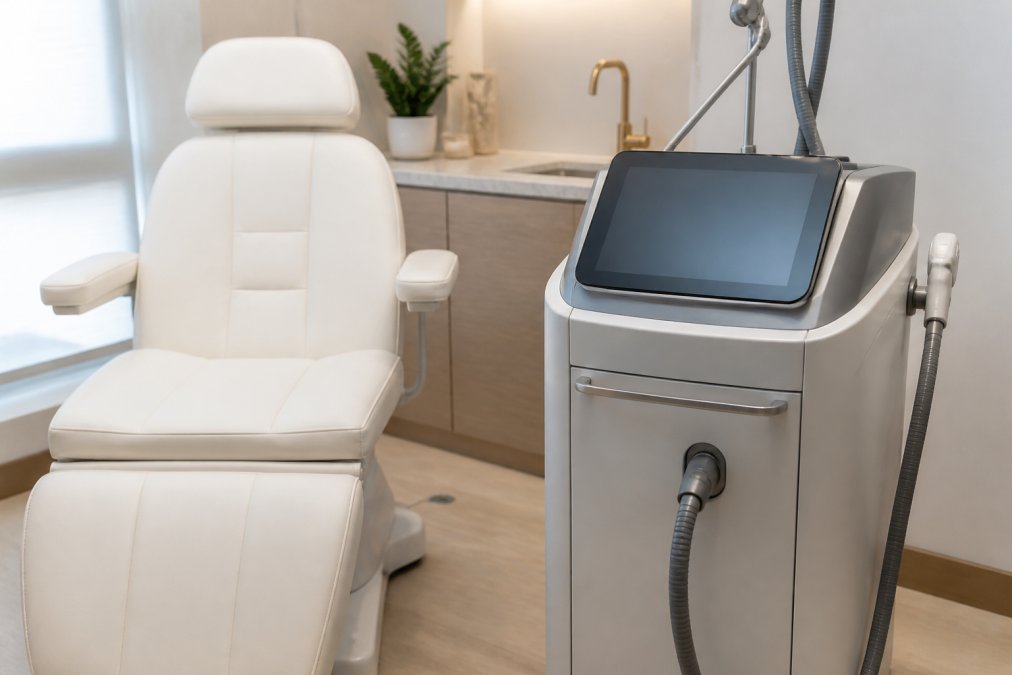
UltraClear uses Laser-Coring technology to remove precise micro-columns of tissue, stimulating deep collagen production as a non-surgical alternative to a mini-facelift. Halo Laser combines ablative and non-ablative wavelengths in a hybrid fractional design, making it versatile for both surface pigmentation and deeper textural issues. Ultherapy uses ultrasound imaging to stimulate collagen without breaking the surface, so there is no downtime. The LYMA Laser PRO is an at-home device blending 808 nm near-infrared light with 620 nm red LEDs for gentle, non-ablative maintenance between professional sessions.
Microneedling vs Laser Skin Rejuvenation: Which Is Right for You?
Microneedling and laser skin rejuvenation both trigger the skin's wound healing response, but through completely different mechanisms. Microneedling creates microscopic punctures in the dermis with fine needles, while lasers deliver controlled thermal injury to targeted layers, producing different results for different concerns (peer-reviewed research).
How Microneedling Works
A device with fine needles (typically 0.5 mm to 2.5 mm in depth) creates controlled micro-injuries that stimulate fibroblasts to produce new collagen and elastin. The epidermis remains largely intact, so the skin barrier recovers quickly, most patients experience redness for 24 to 48 hours and mild swelling for a few days. For deeper acne scars, providers may use radiofrequency-assisted microneedling, which adds heat energy at the needle tips to enhance collagen remodeling.
How Laser Skin Rejuvenation Works
Lasers use specific wavelengths of light to target water (ablative lasers like CO2 and Erbium) or pigment (non-ablative and fractional lasers). Ablative lasers vaporize the top layers of skin, forcing rapid regeneration. Fractional lasers create microscopic columns of thermal injury, leaving surrounding tissue intact for faster healing. Non-ablative lasers heat the dermis without damaging the surface, making them safer for darker skin tones but less dramatic in results.
Head-to-Head Comparison
| Factor | Microneedling | Fractional Laser (e.g., Halo, Fraxel) | Ablative Laser (e.g., CO2, Erbium) |
|---|---|---|---|
| Primary mechanism | Physical puncture | Thermal + fractional injury | Full-surface vaporization |
| Best for | Acne scars, texture | Pigmentation, texture, mild laxity | Deep wrinkles, severe sun damage |
| Fitzpatrick skin type safety | Safe for all types with proper settings | Type I-IV generally safe; Type V-VI requires caution | Type I-III only; high risk of hyperpigmentation in Type IV-VI |
| Typical downtime | 1-2 days redness | 2-5 days (adjustable) | 7-14 days with significant peeling |
| Number of sessions | 3-6 for optimal results | 1-3 depending on depth | 1-2, results are dramatic |
| Pain level | Mild to moderate | Moderate | Significant, requires topical or local anesthesia |
Which One Should You Choose?
Microneedling is often the better choice for deeper acne scarring, as physical collagen stimulation can remodel scar tissue effectively. It is also safer for Fitzpatrick skin types IV through VI, since there is no thermal injury to trigger post-inflammatory hyperpigmentation. Fractional laser technology tends to excel at hyperpigmentation, sun damage, and overall texture because light energy breaks up pigment while tightening collagen.
A common pattern is to combine both modalities, for example, a series of microneedling sessions followed by a single fractional laser treatment for a patient with both acne scars and sun damage. However, never undergo both in the same session without explicit provider approval, as combined trauma can overwhelm the skin's healing capacity.
Recovery and Downtime Differences
Microneedling recovery is straightforward: makeup after 24 hours, redness fading within 48 hours. Fractional lasers require gentle cleansing, moisturizing, and strict sun avoidance for at least one week. Ablative lasers demand the most intensive recovery, with open wounds requiring ointment and bandaging for several days. Your provider should give you a written aftercare plan before you leave.
Cost Considerations
Microneedling sessions typically range from $200 to $700 per session depending on the device and geographic region. Fractional laser treatments range from $500 to $1,500 per session. Ablative lasers are the most expensive, often $1,500 to $3,000 per treatment (asds.net). Because microneedling usually requires more sessions, the total cost can approach that of a single fractional laser treatment. Discuss the full treatment plan cost during your consultation rather than comparing single-session prices.
Radiofrequency Skin Tightening Recovery Time and Results
Radiofrequency (RF) therapy is a non-invasive option for skin tightening that heats the dermis to stimulate collagen production without damaging the epidermis. Recovery time is minimal, with most patients returning to normal activities immediately, making it attractive for those who cannot afford visible downtime.
Results develop gradually as new collagen forms over several months. Patients notice initial firmness right away, but the full effect appears after two to three months. RF is best suited for mild to moderate laxity rather than advanced sagging, where surgical options may be more appropriate. Maintenance sessions are usually recommended since collagen production naturally slows with age.
Exploring the Benefits of Chemical Peels for Skin Texture
Chemical peels improve skin texture by accelerating cell turnover through controlled exfoliation, offering a smoother surface, more even tone, and reduced fine lines. Peels range from superficial formulas causing light flaking to deeper formulas requiring several days of recovery.
For patients considering laser alternatives, peels can be an effective first step or complement to laser treatments. Superficial and medium-depth peels address dullness, mild hyperpigmentation, and rough texture without the thermal effects of lasers. Deeper peels approach ablative laser results but carry similar downtime and require careful patient selection based on skin type.
| Concern | Best Treatment Option | Expected Recovery |
|---|---|---|
| Dull texture, mild tone | Chemical peel | 1-3 days flaking |
| Sun damage, uneven pigment | Halo Laser | 2-5 days |
| Deep acne scarring | Microneedling | 1-2 days redness |
| Mild laxity, early sagging | Ultherapy or RF | None |
Choosing a Treatment Based on Your Skin Type and Concerns
Patient candidacy is the single most important factor in achieving safe, satisfying results. The Fitzpatrick scale classifies skin into six types based on sun response, not just a cosmetic label, but a direct determinant of which technologies are safe for you and which carry unacceptable risks.
Fitzpatrick Skin Type Safety Guide
| Fitzpatrick Type | Characteristics | Safe Treatment Options | Higher-Risk Options |
|---|---|---|---|
| Type I (always burns, never tans) | Very fair, red or blonde hair | All lasers, peels, microneedling | None specifically |
| Type II (usually burns, tans minimally) | Fair skin | All lasers with conservative settings | Deep chemical peels |
| Type III (sometimes burns, tans gradually) | Fair to medium | Fractional lasers, RF, microneedling | Ablative lasers with caution |
| Type IV (rarely burns, tans easily) | Olive or light brown | Microneedling, RF, non-ablative lasers, superficial peels | Ablative lasers, medium-depth peels |
| Type V (very rarely burns, tans very easily) | Brown skin | Microneedling, RF, non-ablative lasers at low settings | Fractional lasers, chemical peels above superficial depth |
| Type VI (never burns, deeply pigmented) | Dark brown or black skin | Microneedling, RF, non-ablative lasers at low settings | Any laser with significant thermal injury |
For Fitzpatrick types IV through VI, the risk of post-inflammatory hyperpigmentation (PIH) or hypopigmentation is the central concern. Ablative lasers remove the epidermis entirely, and healing in darker skin often produces excess melanin; even fractional lasers can trigger PIH if settings are too aggressive. The safest approach is microneedling, which creates no thermal injury, or non-ablative lasers like Nd:YAG (1064 nm wavelength) that bypass the epidermis and target the dermis directly.
Combination Therapy Protocols That Actually Work
Most articles compare treatments in isolation, but real-world dermatology rarely works that way. Stacking complementary treatments can produce better results than any single modality. Here are three evidence-based combination protocols practitioners commonly use:
Protocol 1: Acne Scars + Texture (Fitzpatrick I-III)
- Session 1: Fractional CO2 laser at moderate depth
- Sessions 2-4 (monthly): Microneedling with platelet-rich plasma (PRP)
- Rationale: The laser breaks down scar tissue and stimulates initial collagen; microneedling with PRP sustains the remodeling process over several months.
Protocol 2: Hyperpigmentation + Sun Damage (Fitzpatrick II-IV)
- Series of 3 non-ablative fractional laser sessions (e.g., 1550 nm erbium-doped laser) spaced 4 weeks apart
- Add a superficial chemical peel (glycolic or mandelic acid) 2 weeks after each laser session
- Rationale: The laser fragments pigment deep in the skin; the peel accelerates surface cell turnover to clear the fragmented pigment faster.
Protocol 3: Mild Laxity + Dullness (Fitzpatrick I-VI)
- Radiofrequency microneedling (e.g., Morpheus8, Fractora) for 3 sessions
- Add a series of LED light therapy sessions (red and near-infrared) between RF sessions
- Rationale: RF heats the dermis for collagen contraction and tightening; LED therapy reduces inflammation and supports cellular repair without additional downtime.
Cost-Benefit Analysis: Professional vs. At-Home vs. Combination
A critical gap in most online comparisons is the long-term financial picture. Here is how the costs actually stack up:
| Approach | Upfront Cost | Maintenance Cost | Results Longevity |
|---|---|---|---|
| Single ablative laser session | $1,500-$3,000 | $500-$1,000 per year for touch-ups | 2-3 years |
| Series of 3 fractional laser sessions | $1,500-$4,500 | $500-$1,500 per year | 1-2 years |
| Series of 4 microneedling sessions | $800-$2,800 | $200-$700 per year | 1-2 years |
| At-home LED device (e.g., LYMA Laser PRO) | $500-$2,000 | $0 (device lasts years) | Maintenance only; cannot correct existing damage |
| Combination (laser + microneedling + at-home LED) | $2,500-$6,000 initial | $500-$1,500 per year | 2-4 years with maintenance |
At-home devices are not a substitute for professional treatment, but they are an intelligent bridge. Using an at-home LED or low-level laser device between professional sessions can extend the interval between costly in-office visits. However, no at-home device currently available can penetrate deeply enough to remodel scar tissue or eliminate significant hyperpigmentation. If considering one, look for FDA-cleared options and understand they are maintenance tools, not corrective treatments.
Skin Barrier Health and Pre-Treatment Preparation
Your skin barrier must be intact before any treatment. If you have active acne, eczema, or rosacea flare-ups, your provider should postpone treatment until the skin calms. A common preparation protocol includes a gentle cleanser, a barrier-repair moisturizer with ceramides, and strict sun protection for at least two weeks before treatment. If you have a history of cold sores, your provider will likely prescribe an antiviral medication before and after treatment to prevent an outbreak.
Final Decision Framework
Ask yourself these four questions before booking any treatment:
- What is my Fitzpatrick skin type, and has my provider confirmed it?
- What is my primary concern: scarring, pigment, laxity, or texture?
- How many days of downtime can I realistically tolerate?
- What is my budget for the full treatment series plus maintenance?
Write down your answers and bring them to your consultation. A qualified provider should be able to map your answers directly to a specific treatment protocol rather than offering a generic menu of options.
Conclusion: Finding Your Ideal Path to Smoother, Brighter Skin
Choosing the right alternative to Skinsation for laser skin rejuvenation requires honest assessment of your skin concerns, your tolerance for downtime, and your long-term maintenance commitment. No single treatment works for everyone, and the most effective approach often combines multiple modalities tailored to your skin type. According to the American Society for Dermatologic Surgery patient resources, consulting with a qualified professional is the first step to determining which technology aligns with your goals.
Lumyn Medspa offers a comprehensive range of aesthetic services, from advanced injectables to laser skin rejuvenation, all delivered through customized treatment plans. Our team uses advanced technology to help you achieve refreshed, radiant skin with minimal disruption to your routine. Whether you are exploring your first treatment or seeking a better alternative, we invite you to book a consultation and discover the approach that works for your skin.
Frequently Asked Questions
What is the strongest non-laser skin tightening procedure?
Radiofrequency (RF) therapy and focused ultrasound are among the strongest non-laser options for skin tightening. RF treatments heat the deeper dermis to stimulate collagen production and improve skin elasticity. Ultherapy, which uses ultrasound, is another powerful option for lifting and tightening. The right choice depends on your skin laxity and goals. A consultation with a qualified provider can help determine which treatment will be most effective for your specific needs.
How does microneedling compare to laser skin resurfacing for acne scars?
Both microneedling and laser skin resurfacing can improve acne scarring, but they work differently. Microneedling creates controlled micro-injuries to stimulate collagen production, which is effective for rolling scars. Laser skin resurfacing, especially ablative types, removes the outer epidermis and heats the dermis, which can be more effective for deeper ice-pick scars. The best approach often depends on your scar type, skin tone, and tolerance for downtime.
Are chemical peels a viable alternative to laser skin rejuvenation?
Yes, chemical peels are a viable alternative for improving skin texture, tone, and hyperpigmentation. They use acid solutions to exfoliate the outer layers of skin, promoting cell turnover and revealing fresher skin. While they can treat fine lines and sun damage, their effect on deep collagen remodeling is typically less pronounced than ablative lasers. Peels are excellent for addressing surface-level concerns and can be combined with other treatments for enhanced results.
What is the typical recovery time for radiofrequency skin tightening?
Radiofrequency skin tightening has minimal downtime. Most people experience some temporary redness or mild swelling immediately after the procedure, which usually subsides within a few hours to a day. This makes RF therapy a convenient option for those with busy schedules. You can typically return to your normal activities right away, though you should avoid intense heat and direct sun exposure for a few days as directed by your provider.
How do I choose the right skin rejuvenation treatment for my skin type?
Your skin type is a primary factor in choosing a treatment. For example, certain lasers may not be suitable for darker skin tones due to the risk of hyperpigmentation. Microneedling and chemical peels can be tailored to various skin types. A professional will assess your skin concerns, medical history, and goals. They can then recommend the safest and most effective laser skin rejuvenation alternative or combination of procedures for you.