 ultimate-guide
Cost of Professional Aesthetic Treatment Plans in 2026
Table of Contents
- What Drives the Cost of Professional Aesthetic Treatment Plans
- The Aesthetic Treatment Consultation Process: What Happens Before You Pay
- Per-Unit vs. Per-Area Pricing: Comparing the Two Models
- Benefits of Personalized Aesthetic Plans Over Single Sessions
- Medspa Financing Options and Payment Strategies
- Your Aesthetic Treatment Maintenance Schedule and Long-Term Costs
- Hidden Costs and the Psychology of Treatment Planning
- Conclusion
- Frequently Asked Questions
Last Updated: September 12, 2026
What Drives the Cost of Professional Aesthetic Treatment Plans
The cost of professional aesthetic treatment plans is not a single number you can look up. It is a calculation built from your anatomy, your goals, the products and technology used, and your provider's clinical expertise. Two patients with the same concern can leave the same medspa with quotes differing by hundreds of dollars, because a responsible plan is built around the individual.
This guide from Lumyn Medspa breaks down what moves the number, how pricing models differ, and how to budget for lasting results.
Anatomy-Based Assessment and Treatment Area
Where you need treatment, and how much surface area it covers, is the first cost driver. A provider performing an anatomy-based assessment maps your facial structure, skin quality, and volume loss before quoting. Treating the full face requires more product and precision than softening a single set of lines.
Some areas are also technically harder to treat. The delicate skin around the eyes and mouth demands slower, more careful work than the cheeks or jawline. That procedural complexity shows up in the quote.
Product Volume, Technique, and Clinical Expertise
Product volume is the most visible variable in any injectable quote. Providers price by the unit or syringe, so restoring volume across multiple areas uses more product than targeting one concern.
Technique matters just as much. An experienced injector can achieve a natural result with less product, while an inexperienced one may overcorrect. Clinical expertise is not a line item, but it changes your outcome and total cost.
The Aesthetic Treatment Consultation Process: What Happens Before You Pay
A proper consultation is a medical appointment, not a sales pitch: a review of your health history, a discussion of goals, and a physical assessment of your skin and anatomy. Many practices charge a consultation fee or apply it toward your first treatment, so ask which policy applies before you book.
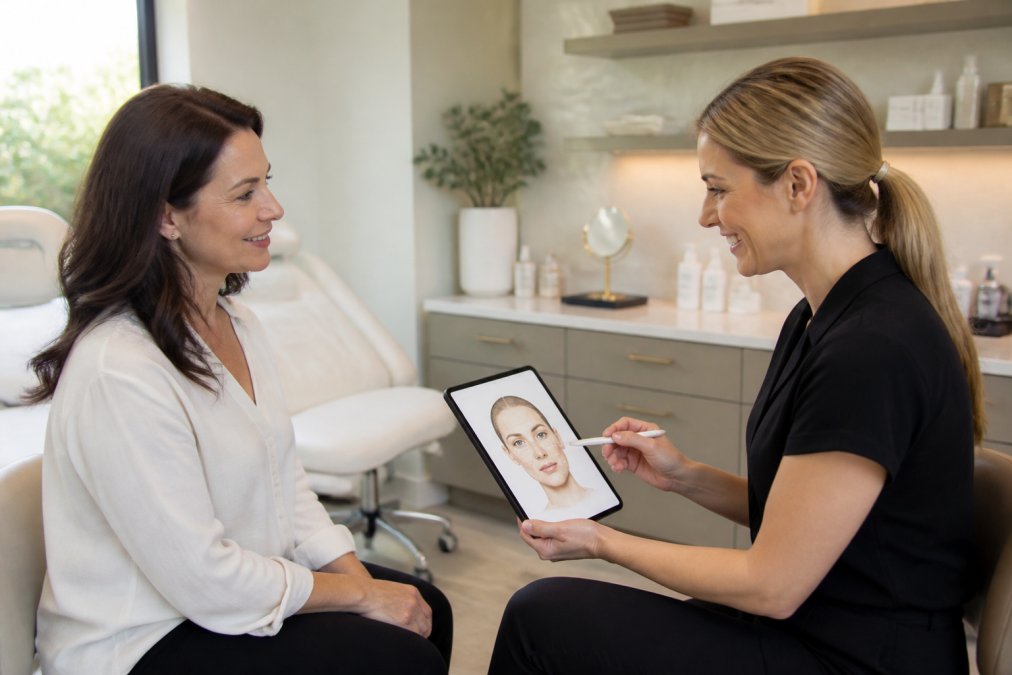
Come prepared with questions. Ask about the provider's credentials, the products they use, and what a realistic outcome looks like for someone with your skin. Reputable providers welcome this. The American Med Spa Association's guidance on medspa regulation is a useful starting point for understanding how providers are licensed and supervised.
At Lumyn Medspa, consultations are built around a customized treatment plan rather than a single-session sale, so you understand the full picture before committing.
Per-Unit vs. Per-Area Pricing: Comparing the Two Models
Two pricing models dominate the market and can produce very different quotes for the same treatment. Per-unit pricing charges for each unit or syringe used; per-area pricing bundles a defined zone into one flat fee.
| Pricing Model | How It Works | Best For | Watch Out For |
|---|---|---|---|
| Per-unit | Pay for product used | Precise, small areas | Total can rise if more product is needed |
| Per-area | Flat fee per zone | Full-face or multi-zone plans | Zones defined differently by each provider |
Per-unit pricing offers cost transparency: you see exactly what you're paying for. Per-area pricing is easier to budget because the number doesn't move mid-treatment. Neither is automatically cheaper. What matters is whether the provider explains which model they use and why it fits your plan.
Benefits of Personalized Aesthetic Plans Over Single Sessions
A personalized aesthetic plan treats your face and body as a system, not a series of isolated appointments. Single sessions solve one concern at a time and often produce uneven results; a plan sequences treatments so each supports the next, meaning fewer corrective appointments later.
The benefits of personalized aesthetic plans show up in the details:
- Combination treatments address skin quality and volume together
- Session frequency is set to your biology, not a sales calendar
- Foundational skincare supports in-office results at home
- Follow-up care catches issues before they become expensive fixes
This is the difference between value-based pricing, where you pay for an outcome, and commodity pricing, where you pay for a product. The first tends to cost less over a year.
Medspa Financing Options and Payment Strategies
Medspa financing options have expanded well beyond paying at the front desk. Many practices offer third-party patient financing that splits a plan into monthly payments, often with promotional no-interest periods for qualified applicants, plus in-house payment plans or package discounts.
Series pricing deserves a close look. Buying sessions up front usually lowers the per-session cost, but only if you'll complete the series. Ask whether packages expire, whether they're transferable, and what happens if you move or change plans.
Your Aesthetic Treatment Maintenance Schedule and Long-Term Costs
The real cost of aesthetic treatment plans is a yearly number, not a one-time fee. Injectable results soften as your body metabolizes the product, and laser or skin treatments need periodic sessions to hold their gains. An aesthetic treatment maintenance schedule turns surprise bills into a predictable budget line.
The Annual Maintenance Budget Template
Work through these five columns for every treatment in your plan. The output is a monthly and annual figure you can compare against your household budget before committing.
| Treatment | Typical Result Duration | Sessions Per Year | Cost Per Session | Annual Cost |
|---|---|---|---|---|
| Neuromodulator (e.g., glabellar lines) | 3-4 months | 3-4 | $ | $ |
| Hyaluronic acid filler (e.g., lips, cheeks) | 6-18 months, varies by area and product | 1-2 | $ | $ |
| Skin resurfacing / laser series | 6-12 months between maintenance rounds | 1-2 | $ | $ |
| Medical-grade skincare | Ongoing | Continuous | $ | $ |
| Body contouring maintenance | Varies; often 1-2 touch-ups | 1-2 | $ | $ |
Fill in your own quoted prices. The structure forces you to see the yearly total instead of the per-visit number. (Source: American Society of Plastic Surgeons' statistics on cosmetic procedures)
How to Calculate Your True Monthly Cost
For each row, divide the annual cost by 12, then add every row together. That sum is your true monthly maintenance cost, the number you should absorb without touching savings or credit.
Practitioners report that patients who calculate this number before their first treatment space sessions strategically rather than treat on impulse, and have fewer "I didn't budget for that" moments when a touch-up comes due.
Cadence Ranges to Expect by Treatment Type
Exact durations depend on your metabolism, the product, and the treatment area, but these ranges are widely reported:
- Neuromodulators: 3-4 months for most patients; some report longer with consistent use.
- Hyaluronic acid fillers: 6-18 months depending on area, lip and superficial filler tends to fade faster than deeper structural placement.
- Biostimulatory fillers: often 1-2 years, with results building over several months.
- Laser and light treatments: initial series of 3-6 sessions, then 1-2 maintenance sessions per year.
- Chemical peels: series of 3-6, then quarterly maintenance for many patients.
- Medical-grade skincare: continuous; usually the smallest line item but the one that extends every other result.
Why Spacing Beats Stacking
Two patients with identical plans can spend very different amounts over a year, and the difference is usually sequencing. A provider who maps your maintenance schedule at the consultation stage, rather than selling sessions one at a time, can align treatments so a single recovery window covers multiple procedures and foundational skincare does more work between visits.
What Changes Your Maintenance Number Over Time
Your annual figure is not fixed. It moves with:
- Age and skin changes, volume loss accelerates in some patients, which can increase filler frequency.
- Weight fluctuation, significant changes can affect facial volume and body contouring results.
- Sun exposure and lifestyle, UV damage and smoking shorten the life of many results.
- Product and technique advances, longer-lasting formulations can reduce frequency over time.
- Provider changes, switching injectors mid-plan often means re-establishing a baseline, which can add a session.
A Realistic Two-Year View
One-time pricing hides the real comparison. A bargain session redone in three months can cost more over two years than a slightly higher-priced plan with a mapped maintenance schedule. Compare two-year totals, not first-visit numbers.
Hidden Costs and the Psychology of Treatment Planning
The hidden costs of aesthetic procedures rarely appear on a quote: consultation fees that don't roll into treatment, numbing or aftercare products, time off work for recovery, and corrective work if a first attempt misses the mark. Budgeting for aesthetic enhancements means planning for these, not just the headline price.
The Full Hidden-Cost Checklist
Run every quote through this list before you compare it to another.
- Consultation fees, Many practices charge a fee that is applied to treatment only if you book within a set window. Ask the policy before you book.
- Numbing and comfort products, Topical anesthetic, nerve blocks, or nitrous oxide may be billed separately.
- Post-care products, Arnica, antibiotic ointment, gentle cleansers, and sun protection are often required and rarely included.
- Follow-up visits, Some providers include a two-week check; others bill it.
- Corrective or touch-up work, A touch-up may be free within a window, or it may be a full-price session. Get this in writing.
- Time off work, Bruising, swelling, and downtime have a real cost if you are hourly or self-employed.
- Travel and parking, For multi-session plans, this adds up faster than most patients expect.
- Membership or maintenance fees, Some practices require an annual membership to access package pricing.
- Financing interest, Promotional no-interest periods end; the standard rate after the promo can be substantial.
- Skincare regimen changes, A new in-office treatment often requires a new at-home routine, which is an ongoing cost.
The Psychology of Treatment Planning
The psychological impact of treatment planning is as real as the financial one, and it cuts both ways.
Patterns that lead to overspending:
- Consultation-room momentum, Patients who feel rushed into a same-day decision often buy more sessions than they need. A reputable provider will not pressure a same-day commitment.
- Anchoring on the first quote, The first number you hear becomes your reference point, even if it was for a different plan.
- Package discount bias, A 15% discount on a package you won't finish is a 100% loss on the unused sessions.
- Comparison to surgery, Framing a non-surgical plan as "cheaper than a facelift" can justify spending well beyond your original budget.
- Social comparison, Results seen on social media are often filtered, lit, and edited. They are not a realistic outcome benchmark.
Patterns that lead to satisfaction:
- Written plan with a schedule, Patients who receive a documented plan with cadence and total cost report fewer surprises.
- Staged commitment, Starting with one area or one treatment and expanding after seeing results reduces regret risk.
- Clear outcome expectations, Providers who show before-and-after photos of similar patients, and who state what the plan will not achieve, build trust that lasts.
- Budget-first conversations, Naming your annual budget at the consultation lets the provider design a plan that fits, rather than trimming one after the fact.
Questions That Surface Hidden Costs Before You Commit
Ask these at the consultation, and get the answers in writing:
- Is the consultation fee applied to treatment, and within what window?
- What is included in the quoted price, product, numbing, follow-up, aftercare?
- What is the touch-up policy, and what does a touch-up cost if it falls outside the window?
- Are there membership or maintenance fees required to keep package pricing?
- If I finance, what is the rate after any promotional period ends?
- What at-home products will I need, and what do they cost per month?
Why This Matters More Than the Headline Price
Two quotes that differ by $200 can flip in total cost once hidden items are added. The provider who itemizes, documents the touch-up policy, and welcomes a budget-first conversation is almost always the lower total cost over a year, even at a higher per-session price.
Conclusion
Understanding what drives the cost of professional aesthetic treatment plans puts you in control of the decision instead of reacting to a number at the front desk. The right provider walks you through anatomy, product volume, pricing models, and a maintenance schedule before asking for a commitment.
That is how Lumyn Medspa approaches every plan. Our team builds customized treatment plans around your anatomy and goals, uses advanced technology like Candela Nordlys® for skin rejuvenation, and offers a full range of services from injectables to body contouring and wellness management. You get a plan designed for refreshed, radiant results, not a one-off sale.
Get started with Lumyn Medspa and book a consultation to see exactly what your personalized plan would involve.
Frequently Asked Questions
What factors influence the total cost of an aesthetic treatment plan?
Several variables shape the cost of professional aesthetic treatment plans. Anatomy-based assessment determines how much product volume or how many laser sessions your treatment area requires. Procedural complexity, provider qualifications, and whether you choose combination treatments all affect pricing. Geography and medspa overhead also play a role. Because every face and body responds differently, a personalized care plan is the only way to get an accurate estimate. Schedule a consultation so a qualified provider can assess your treatment goals and build a customized protocol.
Are aesthetic treatment plans more cost-effective than individual sessions?
In many cases, yes. Series pricing and package models spread the cost of multiple sessions across a longer period, and medspas often price these bundles lower than paying per visit. A maintenance schedule built into your plan also prevents you from paying for corrective work later. That said, the savings depend on your treatment goals, session frequency, and how consistently you follow the plan. Ask your provider to break down the per-session cost inside a package versus standalone pricing so you can compare directly.
How can I budget for long-term aesthetic maintenance?
Start by asking your provider for a projected maintenance schedule: how many sessions you will need in year one and how often you will return after that. Injectables typically need touch-ups every few months, while laser and body contouring results last longer. Add up the annual cost of those visits, then divide by twelve to get a monthly figure. Many medspas offer financing options or membership programs that spread payments. Review your budget honestly before committing so you can maintain results without financial strain.
What should I expect during a professional aesthetic consultation?
A thorough consultation includes a review of your medical history, a discussion of your treatment goals, and an anatomy-based assessment of the areas you want to address. Your provider should explain which treatments fit your concerns, how many sessions you will likely need, and what results you can realistically expect. You should also receive a written cost estimate with no pressure to book immediately. Come prepared with questions about provider qualifications, product sourcing, and follow-up care so you feel confident in the plan.