 comparison
Botox vs Fillers for Deep Wrinkles: What Works
Table of Contents
- Botox vs Fillers for Deep Wrinkles: Quick Comparison
- How Botox and Fillers Differ at the Injection Site
- Which Is Better for Dynamic vs. Static Wrinkles?
- Botox Side Effects and Risks: What to Expect
- Dermal Filler Longevity: How Long Do Results Last?
- Best Injectable for Deep Nasolabial Folds
- Combining Botox and Fillers for Deep Wrinkles
- Conclusion: Choosing the Right Treatment
- Frequently Asked Questions
Last Updated: September 5, 2026
Botox vs Fillers for Deep Wrinkles: Quick Comparison
Choosing between botox vs fillers for deep wrinkles comes down to one question: what is causing the wrinkle? Botox Cosmetic is an FDA-approved injectable that temporarily relaxes facial muscles to smooth dynamic wrinkles, while hyaluronic acid-based dermal fillers like Juvederm and Restylane restore lost volume to fill static lines and folds. At Lumyn Medspa, we evaluate each patient's facial anatomy and wrinkle type before recommending a treatment plan, because the wrong choice simply will not produce the result you want.
Botox is a neuromodulator that blocks nerve signals to specific muscles. Dermal fillers are gel-like substances injected into the dermal layer to plump and add structure.
| Treatment | Primary Action | Best For | Typical Longevity |
|---|---|---|---|
| Botox Cosmetic | Relaxes muscle contraction | Dynamic wrinkles (frown lines, crow's feet) | 3 to 4 months |
| Dermal Fillers (Juvederm, Restylane) | Adds volume, stimulates collagen | Static wrinkles, deep folds, volume loss | 6 to 24 months depending on product |
| Sculptra | Stimulates collagen production | Deep wrinkles and gradual volume restoration | Up to 2 years |

How Botox and Fillers Differ at the Injection Site
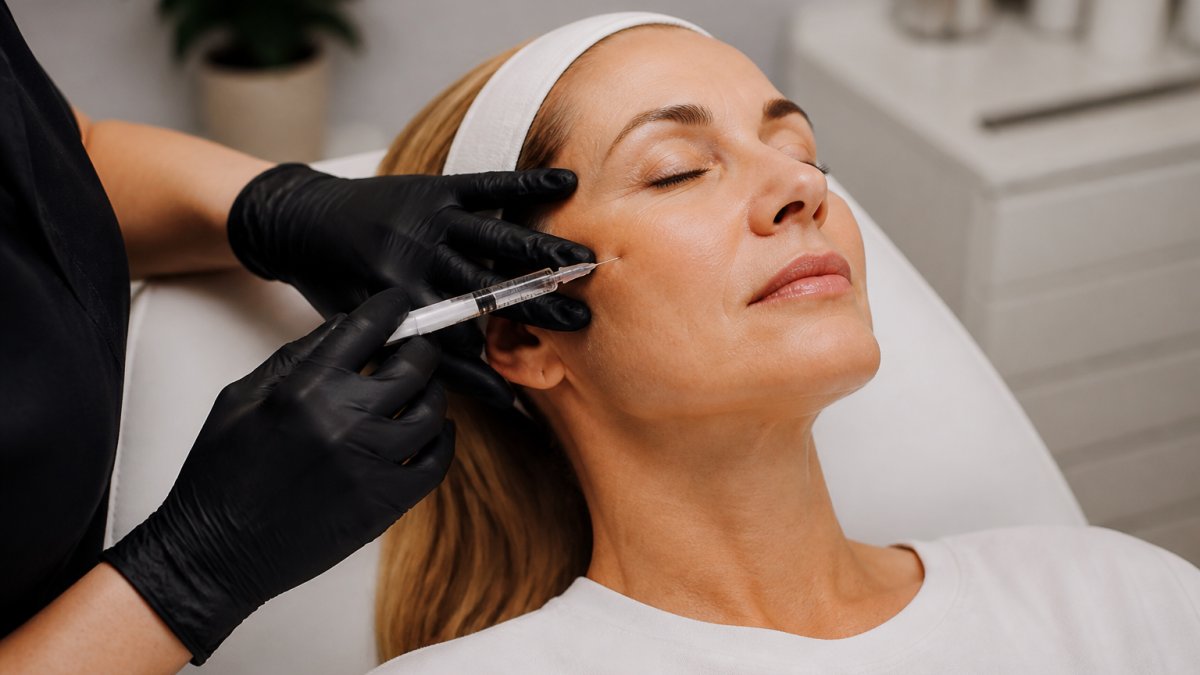
Botox works at the muscle level through intramuscular injection, while fillers are placed in the subcutaneous or dermal layer. This difference determines which product addresses your specific wrinkle pattern.
Botox Cosmetic targets dynamic wrinkles caused by repetitive facial expressions. It temporarily blocks nerve signals that trigger muscle contraction, smoothing the overlying skin for 3 to 4 months before muscle activity gradually returns.
Dermal fillers physically fill space beneath the skin. Juvederm and Restylane use hyaluronic acid to add volume and lift, while Sculptra stimulates your body's own collagen production over time. Treating a volume-loss wrinkle with Botox will not work, and treating a muscle-driven line with filler often looks unnatural.
Which Is Better for Dynamic vs. Static Wrinkles?
Dynamic wrinkles appear when you make facial expressions and disappear at rest. Static wrinkles remain visible even when your face is relaxed.
For dynamic wrinkles, Botox is the clear winner. Frown lines between the eyebrows, crow's feet at the corners of the eyes, and horizontal forehead lines all form from years of muscle contraction. Botox Cosmetic is FDA-approved specifically for these three areas and remains the gold standard for treating them.
For static wrinkles and deep folds, fillers are the better choice. Nasolabial folds, marionette lines, and wrinkles that persist at rest indicate structural volume loss. Hyaluronic acid fillers restore that lost volume, lifting and smoothing the skin from within. Many patients in their 40s and 50s have both wrinkle types simultaneously, which is why a single-product approach often falls short.
Botox Side Effects and Risks: What to Expect
Botox side effects and risks are generally mild and temporary when administered by a qualified provider. The most common reactions include temporary bruising, swelling, and redness at the injection site.
Some patients experience mild headache within the first 24 hours. Treating frown lines carries a small risk of temporary eyelid drooping if the product migrates, though skilled injection technique minimizes this possibility.
The most common concern is looking "frozen" or expressionless, which is almost always the result of over-treatment. A skilled injector uses the minimum effective dose to soften wrinkles while preserving natural movement. Asymmetry is also possible if the product spreads unevenly, so choosing an experienced professional matters as much as the product.
Dermal Filler Longevity: How Long Do Results Last?
Dermal filler longevity varies by product type, treatment area, and individual metabolism. HA fillers like Juvederm and Restylane generally last 6 to 18 months, while Sculptra can last up to two years. But patients more often ask "will it hurt?" and "what if I don't like it?"
Pain Management: What to Actually Expect
The fear of injection pain is one of the most common reasons patients delay treatment. Here is what a typical appointment involves:
- Numbing agents. Most reputable clinics apply a topical lidocaine cream 20-30 minutes before injection. This numbs the skin surface but does not eliminate all sensation, especially for deeper filler placements.
- Buffered fillers. Many modern HA fillers, including most Juvederm and Restylane products, are pre-mixed with lidocaine to reduce discomfort during the injection itself. This is a significant advancement over earlier formulations.
- Needle gauge matters. Botox is delivered through a very fine needle (typically 30- to 32-gauge), which most patients describe as a quick pinch. Fillers for deep folds often use a slightly larger needle or a blunt-tip cannula (27- to 25-gauge) to reduce bruising and allow more precise placement.
- Ice and vibration. Many injectors use ice packs before and after to numb the area and reduce swelling. Some use vibration devices that distract the nerve pathways, a technique borrowed from dental anesthesia.
Most patients rate the discomfort of Botox as 2/10 and filler injections as 3-4/10, with the sensation described as pressure rather than sharp pain. The most uncomfortable areas are typically the nasolabial folds and the lips, where the skin is thin and nerve endings are dense.
Reversibility: The "Undo" Button vs. the "Wait It Out"
A common misconception is that dermal filler longevity means permanent correction. All FDA-approved fillers are eventually metabolized by the body, which is actually a safety feature. But the more important difference between Botox and fillers is what happens if you are unhappy with the result.
- Hyaluronic acid fillers are reversible. If you experience a complication, asymmetry, or simply do not like the look, an enzyme called hyaluronidase (brand names include Hylenex and Vitrase) can be injected to dissolve the filler within 24-48 hours. This is a critical safety net that makes HA fillers the preferred choice for first-time patients or those concerned about overcorrection.
- Botox is not reversible. Once injected, Botox cannot be dissolved or removed. You must wait for the effect to wear off, which typically takes 3 to 4 months. This is why starting with a conservative dose is so important, you cannot undo it if you feel it is too strong.
- Sculptra is not immediately reversible. Because Sculptra works by stimulating your own collagen production over weeks and months, there is no enzyme that can reverse it. This makes patient selection and proper dilution technique even more critical.
Treatment area also affects longevity. Areas with frequent movement, such as the lips, metabolize filler faster than static areas like the cheeks. Deep nasolabial folds often require more product initially, but touch-ups may last longer as the filler stimulates collagen production.
Best Injectable for Deep Nasolabial Folds
The best injectable for deep nasolabial folds is a hyaluronic acid filler, not Botox. These folds run from the nose to the corners of the mouth and form from volume loss, skin laxity, and gravitational descent over time.
Restylane Lyft and Juvederm Voluma are commonly selected because their thicker formulations provide structural support at the mid-to-deep dermal level. Thinner fillers lack the viscosity to lift a deep fold. Sculptra stimulates collagen over several sessions, though results are not immediate.
A qualified provider will assess fold depth and skin quality before selecting a product and determining syringe count. Deep folds typically require more than one syringe, and pricing depends on product volume. A consultation is essential for an accurate estimate.
Combining Botox and Fillers for Deep Wrinkles
For many patients, the most effective approach combines Botox and fillers rather than choosing one. This strategy, called combination therapy or a "liquid facelift," addresses both muscle activity causing dynamic lines and volume loss causing static folds. The real value lies in how treatments are sequenced and layered.
The Standard Combination Protocol
A typical combination protocol involves treating the upper face with Botox and the mid-to-lower face with fillers. The standard sequence most practitioners follow is:
- Botox first. Injections are placed in the glabellar complex (frown lines), frontalis (forehead), and orbicularis oculi (crow's feet). Botox takes 3 to 7 days to fully bind to the neuromuscular junction, so its muscle-relaxing effect is not immediate.
- Fillers second, at the same appointment or after 1-2 weeks. Because Botox does not cause significant swelling in most patients, fillers can be placed immediately after. However, some injectors prefer to wait 7-14 days to assess the final muscle relaxation before adding volume, especially in the lower face where muscle activity influences fold depth.
Why Sequencing Matters
Treating the upper face with Botox and the mid-to-lower face with fillers creates a balanced appearance. Sequencing matters because injecting filler into a nasolabial fold before Botox relaxes the muscles pulling on it may cause the filler to shift once muscle activity decreases. Experienced injectors map the entire face first, identifying every wrinkle type and its contributing factor before drawing up a syringe.
The "Liquid Facelift" Approach
For patients with advanced aging, a full combination plan might include:
- Botox for the forehead, glabella, and crow's feet to stop dynamic wrinkle formation.
- Juvederm Voluma or Restylane Lyft for the cheeks to restore midface volume and indirectly soften the nasolabial folds by lifting the tissue above them.
- A thinner filler like Restylane Silk or Juvederm Volbella for fine lines around the mouth or to precisely fill the fold itself.
- Sculptra as a collagen-stimulating base, often started 4-6 weeks before or after HA fillers, to build structural support over time.
This layered approach treats the cause, not just the symptom. Botox prevents wrinkles from deepening by reducing muscle movement, while filler restores lost volume. The results are often greater than the sum of their parts.
The 30s vs. 50s+ Difference
Combination therapy is not one-size-fits-all. In your 30s, the priority is prevention: small Botox doses for dynamic lines and minimal filler for early volume loss. In your 50s and beyond, the priority shifts to restoration: more substantial midface filler, deeper placement, and potentially Sculptra. A provider recommending the same protocol for a 35-year-old and a 60-year-old is not practicing individualized medicine.
According to American Society of Plastic Surgeons procedural statistics, minimally invasive procedures like injectables continue to grow in popularity, reflecting patient preference for non-surgical facial rejuvenation. The growth is driven not by single-product treatments but by combination protocols that deliver more comprehensive results.
Conclusion: Choosing the Right Treatment
The botox vs fillers decision ultimately depends on the nature of your wrinkles. Botox excels at smoothing dynamic lines caused by muscle movement, while dermal fillers restore volume to static wrinkles and folds. Many patients achieve their best results through a combination of both.
Your anatomy, skin quality, and aesthetic goals all factor into the right treatment plan. A thorough consultation with a qualified medical provider is the only way to determine which approach, or combination of approaches, will deliver the natural-looking results you want. According to FDA information on dermal fillers, choosing a licensed professional and using FDA-approved products is essential for safety and outcomes.
If you are considering injectables for deep wrinkles, the team at Lumyn Medspa develops customized treatment plans tailored to your unique facial structure. We combine advanced technology with personalized care to restore facial volume, soften lines, and enhance your natural contours. American Academy of Dermatology guidance on injectables emphasizes that patient candidacy and provider skill are the most important factors in achieving safe, satisfying results.
Frequently Asked Questions
Can fillers fix deep wrinkles?
Yes, dermal fillers can smooth deep static wrinkles, such as nasolabial folds, by adding volume beneath the skin. Hyaluronic acid fillers like Juvederm and Restylane plump the area, reducing the fold's appearance. Results are immediate, though the effect is temporary. For deep wrinkles caused by muscle movement, Botox may be more effective. A consultation with a qualified provider can determine the best approach.
How long do results last for Botox versus dermal fillers?
Botox results typically last 3 to 4 months, after which muscle activity gradually returns. Dermal filler longevity varies by product and area treated; hyaluronic acid fillers often last 6 to 18 months, while collagen-stimulating fillers like Sculptra can last up to two years. Factors like metabolism and injection site affect duration. Regular maintenance appointments help preserve results.
Do Botox and fillers age you faster?
No, Botox and fillers do not accelerate aging. Botox temporarily relaxes muscles to smooth dynamic wrinkles, and fillers restore volume lost over time. When treatments stop, the effects fade gradually, and your skin returns to its natural state. Some people worry about overuse, but skilled providers aim for natural-looking results. Discussing your aesthetic goals with a qualified professional helps avoid an overdone appearance.
What is more risky, Botox or fillers?
Both Botox and fillers are considered minimally invasive with low risk when performed by a trained professional. Common side effects include temporary bruising, swelling, and redness at the injection site. Serious complications are rare but can include asymmetry or, in very rare cases, vascular issues with fillers. Choosing a licensed, experienced injector minimizes risks. Always discuss your medical history and concerns during a consultation.
Choosing between Botox and fillers does not have to be confusing, but it does require expert guidance. A treatment plan that addresses both dynamic wrinkles and volume loss delivers the most natural, long-lasting results. Lumyn Medspa offers comprehensive injectable consultations with customized treatment plans designed around your facial anatomy and aesthetic goals. Book your consultation today and discover how restored volume and softened lines can refresh your appearance.
This article was written using GrandRanker
Frequently Asked Questions
Q: Can fillers fix deep wrinkles?
A: Yes, dermal fillers can smooth deep static wrinkles, such as nasolabial folds, by adding volume beneath the skin. Hyaluronic acid fillers like Juvederm and Restylane plump the area, reducing the fold's appearance. Results are immediate, though the effect is temporary. For deep wrinkles caused by muscle movement, Botox may be more effective. A consultation with a qualified provider can determine the best approach.
Q: How long do results last for Botox versus dermal fillers?
A: Botox results typically last 3 to 4 months, after which muscle activity gradually returns. Dermal filler longevity varies by product and area treated; hyaluronic acid fillers often last 6 to 18 months, while collagen-stimulating fillers like Sculptra can last up to two years. Factors like metabolism and injection site affect duration. Regular maintenance appointments help preserve results.
Q: Do Botox and fillers age you faster?
A: No, Botox and fillers do not accelerate aging. Botox temporarily relaxes muscles to smooth dynamic wrinkles, and fillers restore volume lost over time. When treatments stop, the effects fade gradually, and your skin returns to its natural state. Some people worry about overuse, but skilled providers aim for natural-looking results. Discussing your aesthetic goals with a qualified professional helps avoid an overdone appearance.
Q: What is more risky, Botox or fillers?
A: Both Botox and fillers are considered minimally invasive with low risk when performed by a trained professional. Common side effects include temporary bruising, swelling, and redness at the injection site. Serious complications are rare but can include asymmetry or, in very rare cases, vascular issues with fillers. Choosing a licensed, experienced injector minimizes risks. Always discuss your medical history and concerns during a consultation.