 listicle
Best Dermal Filler Brands: A 2026 Comparison Guide
Table of Contents
- What Sets the Best Dermal Filler Brands Apart
- Juvéderm: The Versatile Standard
- Restylane: Natural Movement and Precision
- Sculptra: Long-Term Collagen Restoration
- Choosing the Right Filler for Cheeks vs Lips
- Dermal Filler Longevity Comparison
- How Much Do Lip Filler Cost and Other Pricing Factors
- Safety, Reversibility, and Choosing a Provider
- Frequently Asked Questions
Last Updated: October 6, 2026
What Sets the Best Dermal Filler Brands Apart
The best dermal filler brands separate themselves through one thing above all: what happens if you don't like the result. At Lumyn Medspa, we tell every patient the same thing before their first syringe, the brand on the box matters far less than whether your injector can reverse it.
Dermal fillers are injectable gels placed beneath the skin to restore volume, soften folds, and reshape facial contours. Most modern fillers fall into two families: hyaluronic acid (HA) gels, which the body breaks down naturally and which can be dissolved with an enzyme called hyaluronidase, and collagen stimulators, which trigger your own collagen production over months.
That distinction drives everything else.
Hyaluronic Acid vs. Collagen-Stimulating Fillers
HA fillers use a cross-linked gel that mimics the hyaluronic acid already present in your skin. They offer immediate results, a low risk of adverse reactions thanks to their biocompatibility, and full reversibility. Brands like Juvéderm, Restylane, and the RHA Collection sit here.
Collagen stimulators such as Sculptra (poly-L-lactic acid) and Radiesse (calcium hydroxylapatite) work differently. They provide a scaffold, then your body replaces it with its own collagen. Results build gradually and last longer, but they are not reversible.
Juvéderm: The Versatile Standard
Juvéderm remains the most widely recognized family of HA fillers, and the reason is manufacturing, not marketing. Every product in the line is built on VYCROSS technology, a cross-linking process that bonds hyaluronic acid chains at two different molecular weights. The result is a gel that is both firm enough to lift tissue and smooth enough to integrate evenly into the dermal layer without the lumpiness older generation fillers were known for.
That single chemistry platform is why one brand can span so many treatment areas. The difference between a Voluma syringe and a Volbella syringe is not the raw ingredient, it is how tightly the gel is cross-linked and how much water it holds, which together set the product's G-prime, or lift capacity.
- Voluma XC, the highest G-prime in the line. Thick, firm, and designed to sit deep on the bone or in the deep fat compartments to restore midface projection. This is a structural product, not a surface one.
- Vollure XC, medium G-prime. Soft enough to move with expression but dense enough to soften nasolabial folds without migrating.
- Volbella XC, the lowest G-prime in the family. Thin and highly cohesive, formulated for the superficial lip and perioral lines where a firm gel would show through the skin.
- Volux XC, the newest and firmest addition, engineered specifically for jawline definition and chin projection, areas that need bone-level support.
For patients who want predictable, natural-looking volume with a long clinical track record, Juvéderm is hard to beat. Its popularity means some clinics treat it as a one-size-fits-all answer when a thinner or thicker product would serve the anatomy better. A provider who reaches for Voluma in the lips or Volbella in the jawline has not matched the product to the tissue.
Restylane: Natural Movement and Precision
Restylane's strength is precision in dynamic areas. The portfolio spans Kysse for lips, Lyft for cheek lift, and Defyne and Refyne for folds that move when you smile.
This matters. A filler that feels stiff during animation is the fastest route to the "frozen" look patients worry about. Restylane's NASHA and XpresHAn technologies are engineered to flex with facial muscle movement.
Longevity varies by product in the line, so your maintenance schedule depends on which formulation your provider selects and where it is placed.
Sculptra: Long-Term Collagen Restoration
Sculptra works on a completely different timeline. Instead of immediate volumization, it stimulates collagen production over several months, gradually restoring structural support and improving skin elasticity.
Results can last well beyond two years, which makes it appealing for patients who want to treat facial aging as a long project rather than a quick fix. It requires a series of sessions, and the change is subtle rather than dramatic.
There is also a practical consideration: because Sculptra is not an HA filler, hyaluronidase will not dissolve it. Choosing the right provider matters more here than with any reversible product.
Choosing the Right Filler for Cheeks vs Lips
Cheeks and lips need different products, and understanding why is the difference between a natural result and an obvious one.
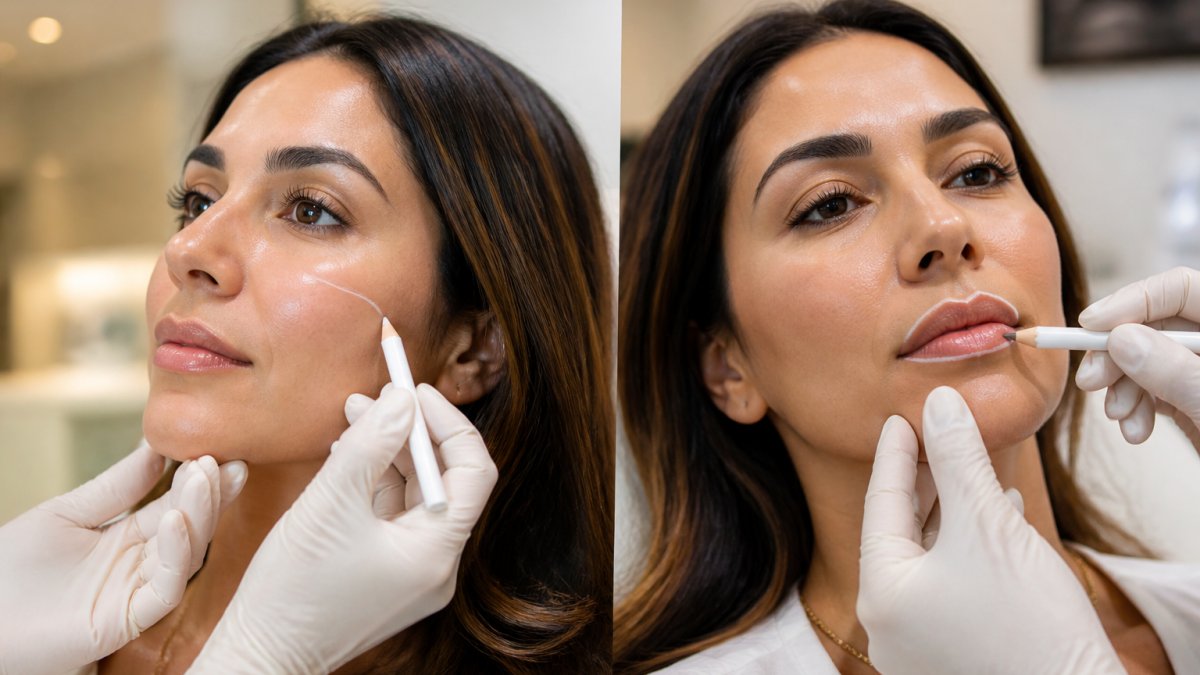
Cheek augmentation requires structural support. The goal is to lift and restore midface volume that has descended with age, which calls for a firmer, deeper filler with high G-prime (the measure of a gel's lift capacity). Juvéderm Voluma XC and Restylane Lyft are built for this. Injections go deeper, onto the bone or in the deep fat compartments.
Lip enhancement is the opposite problem. Lips move constantly, so the filler must be soft and flexible. Overfilling or using a firm product here produces the unnatural look patients fear most. Juvéderm Volbella XC and Restylane Kysse are designed specifically for lip tissue, adding hydration and subtle definition rather than volume alone.
| Treatment Area | Best Filler Type | Key Products | Why It Works |
|---|---|---|---|
| Cheeks and midface | Firm, high G-prime | Juvéderm Voluma, Restylane Lyft | Structural support and lift |
| Lips | Soft, flexible | Juvéderm Volbella, Restylane Kysse | Moves naturally with expression |
| Nasolabial folds | Medium density | Juvéderm Vollure, Restylane Defyne | Softens folds without stiffness |
| Jawline | Thick, structural | Radiesse, Juvéderm Volux | Defines contour and border |
| Fine lines | Thin, cohesive | Belotero Balance | Integrates smoothly, minimal Tyndall effect |
Dermal Filler Longevity Comparison
Dermal filler longevity comparison comes down to product chemistry and treatment area, not brand marketing. Movement, metabolism, and injection depth all shorten how long results hold.
| Filler | Base Material | Typical Longevity | Reversible |
|---|---|---|---|
| Juvéderm | Hyaluronic acid | 9-24 months | Yes |
| Restylane | Hyaluronic acid | 6-18 months | Yes |
| RHA Collection | Hyaluronic acid | 9-15 months | Yes |
| Belotero | Hyaluronic acid | 6-12 months | Yes |
| Radiesse | Calcium hydroxylapatite | 12-18 months | No |
| Sculptra | Poly-L-lactic acid | Up to 2+ years | No |
| Bellafill | PMMA microspheres | Up to 5 years | No |
Lips metabolize filler faster than cheeks because of constant motion. A patient who gets 12 months from a cheek treatment may see lip results fade in six to nine. This is why a maintenance schedule should be built around the area, not the product alone.
How Much Do Lip Filler Cost and Other Pricing Factors
How much do lip filler cost depends on your location, your provider's experience, and how many syringes your treatment plan requires.
Several factors move the number:
- Product choice. Premium HA lines cost more than older formulations.
- Syringe count. Lips typically need one syringe; full facial contouring may need three or more.
- Provider expertise. Experienced injectors charge more, and the difference shows in the result.
- Follow-up policy. Some clinics include a two-week refinement visit; others bill separately.
We do not publish flat pricing at Lumyn Medspa because every treatment plan is built around your anatomy and goals. The honest answer is that a consultation is the only way to get a real number.
Safety, Reversibility, and Choosing a Provider
Safety in filler treatment is a provider problem more than a product problem. Two clinics can use identical Juvéderm syringes and produce wildly different outcomes. The difference is almost always the injector's understanding of facial anatomy and their readiness for the rare event that something goes wrong.
The complication that matters most is vascular occlusion, filler accidentally entering or compressing an artery, cutting off blood supply to the skin.
This is also why reversibility is not a marketing feature, it is a safety feature. HA fillers can be dissolved. Collagen stimulators like Sculptra and Radiesse cannot, and neither can semi-permanent options like Bellafill.
What separates a safe practice from a risky one:
- Licensed, trained injectors who can show you their credentials, their training, and their complication protocol
- Authentic product sourced directly from the manufacturer, never from a discount wholesaler or a third-party reseller
- Hyaluronidase on site for every HA treatment, with a written protocol for how it is used
- A real consultation that includes your medical history, prior treatments, and a candid discussion of risks, not just benefits
- No pressure to buy more syringes than your goals require
- A follow-up visit scheduled before you leave, not offered as an upsell
The FDA regulates dermal fillers as medical devices and requires them to be sold only to licensed providers, which is why FDA guidance on dermal fillers is worth reading before any appointment.
For a broader look at injectable safety and how to evaluate a practice, the American Society of Plastic Surgeons publishes patient resources on choosing a qualified provider.
Demographic tailoring matters too. A 32-year-old seeking preventative lip hydration needs a different plan than a 50-year-old addressing midface volume loss and jawline definition. Age, skin elasticity, and facial structure all shape which filler and how much of it makes sense.
At Lumyn Medspa, we build every treatment plan around a clinical consultation. Our team offers a full range of injectable and laser services, including advanced technology such as Candela Nordlys®, and we customize each plan rather than working from a standard package. If you are new to aesthetic treatments, you will not be judged for asking basic questions. That is what the consultation is for.
Frequently Asked Questions
What brand of dermal filler is considered the gold standard?
Juvéderm and Restylane are often considered the gold standard due to their extensive clinical history, FDA approval, and wide range of specialized formulations. Juvéderm's VYCROSS technology provides smooth consistency for versatile volume, while Restylane's NASHA and XpresHAn technologies offer precision and natural movement. The best choice depends on your treatment area and aesthetic goals, so a consultation with a qualified provider is essential.
Which dermal filler lasts the longest?
Sculptra and Bellafill are known for their longevity. Sculptra, a poly-L-lactic acid stimulator, can provide results lasting over two years by gradually replacing lost collagen. Bellafill, a semi-permanent filler, is designed to last up to five years. However, longevity varies by individual, treatment area, and injection technique. Hyaluronic acid fillers like Juvéderm and Restylane typically last six to 18 months.
Is Juvéderm or Restylane better?
Neither is universally better; they serve different purposes. Juvéderm offers a wide variety of formulations like Voluma XC for cheeks and Volbella XC for lips, making it highly versatile. Restylane is excellent for dynamic areas like the lips and fine lines, with products like Kysse and Lyft designed for natural movement. Your provider can recommend the best option based on your facial anatomy and goals.
How do I know which dermal filler brand is right for my aesthetic goals?
Choosing the right filler depends on your treatment area, desired outcome, and how long you want results to last. For cheek volume and jawline definition, thicker fillers like Juvéderm Voluma XC or Radiesse work well. For lips and fine lines, thinner fillers like Restylane Kysse or Belotero Balance are ideal. A clinical consultation with a qualified injector is the best way to match a brand to your needs.
How should I choose a qualified provider for dermal filler injections?
Choose a licensed medical professional with specialized training in facial anatomy and injection techniques. Ask about their experience with specific filler brands, whether they carry hyaluronidase for emergency reversal, and if they use FDA-approved products from reputable sources. A thorough consultation should include a review of your medical history, aesthetic goals, and a discussion of risks and aftercare.