 ultimate-guide
How Much Do Lip Filler Cost? A 2026 Pricing Guide
Table of Contents
- What Determines Lip Filler Cost
- 0.5 ml vs 1 ml Lip Filler: How Syringe Size Affects Price
- Lip Filler Longevity: How Long Results Last and What That Means for Your Budget
- Hidden Costs Beyond the Syringe
- How to Choose a Lip Filler Provider
- Maintenance and Long-Term Financial Planning
- Insurance and Financing Reality
- Frequently Asked Questions
Last Updated: September 20, 2026
What Determines Lip Filler Cost
Lip filler cost is not a single number. It reflects the product used, the amount injected, the skill of the provider, and the market you're buying in. Price is really a function of four variables: who is injecting, what they're injecting, how much of it you need, and where you are.
The biggest variable is the injector.
Provider Expertise and Credentials
A board-certified plastic surgeon or dermatologist typically charges more than a general practitioner or an aesthetician working under supervision. That gap reflects training, complication management, and the ability to correct a result that goes wrong. A provider who can handle a vascular occlusion is worth more than one who cannot, and pricing usually signals that difference. Ask directly who will hold the syringe and what their credentials are.
Geographic Variance and Med Spa Overhead
Rent, staffing, and licensing costs vary enormously by market, and those costs get passed to you. A med spa in a high-traffic urban district carries overhead a suburban clinic does not. This is why two clinics a short drive apart can quote noticeably different prices for the same product. Location is not a quality signal by itself, but it does explain a real part of the price difference. For current pricing, see the Lumyn Medspa website.
0.5 ml vs 1 ml Lip Filler: How Syringe Size Affects Price
Syringe size is the single biggest line item on your quote, so it is worth understanding how clinics actually price it. A 0.5 ml syringe is not simply half the price of a 1 ml syringe of the same product. Most practices price the smaller volume at a premium per unit because the appointment overhead, room time, numbing, the injector's hands-on minutes, sterile setup, and documentation, is nearly identical whether 0.5 ml or 1 ml goes in.
| Syringe Size | Typical Use Case | Price Relationship |
|---|---|---|
| 0.5 ml | Subtle definition, first-timers, lip flip add-on | Lower total, highest per-unit cost |
| 1 ml | Standard augmentation, most first treatments | Higher total, best per-unit value |
| 1.5 ml+ | Full volume restoration, revision of prior work | Scales roughly linearly with units used |
What Actually Drives the Per-Syringe Number
Four inputs move the price of a single syringe more than anything else:
- Product brand and formulation. A plain hyaluronic acid gel and a cross-linked, lidocaine-infused filler built for lip mobility are not priced the same. The more heavily cross-linked the gel, the more it tends to cost and the longer it tends to hold.
- Injector credentials. A board-certified dermatologist or plastic surgeon typically prices above a nurse injector or a supervised aesthetician, and that gap reflects complication management, not marketing.
- Market overhead. Rent, staffing, and licensing costs in a high-traffic urban district get passed through to the syringe price in a way a suburban clinic's do not.
- Whether the quote is all-in. Some clinics bundle numbing, a two-week touch-up, and aftercare into the syringe price. Others itemize. Two quotes for "1 ml" can differ by a meaningful margin once you compare what is actually included.
The Mistake That Erases the Savings
The most common error is choosing a 0.5 ml syringe purely to lower the ticket, then needing a second appointment a few weeks later to reach the look the patient actually wanted. That second visit carries its own overhead, its own numbing, and often its own consultation, so the total ends up higher than if the patient had started at 1 ml.
Lip Filler Longevity: How Long Results Last and What That Means for Your Budget
Lip filler longevity typically runs six to eighteen months, depending on the product, the treatment area, and how your body metabolizes hyaluronic acid. Lips move constantly, which accelerates breakdown compared with static areas like the cheeks.
Hidden Costs Beyond the Syringe
The quoted syringe price rarely reflects what you actually pay. Several costs sit outside it, and they add up over a year of treatment.
- Numbing cream or nerve block: sometimes bundled, sometimes billed separately
- Post-treatment arnica or aftercare products: often recommended, occasionally included
- Correction appointments: if you want a minor asymmetry adjusted
- Time off work: unpaid hours if you bruise badly
- Travel and parking: trivial per visit, meaningful across a year
Consultation Fees and Touch-Up Appointments
Many clinics charge a consultation fee that is credited toward treatment if you book. Others waive it entirely. Ask before you go, because a "free" consultation that converts into a pressured same-day sale is not free in any meaningful sense.
How to Choose a Lip Filler Provider
The right provider is a licensed medical professional who shows you the product packaging, explains the risks, and does not rush you into a same-day decision. Everything else is secondary.
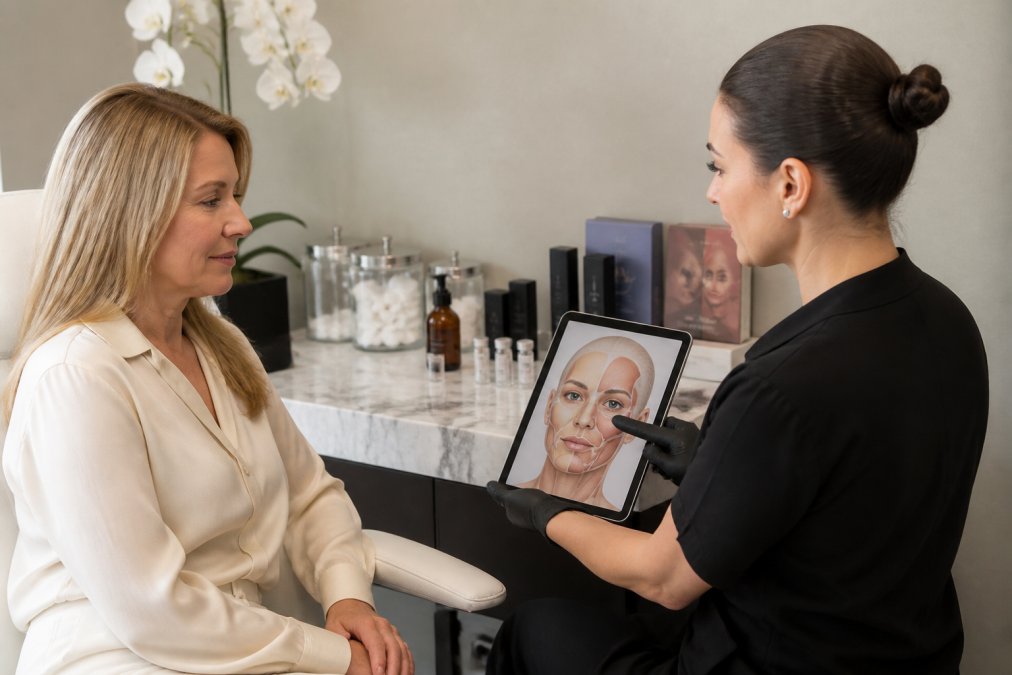
Use this checklist before you book:
- Confirm the injector's license and credentials, and ask who handles complications
- Ask to see the sealed product and its lot number before injection
- Request a written quote covering the syringe, consultation, and any touch-up
- Ask what happens if you are unhappy with the result
- Read reviews that mention aftercare, not just the result photos
- Walk away from any pressure to decide on the spot
Maintenance and Long-Term Financial Planning
Every other guide stops at the first syringe. The number that actually matters for your budget is the annual cost of keeping the result you want, and that number is almost never the same as your first appointment.
The Subscription Math
Lip filler behaves less like a purchase and more like a subscription. If your product holds for about a year, you are budgeting one full treatment cycle every twelve months, plus the realistic possibility of a touch-up somewhere in that window. If your body metabolizes hyaluronic acid faster, and lips, which move constantly, tend to fade faster than static areas like the cheeks, that cycle shortens and the annual cost rises.
Why Letting It Fully Fade Costs More
This is the part most guides leave out. Maintaining volume and rebuilding volume are not the same job. When filler has fully dissolved, the injector is starting from your baseline anatomy again and has to recreate the entire result. When you top up before full fade, the injector is refining an existing shape and typically needs less product to hold it.
Build a Realistic Annual Budget
A workable framework has four lines, not one:
- Base treatment, your primary syringe cost, once or twice a year depending on your fade pattern.
- Touch-up reserve, a smaller amount set aside for a symmetry refinement at the two-week mark, if your clinic charges for it.
- Aftercare, arnica, cold packs, and any recommended post-treatment products.
- Reversal reserve, a rarely used but real line. Hyaluronidase, the enzyme that dissolves hyaluronic acid filler, is a separate billable service at most clinics, and while most patients never need it, the ones who do are glad they planned for it.
Track Your Own Fade Pattern
Your metabolism is the variable no guide can predict for you. Note the date of each appointment and the first week you notice volume dropping. Most patients find their personal cycle is remarkably consistent, which turns next year's spend from a guess into a number you already know.
Insurance and Financing Reality
Elective lip augmentation is almost never covered by health insurance. Insurers classify it as cosmetic, and cosmetic procedures fall outside standard medical coverage. The exception is a documented reconstructive need, which is a different clinical category and a different conversation.
That leaves three realistic paths:
- Pay per visit from a dedicated savings fund
- Clinic payment plans, which some med spas offer in-house
- Third-party medical financing, which spreads cost over months but adds interest
Frequently Asked Questions
Is 0.5 ml of lip filler worth the cost?
For first-time patients or those wanting subtle definition, 0.5 ml can be worth it. A smaller syringe costs less upfront but may require more frequent touch-ups to maintain volume. If your goal is noticeable augmentation, 1 ml often provides better value per milliliter. During your consultation, a provider can assess your lip anatomy and recommend the right amount for your desired outcome.
How long do lip fillers typically last?
Lip filler longevity varies by product type, injection technique, and individual metabolism. Hyaluronic acid fillers commonly last six to twelve months in the lips, though some formulations may last longer. Factors like the treatment area's movement and your body's natural breakdown of the filler affect duration. Touch-up appointments can extend results, but planning for maintenance is part of the overall lip filler cost.
Does the cost of lip filler include the consultation fee?
Not always. Some providers bundle the consultation into the treatment price, while others charge a separate fee that may be credited toward your procedure. Ask upfront whether the consultation is complimentary and if it applies to your treatment. This is one of the hidden costs that can affect your total lip filler cost, so clarify before booking.
Are there hidden costs associated with lip augmentation?
Beyond the syringe itself, you may encounter consultation fees, touch-up charges, and aftercare products. Some practices charge for follow-up visits or require a deposit. Insurance rarely covers cosmetic lip augmentation, so out-of-pocket planning matters. Always request a written estimate that itemizes every fee before your appointment to avoid surprises.