 listicle
7 Best Preventative Aesthetic Treatments for Your 30s
Table of Contents
- Why Your 30s Are the Decade for Preventative Aesthetic Treatments
- 1. Preventative Botox for 30s: Stopping Lines Before They Set
- 2. HydraFacial: The No-Downtime Glow Treatment
- 3. Moxi Laser: Prejuvenation for Early Sun Damage
- 4. Microneedling: Building Collagen from Within
- 5. Chemical Peels: Resurfacing for Tone and Texture
- 6. Dermal Fillers: Restoring Subtle Volume Loss
- 7. Biostimulatory Injectables: Long-Term Collagen Banking
- Building Your Aesthetic Treatment Maintenance Schedule
- Frequently Asked Questions
Last Updated: October 2, 2026
Why Your 30s Are the Decade for Preventative Aesthetic Treatments
Preventative aesthetic treatments for your 30s differ from the corrective treatments people seek in their 50s. Collagen production is still strong but declining, so the goal is maintenance, not repair. (Source: the American Academy of Dermatology's guidelines on sun protection)
Most people wait until lines are etched and volume is gone, then chase results instead of preserving them.
Preventative aesthetic care means using minimally invasive treatments before visible aging becomes pronounced, to slow collagen loss and prevent lines from setting.
Where to start: neuromodulators, collagen stimulators, and gentle resurfacing cover most of what your 30s need. Below, we cover each treatment, who it suits, and how often you'll need it.
The Stressors Most People Forget to Address
UV exposure is the headline cause of skin aging, but three other stressors accelerate collagen breakdown in your 30s, and most routines ignore them.
Air pollution. Traffic-related particulate matter and ozone generate free radicals that deplete antioxidants and contribute to uneven tone and fine lines.
Infrared radiation and heat. Infrared from sunlight and prolonged heat reaches deeper than UV and can degrade collagen over time.
Why This Changes Your Treatment Plan
These stressors don't replace the treatments below; they change how you sequence them. If pollution and visible light drive pigment and dullness, resurfacing treatments like Moxi and chemical peels move up your list. If collagen degradation is the concern, collagen stimulators and microneedling become the backbone.
1. Preventative Botox for 30s: Stopping Lines Before They Set
Preventative Botox for 30s is the most effective way to stop expression lines from becoming permanent.
The FDA approved Botox for moderate to severe frown lines, and it remains the gold standard for early intervention. A common mistake is waiting until lines are visible at rest.
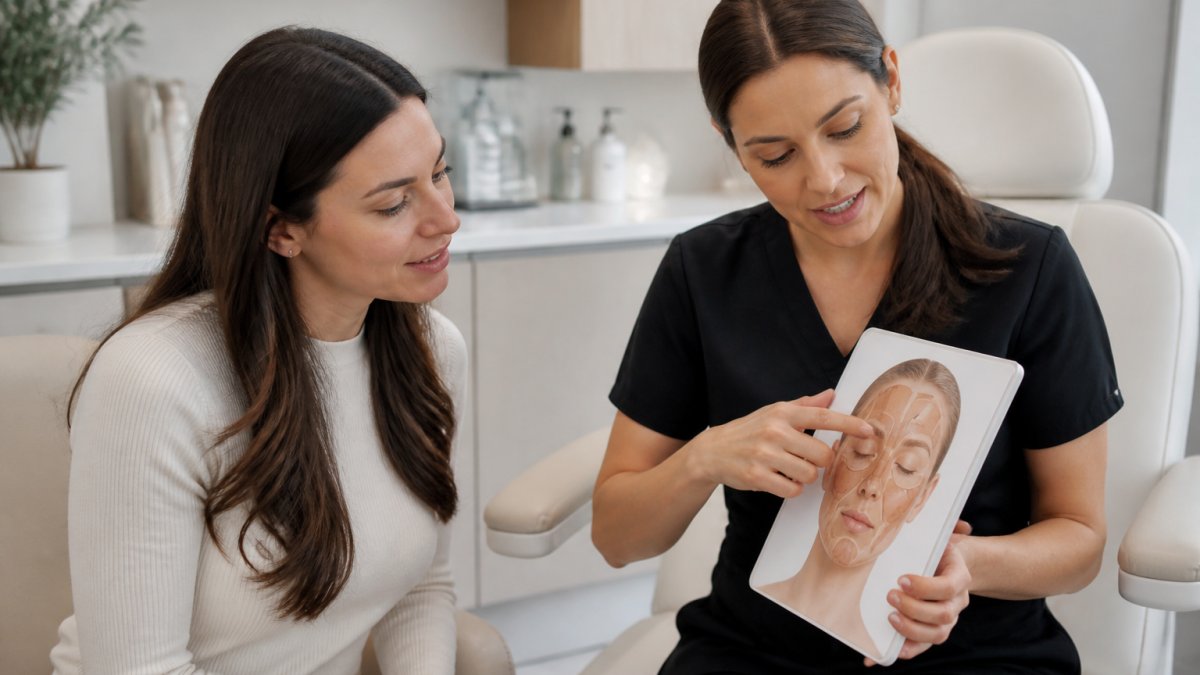
Typical maintenance runs every three to four months. The tradeoff is consistency: skip too many sessions and the muscles relearn their old habits. Results look natural rather than obvious, exactly the point.
2. HydraFacial: The No-Downtime Glow Treatment
HydraFacial is a multi-step hydradermabrasion treatment that cleanses, exfoliates, extracts, and hydrates in one session, using vortex technology to clear pores without aggressive scrubs or manual extractions.
What makes it a strong fit for this decade is the zero downtime: book a session over lunch and return to work with a glow, not a red face.
It won't rebuild collagen or stop muscle movement, think of it as upkeep, not correction.
| Treatment | Downtime | Best For | Typical Frequency |
|---|---|---|---|
| Botox | None | Expression lines | Every 3-4 months |
| HydraFacial | None | Dullness, texture | Every 4-6 weeks |
| Moxi Laser | 2-3 days | Sun damage, tone | 3-4 sessions, then yearly |
| Microneedling | 2-3 days | Firmness, texture | 3-4 sessions, then quarterly |
| Chemical Peels | 1-5 days | Tone, texture, spots | Every 4-8 weeks |
| Dermal Fillers | 1-3 days | Volume loss | Every 6-18 months |
| Biostimulators | 1-3 days | Collagen banking | Every 1-2 years |
3. Moxi Laser: Prejuvenation for Early Sun Damage
Moxi is a non-ablative fractionated laser built for this stage of life. It targets early sun damage, uneven pigmentation, and the first hints of texture change, gently enough for most skin types.
The concept is "prejuvenation": treating visible damage before it deepens. Sun exposure shows up as dark spots and dullness well before wrinkles arrive, and Moxi addresses those early markers while stimulating collagen.
Recovery is short. Most people see redness for a couple of days, then a light bronzing as pigment lifts. A series of sessions is usually needed for the best result, followed by yearly touch-ups. According to the American Academy of Dermatology's guidance on laser and light therapy, matching the device to your skin type and concern is the key to safe outcomes.
4. Microneedling: Building Collagen from Within
Microneedling uses fine needles to create controlled micro-injuries, triggering a surge in collagen and elastin that firms skin and smooths texture over the following weeks (pubmed.ncbi.nlm.nih.gov).
Its appeal is that it's natural: rather than adding volume or freezing muscle, it asks your skin to rebuild itself. FDA-cleared devices with sterile, single-use cartridges are the safety standard.
The catch is patience: results build gradually across a series of sessions, with a few days of redness after each. It shines on early laxity and textural irregularities, changes that show up in your 30s before they're obvious to anyone but you.
5. Chemical Peels: Resurfacing for Tone and Texture
Chemical peels apply professional-grade acids to exfoliate the top layers of skin, revealing smoother, more even tone underneath. They're among the most customizable treatments, from light refresh to deeper resurfacing.
For this decade, medium-depth peels targeting fine lines, acne scarring, and hyperpigmentation deliver the best balance of results and recovery. A common mistake is going too aggressive too fast, over-peeling leaves skin reactive and sensitive.
Redness and peeling are expected for a few days, depending on strength. Peels are also the most cost-effective option here relative to laser treatments, making them practical to sustain.
6. Dermal Fillers: Restoring Subtle Volume Loss
Dermal fillers use hyaluronic acid gels, a substance that occurs naturally in your skin, to restore volume that begins fading in your 30s.
Fillers fix that. Results are immediate, and hyaluronic acid fillers are reversible with an enzyme if you're unhappy, a genuine safety net, especially for first-timers.
The downside is bruising and swelling for a day or two, and results fade over six to eighteen months. The key is restraint: small amounts placed strategically look like you, just rested.
7. Biostimulatory Injectables: Long-Term Collagen Banking
Biostimulatory injectables trigger your body to produce its own collagen over time. Instead of adding volume directly, they improve skin structure and thickness, firming and supporting the face from underneath.
This is the long game: results develop over weeks and months and last considerably longer than traditional fillers.
The tradeoff is no immediate change, which frustrates people who want instant results.
Building Your Aesthetic Treatment Maintenance Schedule
Aesthetic treatment maintenance schedule planning comes down to matching frequency to how fast each treatment's effects fade. Botox needs the most frequent touch-ups. Biostimulators need the least. Everything else falls in between.
The smartest approach in your 30s is to layer treatments rather than stack them all at once. Rotate: neuromodulators every few months, a resurfacing treatment quarterly, and a collagen stimulator yearly. This spreads cost and recovery across the calendar.
The At-Home Routine That Protects Your Results
In-office treatments only hold their ground if your daily routine supports them. A medical grade skincare routine for 30s protects all of this between appointments.
Morning: antioxidant first, then sunscreen. Apply a vitamin C serum to clean skin, wait about a minute, then layer broad-spectrum SPF 30 or higher last.
Evening: retinoid, then moisturizer. A nightly retinoid is the most evidence-backed ingredient for fine lines, texture, and tone.
Matching Your Routine to Your Treatment Calendar
Your at-home actives should shift depending on what you had done in the office and how recently.
| Window | What to Pause | What to Keep |
|---|---|---|
| 3-5 days after a peel or laser | Retinoids, exfoliating acids, vitamin C | Gentle cleanser, ceramide moisturizer, SPF |
| 5-10 days after microneedling | Exfoliating acids, strong retinoids | Hydrating serums, moisturizer, SPF |
| Day after neuromodulators | Nothing needs pausing | Full routine, but avoid facial massage for 24 hours |
| Day after fillers | Exfoliating acids over injection sites | Gentle routine, SPF |
A medical grade skincare routine for 30s is what protects all of this between appointments. Medical-grade formulations carry higher concentrations of active ingredients than over-the-counter products, which is why they're often recommended alongside professional treatments. The catch is compliance: they only work if you use them daily, and skipping days undoes the benefit.
Frequently Asked Questions
At what age should you start preventative aesthetic treatments?
Most providers suggest starting in your late 20s to early 30s, when fine lines begin to form but before they become etched into the skin. Preventative Botox for 30s is often the first step, targeting dynamic wrinkles in the forehead, glabella, and crow's feet. Starting early does not mean you need a full treatment plan immediately; a consultation can help you decide which options match your skin and goals.
How do preventative injectables differ from corrective treatments?
Preventative injectables are used before lines become static, relaxing the muscles that cause expression wrinkles. Corrective treatments address deeper lines and volume loss that already exist, often requiring more product or combination approaches. In your 30s, the goal is to slow collagen breakdown and prevent etching, which is why a lighter touch and consistent schedule work better than waiting until wrinkles are deeply set.
What is a realistic aesthetic treatment maintenance schedule?
A typical aesthetic treatment maintenance schedule might include Botox every 3 to 4 months, HydraFacial every 4 to 6 weeks, and laser or microneedling sessions 2 to 3 times per year. Your exact plan depends on your skin concerns, budget, and how your skin responds. Your provider can adjust the frequency as your skin changes over time.
Are medical-grade facials considered preventative aesthetic care?
Yes. Treatments like HydraFacial and professional chemical peels are considered preventative because they remove dead skin cells, boost hydration, and support collagen production before damage becomes visible. They also prepare the skin to better absorb a medical grade skincare routine for 30s, which helps maintain results between professional sessions.