 listicle
Best Aesthetic Treatments for Sun Damage (2026)
Table of Contents
- How Sun Damage Actually Changes Your Skin
- Top Aesthetic Treatments for Sun Damage, Ranked by Concern
- 1. IPL Photofacial: Best for Sunspots and Redness
- 2. Fractional Laser (Fraxel): Best for Texture and Deep Discoloration
- 3. PicoSure Pro: Best for Stubborn Pigmentation
- 4. Medical-Grade Chemical Peels: Best for Overall Skin Renewal
- 5. Prescription Retinoids and Topicals: Best for At-Home Maintenance
- 6. HydraFacial: Best for Mild Damage and Ongoing Upkeep
- Is IPL Effective for Sun Damage? What to Expect
- Laser Skin Rejuvenation Recovery Time: A Realistic Timeline
- Choosing the Right Treatment for Your Skin Tone and Budget
- Best Skincare Routine After Laser Treatment
- Which Aesthetic Treatment for Sun Damage Is Right for You?
- Conclusion
Last Updated: August 23, 2026
Sun damage is one of the most common skin concerns dermatologists and medspa providers treat, yet it's also one of the most misunderstood. Many people assume a single treatment will erase years of photoaging, when the reality is that the best aesthetic treatments for sun damage depend heavily on your skin tone, the depth of the damage, and how much downtime you can realistically manage. This guide cuts through the confusion.
Quick Picks:
- Best for sunspots and redness: IPL Photofacial
- Best for texture and deep discoloration: Fractional Laser (Fraxel)
- Best for stubborn pigmentation: PicoSure Pro
- Best for overall skin renewal: Medical-Grade Chemical Peels
- Best for at-home maintenance: Prescription Retinoids
- Best for mild damage and upkeep: HydraFacial
How Sun Damage Actually Changes Your Skin
Sun damage is cumulative, structural harm to the epidermis and dermis caused by prolonged UV exposure. UV rays break down collagen and elastin, disrupt melanin production, and accelerate cellular aging over decades.
Visible results include hyperpigmentation, sunspots, age spots, fine lines, uneven texture, and actinic keratosis, a rough, scaly patch that dermatologists monitor closely due to its potential to progress. The skin you see today reflects sun exposure from years ago, which is why treatments must address multiple skin layers. According to the American Academy of Dermatology's patient education resources, broad-spectrum sunscreen with SPF 30 or higher remains the most effective prevention tool, regardless of which corrective treatment you pursue.
Top Aesthetic Treatments for Sun Damage, Ranked by Concern
The six treatments below represent the current standard of care for correcting UV-induced skin changes. Each targets a different depth and concern.
1. IPL Photofacial: Best for Sunspots and Redness
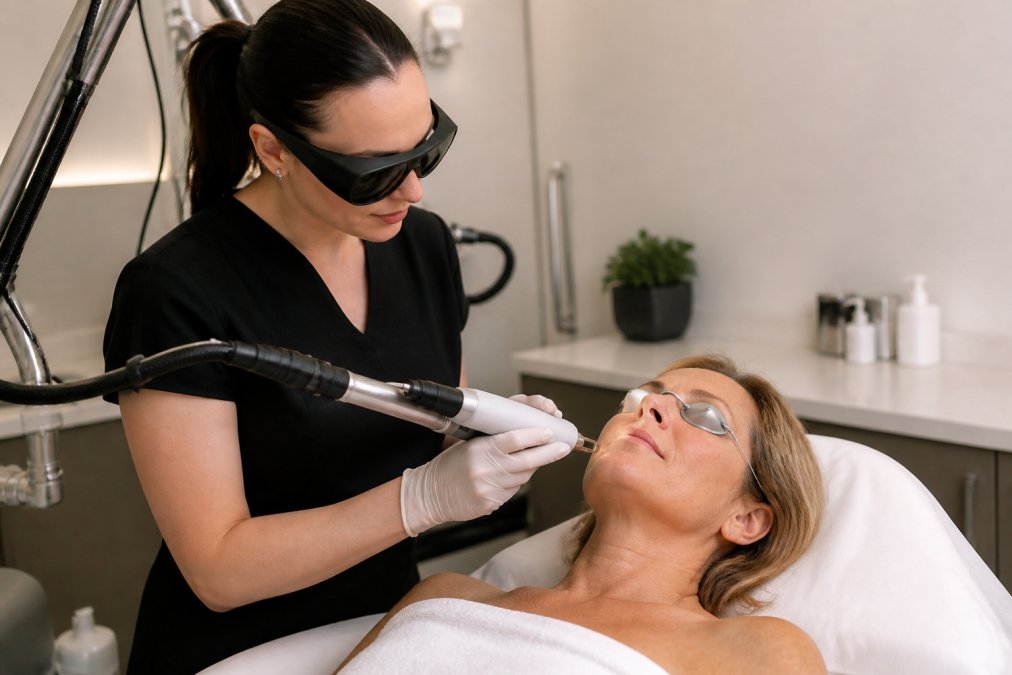
IPL (intense pulsed light) therapy is the go-to treatment for surface-level hyperpigmentation and redness caused by sun exposure. It delivers broad-spectrum light energy that targets melanin in sunspots and oxyhemoglobin in dilated blood vessels.
Sessions take 20 to 30 minutes with minimal downtime. Treated spots typically darken within 24 to 48 hours, then flake away over the following week. A typical course involves three to five sessions spaced three to four weeks apart.
The honest limitation: IPL is not appropriate for all skin tones. The technology targets contrast between pigment and surrounding skin, carrying higher risk of post-inflammatory hyperpigmentation in medium to deeper skin tones. A thorough Fitzpatrick skin type assessment before treatment is essential.
2. Fractional Laser (Fraxel): Best for Texture and Deep Discoloration
Fractional laser treatment, most commonly Fraxel, targets microscopic columns of skin tissue, creating controlled micro-injuries that trigger collagen and elastin production while leaving surrounding tissue intact. Results include significant improvement in skin texture, fine lines, wrinkles, melasma, and deep discoloration that IPL cannot reach, with results continuing to develop over three to six months as new collagen remodels.
Expect four to seven days of redness, swelling, and visible peeling after treatment. This is not a "back to work the next day" treatment, but for the right candidate, the tradeoff is worth it.
Best for: Moderate to severe sun damage with textural changes, deep sunspots, and early structural photoaging.
3. PicoSure Pro: Best for Stubborn Pigmentation
PicoSure Pro uses picosecond technology to shatter pigment particles without generating the thermal heat that conventional lasers produce. This makes it particularly effective for stubborn pigmentation, including melasma and sun spots resistant to other treatments. The ultra-short pulse duration stimulates collagen production through pressure-wave mechanism rather than heat, translating to less downtime and lower risk of post-inflammatory hyperpigmentation. It's one of the more versatile options for a broader range of skin tones.
4. Medical-Grade Chemical Peels: Best for Overall Skin Renewal
Medical-grade chemical peels work through controlled chemical exfoliation of the epidermis and, at deeper concentrations, the upper dermis. The VI Peel combines multiple active ingredients to address hyperpigmentation, sun spots, and uneven skin tone simultaneously. The Cosmelan Peel uses depigmentation ingredients that interrupt melanin synthesis at multiple stages, particularly effective for melasma and severe hyperpigmentation across all skin tones.
Peels vary significantly in depth. Glycolic acid peels are maintenance tools; TCA peels at higher concentrations are medical procedures with several days of visible peeling and post-procedure care requirements.
5. Prescription Retinoids and Topicals: Best for At-Home Maintenance
Prescription retinoids, particularly tretinoin, are FDA-approved for treating fine facial wrinkles and mottled hyperpigmentation caused by sun exposure. They accelerate cellular turnover, fade pigmentation, and stimulate collagen production over time. The initial retinization phase involves several weeks of redness, dryness, and peeling as skin adjusts, but those who persist typically see meaningful improvement in texture, tone, and fine lines over three to six months.
Prescription-strength hydroquinone, which inhibits melanin production, is often paired with retinoids for targeted dark spot and melasma correction. Both require diligent daily sunscreen use, since retinoids increase photosensitivity.
6. HydraFacial: Best for Mild Damage and Ongoing Upkeep
HydraFacial is a maintenance tool, not a corrective treatment for significant sun damage. It uses vortex-fusion delivery to cleanse, exfoliate, extract, and infuse skin with antioxidants, peptides, and hyaluronic acid in a single session with zero downtime. For mild photoaging, dullness, and uneven texture, it delivers immediate results. HydraFacial won't address established melasma, deep sun spots, or structural collagen loss.
Is IPL Effective for Sun Damage? What to Expect
IPL is highly effective for surface-level sun damage, particularly sunspots, freckles, redness, and uneven skin tone in lighter to medium skin tones. It is not a universal solution and its effectiveness drops significantly for deeper pigmentation or darker Fitzpatrick skin types.
IPL targets chromophores, specifically melanin and hemoglobin, using specific light wavelengths. Treated spots darken within 24 to 48 hours, then gradually flake away over the following week. A full course of three to five treatments is standard for meaningful, lasting correction, with maintenance sessions every six to twelve months helping sustain results.
According to clinical guidance from the American Society for Dermatologic Surgery, patient selection and pre-treatment assessment are the most critical factors in IPL outcomes. The treatment is not appropriate for tanned skin or patients on photosensitizing medications.
Laser Skin Rejuvenation Recovery Time: A Realistic Timeline
Laser skin rejuvenation recovery time varies significantly depending on the laser type, energy settings, and individual skin response.
| Treatment | Typical Downtime | Peak Redness | Return to Work |
|---|---|---|---|
| IPL Photofacial | 1-3 days | Day 1-2 | Next day (with makeup) |
| Fraxel Fractional Laser | 4-7 days | Day 2-3 | 5-7 days |
| PicoSure Pro | 1-2 days | Day 1 | Next day |
| Medical-Grade Peel (TCA) | 5-10 days | Day 3-5 | 7-10 days |
| HydraFacial | None | None | Same day |
| VI Peel | 3-7 days | Day 2-4 | 5-7 days |
Non-ablative options like IPL and PicoSure Pro carry far less social downtime. Most patients return to normal activities within one to two days using mineral sunscreen and gentle skincare. Fraxel and deeper TCA peels genuinely require scheduling around professional commitments, but results justify the downtime for the right candidate.
Choosing the Right Treatment for Your Skin Tone and Budget
Skin Tone and Ethnicity Considerations
Skin tone is one of the most important variables in treatment selection. The Fitzpatrick scale classifies skin from Type I (very fair) to Type VI (deeply pigmented) and guides treatment decisions because different skin tones respond differently to light and heat energy.
Lighter skin tones (Fitzpatrick I-III) generally tolerate IPL, Fraxel, and aggressive TCA peels well. Medium to deeper skin tones (Fitzpatrick IV-VI) require careful selection. IPL carries real risk of post-inflammatory hyperpigmentation because light energy can't reliably distinguish between a sunspot and surrounding melanin-rich skin. PicoSure Pro, the Cosmelan Peel, and prescription retinoids with hydroquinone are generally safer and more effective options.
As documented in guidance from the National Institutes of Health on skin of color dermatology, post-inflammatory hyperpigmentation is a significant clinical concern in patients with darker skin tones, and treatment protocols must be adapted accordingly.
Cost-Benefit Breakdown by Treatment Type
IPL and HydraFacial sit at the more accessible end per session but require ongoing maintenance. Fraxel and PicoSure Pro cost more per session but often deliver more significant correction in fewer treatments, making them more cost-effective for moderate to severe sun damage over 12 months.
Medical-grade peels like the VI Peel and Cosmelan Peel occupy the middle ground. Prescription retinoids are among the most cost-effective long-term tools available, particularly for maintaining results after an in-office treatment course.
For accurate pricing, book a consultation at Lumyn Medspa to discuss which treatment combination fits your skin goals and budget.
Best Skincare Routine After Laser Treatment
The best skincare routine after laser treatment follows one principle: protect the skin barrier and minimize inflammation while new skin forms. The first seven to fourteen days after any laser or peel procedure are most critical.
A practical post-procedure care protocol:
- Cleanser: Use a gentle, fragrance-free, non-foaming cleanser twice daily. Avoid active ingredients like glycolic acid, salicylic acid, or vitamin C until fully healed.
- Moisturizer: Apply a barrier-repair moisturizer containing ceramides or hyaluronic acid to support recovery and reduce peeling discomfort.
- Sunscreen: Broad-spectrum SPF 30 or higher, applied every morning without exception, is the single most important step. UV exposure during healing can cause new hyperpigmentation that undoes the treatment.
- Avoid: Retinoids, exfoliating acids, physical scrubs, and heat until the provider clears you.
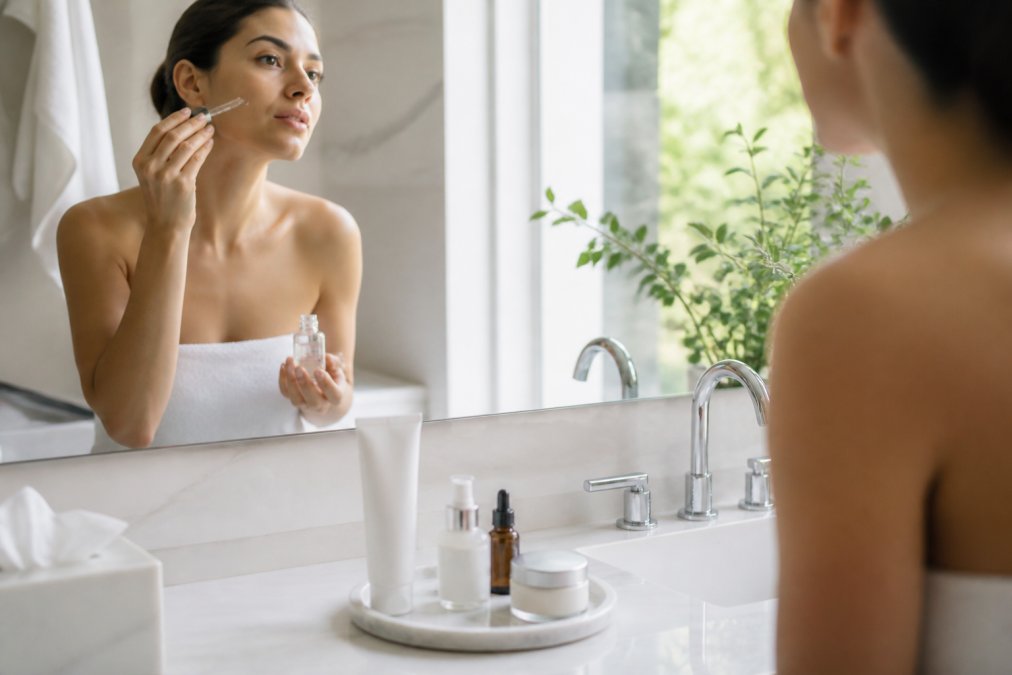
Reintroducing active ingredients too early is one of the most common mistakes patients make. A conservative timeline of two to four weeks before reintroducing retinoids or vitamin C is reasonable, though your provider's specific instructions take precedence.
Which Aesthetic Treatment for Sun Damage Is Right for You?
The right aesthetic treatment for sun damage matches the depth of your damage, your skin tone, your tolerance for downtime, and your long-term maintenance commitment.
| Your Primary Concern | Recommended Starting Point |
|---|---|
| Surface sunspots, redness, uneven tone (light-medium skin) | IPL Photofacial |
| Stubborn pigmentation, melasma (all skin tones) | PicoSure Pro or Cosmelan Peel |
| Texture, fine lines, deep discoloration | Fractional Laser (Fraxel) |
| Overall renewal, mild sun damage | Medical-Grade Chemical Peel |
| At-home maintenance or post-treatment upkeep | Prescription Retinoids |
| Mild damage, ongoing skin health | HydraFacial |
| Medium to deep skin tones with hyperpigmentation | Cosmelan Peel or PicoSure Pro |
A common mistake is choosing a treatment based on what a friend had done rather than what your specific skin needs. A consultation with a qualified provider who performs proper skin assessment, including Fitzpatrick typing and sun exposure history review, is the only reliable way to build an effective treatment plan. Maintenance matters as much as initial correction. The most successful outcomes combine an in-office corrective treatment with a consistent at-home routine anchored by broad-spectrum sunscreen and, where appropriate, prescription topicals.
Sun damage is a long-term skin health concern, not a cosmetic inconvenience, and today's treatments are more precise and effective than ever. The challenge is matching the right treatment to the right patient. Lumyn Medspa offers customized treatment plans using advanced technology, including the Candela Nordlys system, to address sun damage across a range of skin types and concerns. Whether you're starting with IPL, exploring fractional laser skin rejuvenation, or building a prescription topical maintenance routine, the right plan starts with an honest assessment of where your skin is now. Book a consultation with the Lumyn Medspa team to get a personalized recommendation and take the first step toward clearer, more even skin.
===
Frequently Asked Questions
What is the most effective professional treatment for sun-damaged skin?
There is no single best treatment for sun damage because results depend on your skin tone, the severity of photoaging, and how much downtime you can accept. Fractional laser treatments and PicoSure Pro tend to produce the most significant improvements for moderate to severe hyperpigmentation and textural changes. IPL photofacial is highly effective for sunspots and redness with less downtime. A dermatologist or medspa provider can assess your skin and recommend the right combination for your specific concerns.
What is the recovery time for laser skin rejuvenation?
Laser skin rejuvenation recovery time varies by treatment intensity. Non-ablative options like PicoSure Pro typically cause mild redness for 24 to 48 hours. Fractional laser treatments such as Fraxel involve more noticeable redness, swelling, and peeling that can last three to seven days. Most people return to work within a week, though full collagen remodeling continues for several months. Your provider will give you specific post-procedure care instructions based on the device and settings used.
Are aesthetic treatments for sun damage safe for all skin types?
Not every treatment is equally safe across all skin tones. IPL photofacial carries a higher risk of post-inflammatory hyperpigmentation in medium to darker skin tones (Fitzpatrick types IV through VI) because the broad-spectrum light can affect melanin in the surrounding skin. Picosecond lasers, medical-grade chemical peels like the VI Peel and Cosmelan, and prescription retinoids are generally considered safer options for deeper complexions. Always disclose your full skin history during a consultation so your provider can select the appropriate treatment.
How many sessions are typically required to see results from sun damage treatments?
Most professional treatments for sun damage require a series of sessions rather than a single appointment. IPL photofacial often calls for three to five sessions spaced several weeks apart. Fractional laser and PicoSure Pro may show meaningful improvement in two to four sessions depending on the depth of damage. Chemical peels can deliver visible results after one treatment, though a series produces more lasting pigment correction. Your provider will outline a realistic treatment plan after evaluating your skin.
Can aesthetic treatments remove deep sun spots and hyperpigmentation completely?
Significant fading is achievable for most sun spots and hyperpigmentation, but complete removal is not guaranteed for every case. Superficial sunspots typically respond well to IPL, picosecond lasers, and chemical peels. Deeper conditions like melasma or actinic keratosis require more targeted approaches, often combining in-office procedures with prescription topicals such as tretinoin or hydroquinone. Consistent broad-spectrum sunscreen use after treatment is essential, as UV exposure can reactivate pigment and reduce the longevity of your results.
This article was written using GrandRanker