 ultimate-guide
First Time Aesthetic Treatments at 45: A Beginner's Guide
Table of Contents
- Why 45 Is the Right Time to Consider Aesthetic Treatments
- Understanding Skin Changes at 45
- Top Aesthetic Treatments for Your 40s
- Preventative vs. Corrective: The Less Is More Philosophy
- Medical-Grade Skincare as Your Foundation
- Aesthetic Treatment Consultation Checklist
- Budgeting and Long-Term Maintenance Costs
- Frequently Asked Questions
Last Updated: September 3, 2026
Why 45 Is the Right Time to Consider Aesthetic Treatments
At 45, your skin tells a different story than it did a decade ago. Fine lines have deepened, volume has shifted, and sun damage becomes more visible. This is precisely when first-time aesthetic treatments become realistic, not because something is wrong, but because technology has advanced enough to deliver genuinely natural results.
By 45, most people have stopped apologizing for aging and started asking what they actually want to look like. That shift in mindset makes this age ideal for exploring aesthetic treatments. You're refining your own vision, not chasing someone else's standard of beauty.
The best candidates aren't those desperate to look 25 again, but people who want to look like the best version of themselves at 45. The treatments available today reflect a philosophy shift from "more is better" to "less is more", exactly what most 45-year-olds are looking for.
Understanding Skin Changes at 45
Your skin at 45 isn't failing; it's changing in predictable, well-understood ways.
Collagen production naturally declines starting around age 30, but by 45, the effects become visible (peer-reviewed research). Your skin loses structural support, showing up as fine lines around the eyes, deeper nasolabial folds, and subtle loss of firmness along the jawline.
Volume loss is the second major shift. Fat pads in your face naturally migrate and diminish, creating hollowing under the eyes, flattening of the cheeks, and a less defined jawline. Combined with reduced skin elasticity, this makes you look tired even when you're not.
Sun damage accumulated over 45 years becomes increasingly visible through uneven pigmentation, age spots, and rough texture. Your skin's cell turnover has also slowed, creating a dull appearance.
Fine lines deepen because skin has less moisture-holding capacity and less structural support. The good news: all these changes respond well to modern aesthetic treatments.
Top Aesthetic Treatments for Your 40s
When considering first-time aesthetic treatments at 45, you have several proven options. The best choice depends on what you're addressing and how much change you want.

Botox and Fillers for Beginners
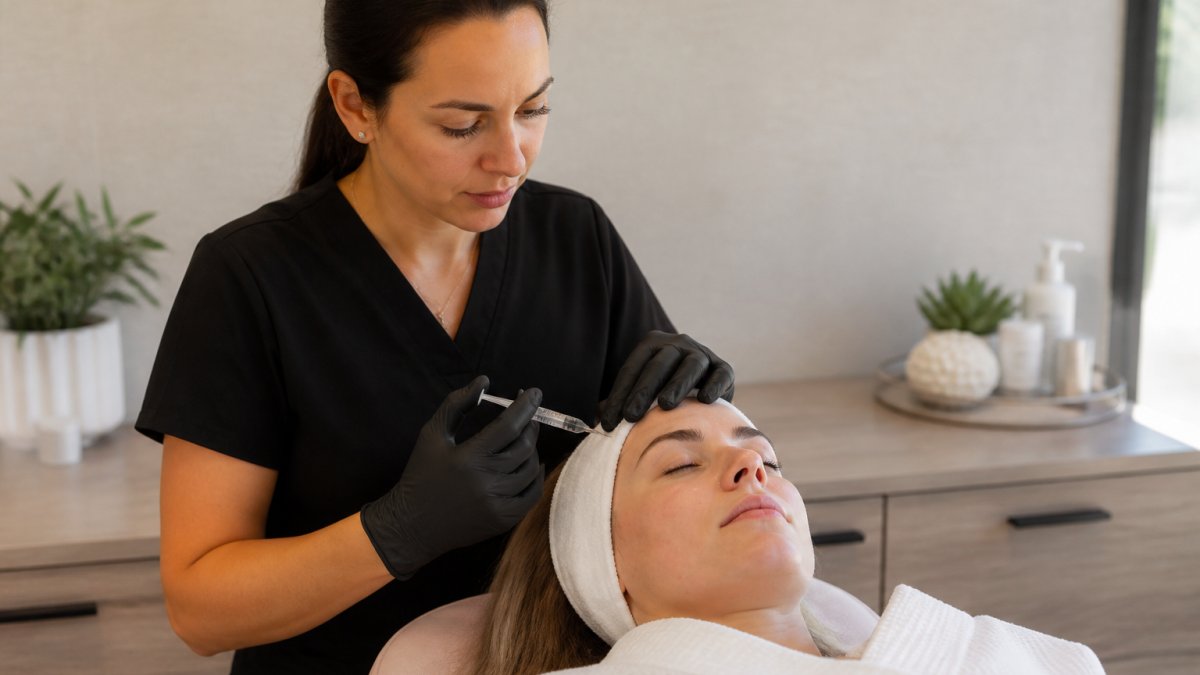
Neuromodulators like Botox relax the muscles that create expression lines. They're most effective for crow's feet, forehead lines, and lines between eyebrows. Results are subtle when done well, you should still move your face and express emotion.
A conservative first treatment is smart. You can always add more; you can't undo it immediately. Botox takes 3-7 days to show results and reaches full effect at two weeks (the FDA). Results last about 3-4 months.
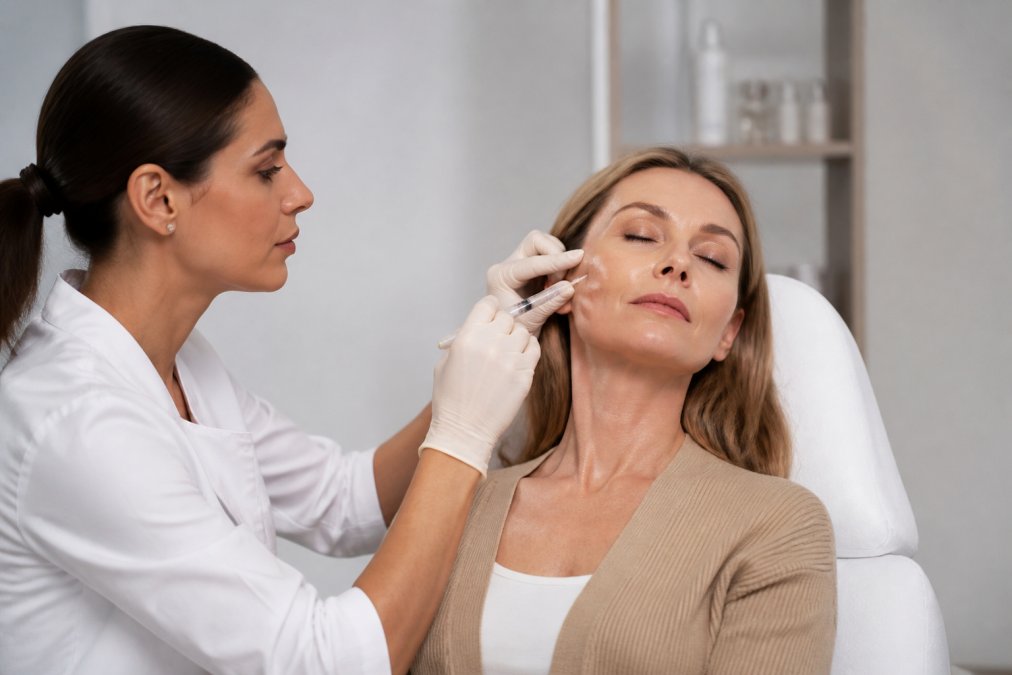
Dermal fillers add volume where it's been lost. Hyaluronic acid fillers are ideal for first-timers because they're reversible. Results are immediate, though swelling occurs for 24-48 hours. Final results appear after a week when swelling resolves. Results typically last 6-12 months.
Dermal Fillers for Volume Loss
Volume loss is often the primary concern at 45. Unlike fine lines, volume loss requires actual restoration of fullness.
Hyaluronic acid filler mimics a substance naturally found in your skin and can be dissolved if needed. The nasolabial folds respond beautifully to filler, and under-eye hollows improve with skilled injection. Cheek filler restores facial architecture, naturally softening folds as a side effect. Results last 6-12 months and require maintenance treatments.
Laser Skin Rejuvenation Recovery Time
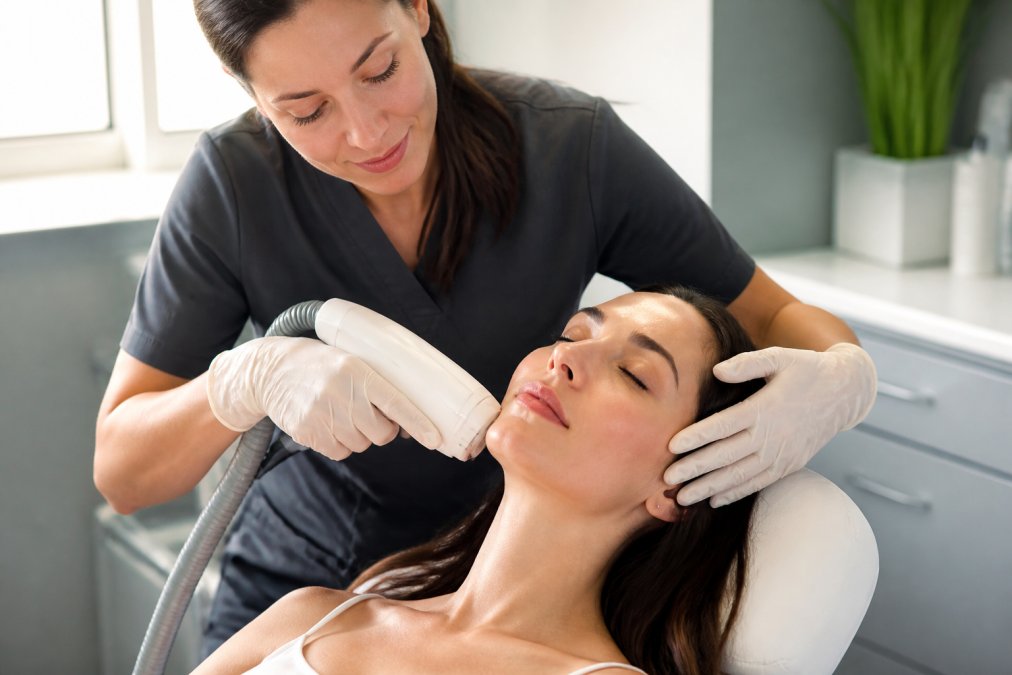
Laser skin rejuvenation addresses texture, pigmentation, and mild skin laxity. Recovery time varies by laser type and intensity. Ablative lasers require 7-14 days of visible recovery (the American Academy of Dermatology). Non-ablative lasers have minimal downtime, usually 24-48 hours of mild redness.
For most first-timers at 45, fractional laser is ideal, it delivers results comparable to ablative lasers with much shorter recovery, typically 3-5 days of noticeable redness and peeling. Results appear gradually over 2-4 weeks as new collagen forms. Most people need 3-4 treatments spaced 4-6 weeks apart.
Laser rejuvenation improves overall skin quality, not just individual lines. Your skin becomes smoother, more even-toned, and firmer. It's one of the few treatments that actually stimulates new collagen production.
Microneedling and Collagen Induction
Microneedling creates controlled micro-injuries to stimulate your body's natural healing response, triggering collagen production. Recovery is gentle, most people experience mild redness for 24-48 hours and can return to normal activities immediately.
Results develop gradually over 4-6 weeks. Most people need 4-6 treatments spaced 4-6 weeks apart. Microneedling is particularly effective for texture and pore refinement, and it's excellent for those who can't tolerate laser treatments.
Preventative vs. Corrective: The Less Is More Philosophy
At 45, you've already accumulated some damage. You can't undo that with prevention alone, but you can prevent it from getting worse while gently correcting what's visible.
The "less is more" philosophy means starting conservatively: a small amount of Botox in crow's feet, subtle filler to restore volume, one laser treatment to assess response. This allows gradual adjustment while keeping you looking like yourself, just better.
Strategic preventative treatments now can actually reduce the need for aggressive corrective treatments later. A small amount of Botox every few months prevents deep lines from forming. Consistent sun protection and medical-grade skincare prevent further damage. The providers who deliver the most natural results understand restraint, they're enhancing what's there and preventing deterioration.
Medical-Grade Skincare as Your Foundation
Injectables and lasers work best when your skincare foundation is solid. Medical-grade skincare isn't optional; it's the difference between good and great results.
Topical retinoids are the single most important product at 45. They increase cell turnover, stimulate collagen production, and improve texture and tone. Start with a low concentration (0.025%) and use it 2-3 times per week, gradually increasing frequency.
Sun protection is non-negotiable. Every aesthetic treatment can be undermined by sun exposure. Use broad-spectrum SPF 30 or higher daily. After laser treatments, sun protection becomes critical, sun exposure can cause irregular pigmentation.
Hyaluronic acid serums and moisturizers support hydration, making fine lines less visible and preparing skin for treatments. Vitamin C serums help with skin tone and provide antioxidant protection. Medical-grade skincare and professional treatments work together: treatments stimulate collagen and improve skin quality; skincare maintains results and prevents new damage.
Aesthetic Treatment Consultation Checklist
Before booking your first aesthetic treatment at 45, have a consultation. Evaluate these key points:
Provider Credentials: Ask about board certification. A board-certified dermatologist, plastic surgeon, or nurse injector has specialized training. This directly impacts whether results look natural.
Your Medical History: Be honest about medications, supplements, and medical conditions. Blood thinners and certain conditions affect how you respond to treatments.
Before-and-After Photos: Ask to see photos of previous patients who look similar to you. You want to see results on someone with your skin type, age, and concerns.
Realistic Expectations: A good provider tells you what's possible and what's not. Avoid providers who promise dramatic changes while claiming completely natural results.
Treatment Plan: A good first consultation results in a conservative plan: one or two treatments to start, with follow-up to assess results. Aggressive plans designed to maximize immediate revenue are a warning sign.
Facility and Safety: The facility should be clean and professional. Ask about sterilization protocols, product sourcing, and how they handle complications. Legitimate providers use FDA-approved products.
Your Comfort Level: You should feel heard, not pressured. The provider should be interested in your goals, not in selling you the most expensive treatment.
Budgeting and Long-Term Maintenance Costs
Aesthetic treatments aren't one-time expenses. Botox requires maintenance every 3-4 months. Dermal fillers last 6-12 months. Laser treatments require a series (usually 3-4) spaced weeks apart, then occasional yearly maintenance. Microneedling requires multiple sessions for results, then periodic maintenance.
Once you've achieved desired results, you'll need ongoing treatments to maintain them. This is an advantage of starting conservatively at 45, you're establishing a maintenance routine now rather than playing catch-up later.
Some practices offer package pricing or loyalty programs that reduce per-treatment costs. Ask about these options during your consultation. The financial investment in aesthetic treatments at 45 is real, but strategic professional treatments combined with medical-grade skincare often deliver better results per dollar than skincare alone.
The decision to pursue aesthetic treatments at 45 is deeply personal. What matters most is that you're making the choice for yourself, not because you feel pressured. The treatments available today are sophisticated enough to deliver genuinely natural results when done by skilled providers who understand restraint.
At Lumyn Medspa, we specialize in helping first-time patients navigate this decision. Our team uses advanced technology like Candela Nordlys® for laser rejuvenation and combines injectables with customized skincare to deliver refreshed, radiant results that look like the best version of you. When you're ready to explore your options, book a consultation to discuss a treatment plan tailored to your specific goals and concerns.
Frequently Asked Questions
Q: Is it safe to start Botox at 45 years old?
A: Yes, starting neuromodulators like Botox at 45 is safe when administered by a qualified provider. Many people begin preventative aesthetic treatments in their 40s to address early fine lines and crow's feet before deeper wrinkles develop. A consultation with a qualified professional allows you to discuss your medical history, any contraindications, and realistic expectations for natural results.
Q: What is the best facial treatment for a 45-year-old woman?
A: The best treatment depends on your specific concerns and goals. Many 45-year-olds benefit from a combination approach: dermal fillers for volume loss in areas like nasolabial folds, neuromodulators for dynamic wrinkles, and laser skin rejuvenation for texture and pigmentation. A qualified provider can recommend a personalized plan during your aesthetic treatment consultation checklist review.
Q: How long do results from aesthetic treatments actually last?
A: Results vary by treatment type. Botox and fillers typically last 3-4 months before gradual reabsorption occurs. Laser skin rejuvenation results improve over several months as collagen production increases, with benefits lasting 6-12 months or longer depending on sun protection and maintenance. Microneedling stimulates ongoing collagen induction, with cumulative improvements over multiple sessions. Your provider will outline a maintenance schedule during your consultation.
Q: What is the downtime for laser skin rejuvenation recovery?
A: Downtime for laser skin rejuvenation recovery time depends on the laser type and intensity. Non-ablative lasers typically cause mild redness lasting a few hours to 1-2 days, while ablative treatments may involve redness, swelling, and crusting for 5-7 days. Most people can return to work within 24-48 hours for non-ablative procedures. Your provider will give specific aftercare instructions to minimize downtime and optimize healing.
This article was written using GrandRanker