 ultimate-guide
What Is Non-Surgical Anti-Aging, Explained?
Last Updated: November 5, 2026
Quick Summary
Non-surgical anti-aging refers to cosmetic treatments that reduce visible signs of aging, such as fine lines, wrinkles, volume loss, and uneven skin texture, without incisions, general anesthesia, or operating room time. Options range from injectables that relax expression lines to energy-based devices that stimulate collagen.
- Neuromodulators temporarily relax muscles behind dynamic lines, such as frown lines and crow's feet.
- Dermal fillers restore volume and soften static folds, and hyaluronic acid fillers can be dissolved if needed.
- Non-invasive does not always mean no effect; treatments can cause temporary redness or swelling, so ask providers exactly what happens to the skin.
- Non-surgical results are usually modest and gradual, and most are not permanent, so maintenance planning is part of the decision.
- Neuromodulators and hyaluronic acid fillers have the strongest evidence, while newer regenerative options often have limited long-term data.
Table of Contents
- Non-Surgical Anti-Aging, Defined
- Non-Invasive Versus Minimally Invasive: Where the Line Falls
- The Main Non-Surgical Treatment Categories
- Non-Invasive Anti-Aging Treatments: Options and Limits
- Best Anti-Aging Treatments for 40s and Beyond
- Latest Anti-Aging Technology and What Is Proven
- Risks, Recovery and Who Should Avoid Treatment
- Planning Your Maintenance Schedule and Booking a Consultation at Lumyn Medspa
- Frequently Asked Questions
Non-Surgical Anti-Aging, Defined
Non-surgical anti-aging refers to cosmetic treatments that reduce visible signs of aging such as fine lines, wrinkles, volume loss, and uneven skin texture without incisions, general anesthesia, or operating room time. At Lumyn Medspa, this category covers a range of options, from injectables that relax expression lines to energy-based devices that stimulate collagen production in the deeper layers of skin.
Many patients come to this category because they want a refreshed look without the downtime and commitment of surgery. The goal is usually subtle, gradual improvement rather than a dramatic transformation.
Non-Invasive Versus Minimally Invasive: Where the Line Falls
The terms "non-invasive" and "minimally invasive" are often used interchangeably, but they describe different things. Non-invasive treatments do not break the skin at all, such as light-based therapies and radiofrequency. Minimally invasive treatments involve a small puncture or entry point, such as injectables, microneedling, or some fillers.
This distinction matters because it shapes expected downtime, cost, and risk. A treatment marketed as non-invasive may still cause temporary redness or swelling, so patients should ask providers to describe exactly what happens to the skin during the procedure.
The Main Non-Surgical Treatment Categories
Non-surgical options generally fall into a few families, each addressing different concerns through a different mechanism. Understanding these groups, and what each can and cannot realistically do, helps patients ask better questions during a consultation. The table below summarizes the families; the sections that follow explain how each works.
| Treatment family | What it does | Typical concerns addressed | Skin entry | Typical downtime |
|---|---|---|---|---|
| Neuromodulators | Temporarily relax muscles that create dynamic lines | Frown lines, forehead lines, crow's feet | Small injection | Minimal to a few days of mild swelling or bruising |
| Dermal fillers | Restore volume and soften static folds | Cheeks, nasolabial folds, lips, under-eye hollows | Small injection | A few days of swelling or bruising |
| Lasers and light devices | Target pigment, redness, texture, and fine lines | Sun damage, pigmentation, pores, mild wrinkles | Non-invasive to minimally invasive depending on device | Days to about a week depending on intensity |
| Radiofrequency and ultrasound | Heat deeper tissue to stimulate collagen and mild tightening | Mild skin laxity, crepey texture | Non-invasive | Little to none for most devices |
| Microneedling | Create controlled micro-injuries to stimulate collagen | Texture, scars, fine lines, pores | Minimally invasive | A few days of redness |
| Chemical peels | Remove outer skin layers to improve tone and texture | Dullness, pigmentation, mild scarring | Non-invasive to minimally invasive depending on depth | Days to a week or more for deeper peels |
Neuromodulators and Dermal Fillers for Lines and Volume
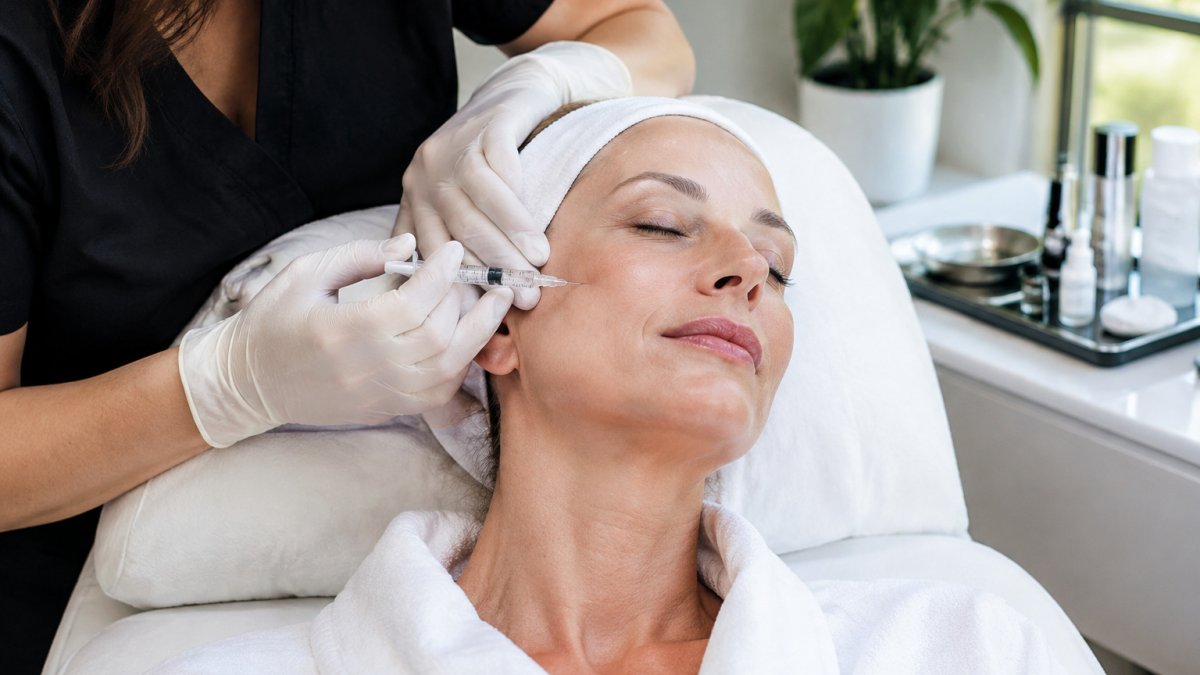
Neuromodulators such as Botox temporarily relax the muscles that create dynamic expression lines on the forehead and around the eyes. They work on movement, not on volume, so they soften lines that appear when you frown or squint but do little for folds visible at rest. Effects typically appear within days and last a few months, and the treatment is gradually absorbed by the body.
Dermal fillers, commonly hyaluronic acid based, restore facial volume and soften static lines. They add structure rather than relaxing muscle, so they are used for hollowing, folds, and contour. Hyaluronic acid fillers can be dissolved with an enzyme if needed, which is one reason they are popular; other filler materials are not reversible in the same way. Duration varies by product and area, generally from several months to over a year.
Watch out: injectables are only as good as the injector's understanding of facial anatomy. A provider who does not assess your movement patterns and volume loss before treating can produce an unnatural or asymmetric result.
Lasers, Radiofrequency and Ultrasound for Texture and Tightening
Lasers can target sun damage, pigmentation, and fine texture by delivering controlled light energy to specific layers of skin. Ablative lasers remove the outer layer and typically produce more dramatic results with more downtime, while non-ablative lasers work below the surface with less recovery. Radiofrequency and ultrasound energy heat deeper tissue to encourage collagen remodeling and mild skin tightening without breaking the skin.
Microneedling and Collagen Stimulation
Microneedling creates controlled micro-injuries with fine needles to trigger the skin's repair response and collagen production. It is used for texture, scars, fine lines, and enlarged pores, and it is often combined with topical serums. Because it punctures the skin, it is minimally invasive and carries a short recovery period of redness and mild sensitivity. Collagen-stimulating injectables work differently, introducing material that prompts the body to build its own collagen over months; results are gradual and not reversible.
Chemical Peels and Skin Resurfacing
Chemical peels apply an acid solution to remove outer skin layers, improving tone, texture, and mild pigmentation. Superficial peels have little downtime and are often done in a series, while medium and deep peels produce more dramatic resurfacing with longer recovery and higher risk, especially for people with darker skin tones. Resurfacing is a good example of why skin type matters: the same peel that suits one patient can cause post-inflammatory hyperpigmentation in another.
Non-Invasive Anti-Aging Treatments: Options and Limits
Even non-invasive options have boundaries. Light and energy treatments tend to produce modest changes and often require a series of sessions. They work best on mild to moderate concerns and are usually less dramatic than surgical lifting.
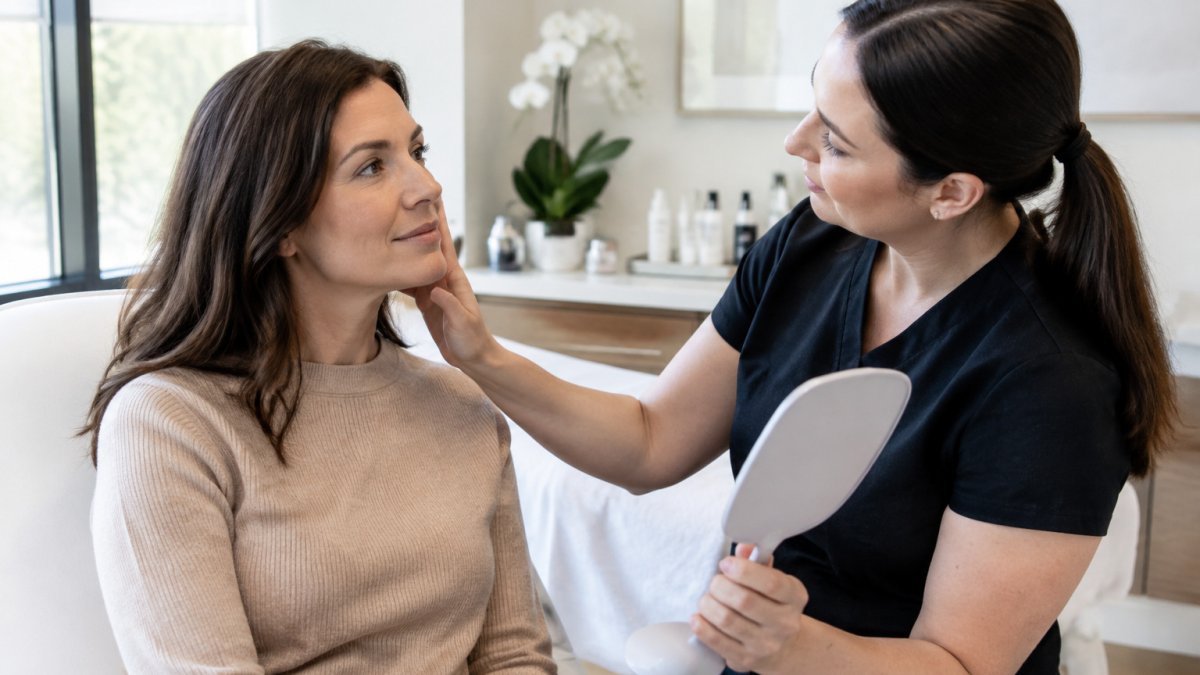
A common mistake is expecting one session to reverse years of sun exposure or deep structural loss. A realistic plan usually combines treatments, daily sun protection, and consistent skincare, and a good provider will tell you when a treatment is unlikely to help.
Best Anti-Aging Treatments for 40s and Beyond
In the 40s and beyond, collagen production slows and volume shifts, so many people shift from purely cosmetic goals to restoring structure and firmness. Injectables for expression lines and volume, combined with energy-based tightening, are among the most common approaches at this stage.
The right choice depends on your skin type, the concerns you want to address, and your tolerance for downtime. A thorough consultation is the best way to match a treatment plan to your goals.
Latest Anti-Aging Technology and What Is Proven
New devices and regenerative options appear regularly, but not every new technology has strong long-term evidence behind it. Rather than asking whether a treatment is "proven" in the abstract, it helps to separate treatments by how much clinical evidence and real-world use support them, and to understand what kind of evidence matters for your concern. You can read about our exosome therapy to see how this regenerative option is offered at Lumyn Medspa.
A useful way to think about the evidence hierarchy:
- Established with extensive clinical use: neuromodulators and hyaluronic acid fillers. These have decades of use, well-documented safety profiles, and predictable reversibility or absorption. Evidence is strongest for their approved uses, such as glabellar lines for neuromodulators and nasolabial folds for fillers; using them in other areas is common but often off-label.
- Established with good evidence but variable results: non-ablative lasers, radiofrequency, ultrasound, microneedling, and chemical peels. These have meaningful clinical support for texture, pigmentation, and mild laxity, but outcomes depend heavily on device settings, number of sessions, and the provider's skill. Results are usually modest and gradual rather than transformative.
- Emerging or limited long-term data: newer regenerative and collagen-stimulating approaches, novel energy devices, and combination protocols. Early results may be promising, but long-term comparative data is often thin, and marketing can outpace the evidence.
When evaluating a newer treatment, ask what research supports it, how long it has been in clinical use, whether the evidence is for your specific concern and skin type, and what outcomes are realistic. A device with a strong brand name is not the same as a device with strong evidence for your concern. Lumyn Medspa uses advanced technology, and our team can explain what the evidence does and does not show for each option.
Watch out: a common pattern is to present a new device as a replacement for established treatments. In practice, newer technologies usually add an option or a combination rather than replace what already works, and the strongest evidence often remains with older, well-studied treatments.
Risks, Recovery and Who Should Avoid Treatment
Every treatment carries risks. Common side effects include temporary redness, swelling, bruising, and tenderness at the treatment site. Rare complications can occur, which is why a licensed provider should evaluate your medical history, medications, and skin before any procedure.
Certain people should avoid specific treatments or delay them, including those who are pregnant or breastfeeding, have active skin infections, or take medications that affect bleeding or healing. Recovery times vary widely by treatment, so ask your provider about downtime before scheduling, especially if you have work commitments.
Planning Your Maintenance Schedule and Booking a Consultation at Lumyn Medspa
Most non-surgical results are not permanent, so planning a maintenance schedule is part of the decision. Some treatments need repeat sessions every few months, while others build results over a series. Ask about the expected timeline before committing, and we recommend discussing a personalized plan at a consultation.
To explore options, you can review our treatment packages for maintenance planning, learn more about neuromodulators and dermal fillers for lines and volume, or see our medspa location and environment before booking. Pricing varies by treatment and plan, so contact Lumyn Medspa directly for current rates.
Frequently Asked Questions
What are the most effective non-surgical anti-aging treatments?
Effectiveness depends on the concern. Neuromodulators such as Botox soften expression lines, dermal fillers restore facial volume, and lasers, radiofrequency and ultrasound improve texture and mild laxity. Results vary by skin type, age and goals, so a licensed provider at Lumyn Medspa can assess which options suit your skin during a consultation.
How do non-surgical procedures differ from plastic surgery?
Non-surgical procedures do not involve incisions, general anesthesia or lengthy recovery in most cases. Plastic surgery removes or repositions tissue. Non-surgical options work by relaxing muscles, adding volume, or stimulating collagen, so results are generally more subtle and temporary, and they typically require repeat sessions to maintain.
Are non-surgical anti-aging treatments safe for all skin types?
No treatment is risk-free, and suitability varies. Some laser and energy-based treatments carry a higher risk of pigmentation changes in deeper skin tones, and certain conditions or medications can rule out specific procedures. A medical evaluation before treatment is the safest way to confirm which options are appropriate for you.
How long do the results of non-surgical anti-aging procedures last?
Duration depends on the treatment. Neuromodulator effects typically last several months, dermal filler results can last from several months to more than a year depending on the product, and collagen-stimulating laser or energy treatments are often spaced over a series of sessions. Ongoing maintenance is usually needed to keep results.
Ready to talk through what non-surgical anti-aging could look like for your skin? Lumyn Medspa offers personalized consultations to help you build a realistic plan, and we invite you to book a consultation with our team.