 how-to
Schedule a Body Contouring Consultation: Step-by-Step Guide
Table of Contents
- What to Know Before You Schedule a Body Contouring Consultation
- Am I a Good Candidate for Body Contouring?
- Non-Surgical Body Contouring for Stubborn Fat: Treatment Options
- How to Prepare for Your Body Contouring Consultation
- Body Contouring Consultation Checklist: What to Bring and Ask
- What Happens During Your Consultation: Step by Step
- How Many Sessions for Body Sculpting: Realistic Expectations
- Making Your Decision: Post-Consultation Next Steps
- Frequently Asked Questions
Last Updated: August 31, 2026
What to Know Before You Schedule a Body Contouring Consultation
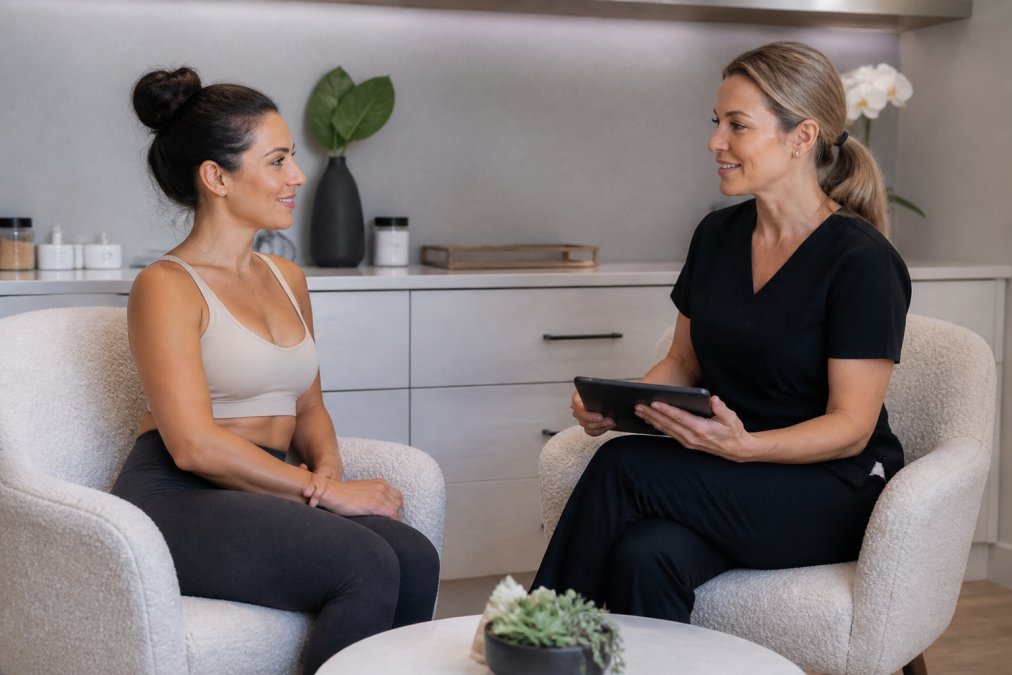
Scheduling a body contouring consultation is the first step toward addressing stubborn fat that diet and exercise haven't touched. A consultation is a clinical assessment where a qualified provider evaluates your candidacy, discusses realistic outcomes, and creates a personalized treatment plan, not a sales pitch disguised as a medical appointment.
Body contouring options range from non-invasive treatments like cryolipolysis and radiofrequency to surgical procedures. The right choice depends on your goals, body composition, medical history, and expectations about downtime. A good consultation protects you by being honest about what's actually possible for your specific situation.
At Lumyn Medspa, we approach consultations as a collaborative process. Before you schedule, know what questions matter, what to bring, and what red flags to watch for.
Am I a Good Candidate for Body Contouring?
Body contouring works best for people with realistic expectations and localized pockets of stubborn fat that haven't responded to diet and exercise. You're a good candidate if you maintain a relatively stable weight and have skin with reasonable elasticity.
Age matters less than overall health and skin quality. What matters more is your body mass index and whether you have significant medical conditions that could complicate treatment or healing. A qualified aesthetic professional will assess these factors during your consultation.
Common treatment areas include the abdomen, flanks, thighs, upper arms, and chin. Some people target multiple areas in a single session; others prefer staged treatments.
Red flags that might disqualify you include uncontrolled diabetes, severe cardiovascular disease, active skin infections in the treatment area, or unrealistic expectations about results. Pregnancy is a contraindication for most body contouring treatments.
Non-Surgical Body Contouring for Stubborn Fat: Treatment Options
Non-surgical options dominate the body contouring landscape because they require minimal downtime and carry lower risk than surgical alternatives. The most common modalities use cold, heat, or energy-based technology to reduce fat cells.
Cryolipolysis freezes fat cells, causing them to die and be naturally eliminated by the body over 8-12 weeks. This approach works well for defined pockets of fat but requires multiple sessions for larger areas.
Radiofrequency treatments use heat to tighten skin while reducing fat. These are effective for body composition improvement and skin tightening simultaneously, with minimal recovery.
Ultrasound-based treatments use focused energy to disrupt fat cells, offering another option for stubborn fat reduction.
The choice between modalities depends on your treatment area, the amount of fat you want to reduce, your skin quality, and your timeline for results. Non-surgical options typically require 2-6 sessions spaced 4-6 weeks apart (peer-reviewed research). Surgical options like liposuction can address larger volumes in a single session but involve longer recovery and higher risk.
How to Prepare for Your Body Contouring Consultation
Wear comfortable, loose-fitting clothing so the provider can assess your body composition clearly. Avoid heavy makeup or lotions in the treatment areas. Some providers ask you to avoid caffeine and alcohol for 24 hours before your appointment.
Gather your medical history, including medications, previous surgeries, allergies, and medical conditions. Bring a list of questions and concerns. Take before photos in good lighting if comfortable.
Research the provider beforehand. Verify board certification in dermatology, plastic surgery, or a related specialty. Check for specific training in the body contouring modalities they offer. Reviews from previous patients offer insight into their practice.
Decide whether you want a virtual or in-person consultation. Virtual consultations work well for initial questions; in-person consultations allow physical evaluation and hands-on assessment of realistic outcomes.
Body Contouring Consultation Checklist: What to Bring and Ask
What to Bring:
- Insurance card and photo ID
- List of current medications and supplements
- Medical history summary (previous surgeries, allergies, conditions)
- Photos of aesthetic goals or areas of concern
- Notebook or phone to take notes
- List of questions prepared in advance
Key Questions to Ask:
- Are you board-certified, and in what specialty?
- How many body contouring treatments have you performed?
- Which treatment modality do you recommend for my specific goals, and why?
- What realistic results should I expect, and how long does it take to see them?
- How many sessions will I need, and how are they spaced?
- What's the total cost, and are payment plans available?
- What's the actual downtime, can I return to work the next day?
- What are the potential risks and side effects?
- What happens if I'm not satisfied with results?
- Do you use FDA-cleared devices and authentic products?
Ask about contraindications specific to your medical history. Request before-and-after photos from previous patients with similar body types and treatment goals. Clarify the refund or revision policy and whether results don't meet expectations.
| Question Category | Why It Matters | Red Flag If... |
|---|---|---|
| Provider Credentials | Ensures clinical competence and safety | Provider can't clearly state their certification |
| Treatment Recommendation | Determines whether the approach fits your goals | Provider recommends the most expensive option without clear justification |
| Realistic Results | Prevents disappointment and unrealistic expectations | Provider guarantees permanent fat removal or dramatic results |
| Total Cost & Timeline | Helps budget and plan your aesthetic journey | Pricing is vague or varies significantly by session |
| Downtime & Recovery | Affects your work and social schedule | Provider minimizes downtime when it's actually significant |
| Revision Policy | Protects your investment if results disappoint | No policy exists or revisions are prohibitively expensive |
What Happens During Your Consultation: Step by Step
The consultation typically lasts 30-60 minutes.
Step 1: Welcome and Intake (5-10 minutes) You'll complete intake forms covering medical history, medications, allergies, and previous aesthetic treatments. Be honest about your expectations so the provider can address unrealistic goals directly.
Step 2: Private Discussion with Provider (10-15 minutes) The provider will review your intake forms and discuss your aesthetic goals. Mention any concerns about looking unnatural or overdone. A good provider takes these seriously and explains their conservative approach.
Step 3: Physical Examination (10-20 minutes) The provider will examine your treatment areas, assess skin quality and elasticity, measure fat deposits, and evaluate your body composition. They may take photos for before-and-after comparison.
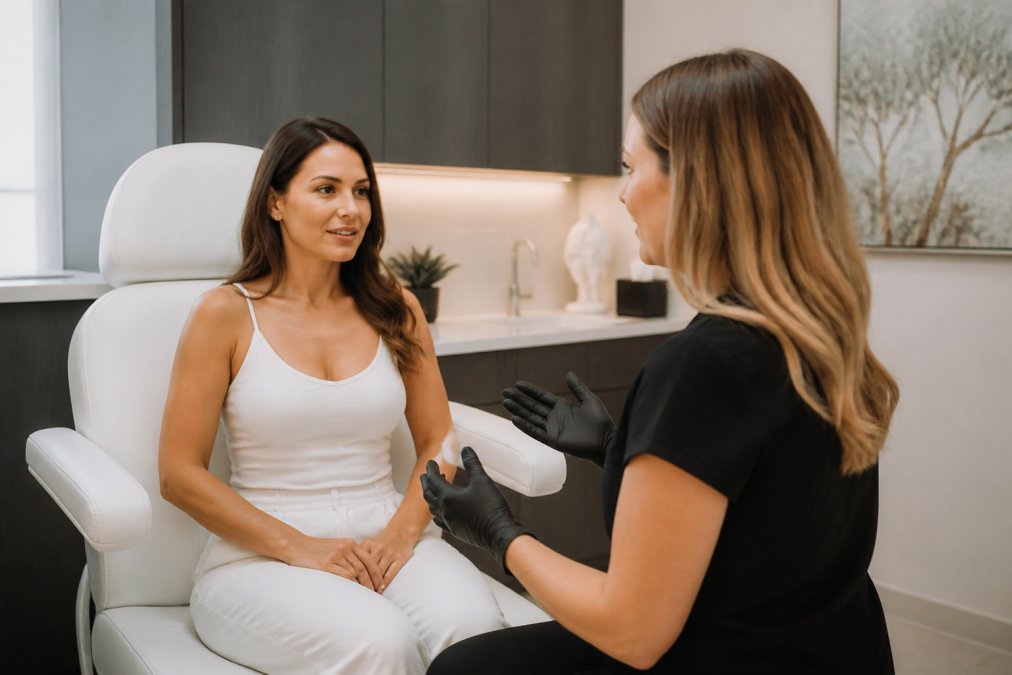
Step 4: Treatment Recommendation (10-15 minutes) Based on the examination and your goals, the provider will recommend one or more treatment modalities. They'll explain why and discuss pros and cons if multiple options exist.
Step 5: Realistic Outcomes Discussion (5-10 minutes) The provider will show before-and-after photos from previous patients with similar concerns. They'll explain what results typically look like, how long they take to appear, and whether results are permanent or require maintenance.
Step 6: Downtime and Recovery Expectations (5 minutes) The provider will detail potential redness, swelling, tenderness, or bruising. They'll explain activity restrictions and when you can return to normal exercise.
Step 7: Cost and Scheduling (5-10 minutes) The practice will provide a detailed cost breakdown. They'll discuss payment options and whether payment plans are available.
Step 8: Questions and Next Steps (remaining time) Ask anything not yet addressed. A good provider makes time for your questions and doesn't pressure you to book immediately.
How Many Sessions for Body Sculpting: Realistic Expectations
The number of sessions depends on the treatment modality, treatment area size, and desired fat reduction. Non-surgical body contouring typically requires multiple sessions because each session addresses a specific volume of fat.
Cryolipolysis usually requires 2-4 sessions per treatment area, spaced 4-6 weeks apart. Radiofrequency treatments often need 4-6 sessions spaced 2-4 weeks apart (peer-reviewed research).
Results aren't immediate. Fat cells die gradually and are eliminated naturally over 8-12 weeks. Most people notice initial results 4-6 weeks after their first session, with continued improvement through 12 weeks (peer-reviewed research).
Cryolipolysis results are relatively permanent because destroyed fat cells don't regenerate. However, remaining fat cells can enlarge if you gain weight significantly. Radiofrequency results may require occasional touch-up sessions to maintain skin tightness as you age.
A realistic expectation is that body contouring reduces stubborn fat by 20-30% per treatment area with a complete series.
Making Your Decision: Post-Consultation Next Steps
After your consultation, take time to process the information before committing. A reputable practice will welcome a few days of consideration.
Review your notes. Does the treatment plan align with your aesthetic goals? Are you comfortable with the provider's approach and communication style?
Compare consultations if you're seeing multiple providers. Look for consistency in recommendations. Different providers may recommend different modalities based on their expertise and available technology.
Check credentials independently through the American Board of Medical Specialties or your state medical board.
Consider the financial commitment. Can you afford the full treatment plan? Does the practice offer payment plans?
Trust your instincts about the provider. Did they listen to your concerns? Did they pressure you or feel rushed? Did they acknowledge risks honestly? These interactions reveal whether the provider prioritizes your safety and satisfaction.
When you're ready to book, schedule your first session. Follow pre-treatment instructions carefully 24-48 hours before your appointment.
Scheduling a body contouring consultation marks the beginning of your aesthetic journey. At Lumyn Medspa, we believe the consultation itself is where real transformation starts, not because we're selling you something, but because we're helping you make an informed decision about your body and your confidence. Our team uses advanced technology to deliver customized treatment plans tailored to your specific goals. Book your consultation today and discover how body contouring can address the stubborn fat that hasn't responded to diet and exercise.
Frequently Asked Questions
Q: What should I bring to my body contouring consultation?
A: Bring a valid photo ID, insurance card if applicable, and any relevant medical history documentation. Wear comfortable, loose-fitting clothing that allows the provider to assess treatment areas clearly. Consider bringing before photos from past aesthetic treatments or fitness progress if you have them. Write down your aesthetic goals and any questions beforehand so you don't forget them during the appointment. If you're taking medications or supplements, bring a list or the bottles themselves.
Q: How many sessions for body sculpting are typically needed to see results?
A: The number of sessions depends on your treatment area size, desired aesthetic outcomes, and the specific non-surgical body contouring technology used. Most patients require multiple treatment sessions spaced weeks apart to achieve optimal results. Your provider will create a personalized treatment plan during your consultation that outlines the recommended number of sessions and the timeline for your body composition goals. Results typically improve progressively over several weeks following your final session.
Q: How long do non-surgical body contouring results last?
A: Results from non-surgical body contouring treatments can last months to years depending on the technology and your lifestyle. Maintaining a stable weight and healthy habits helps extend results. Some patients benefit from occasional maintenance sessions to sustain their aesthetic outcomes. Your provider will discuss the expected longevity of your specific treatment during your consultation and recommend a maintenance schedule if needed.
Q: Is there a recovery period after non-surgical body contouring?
A: Non-surgical body contouring typically involves minimal downtime compared to surgical options. Most patients can return to normal activities immediately or within a few days. You may experience mild redness, swelling, or tenderness in treated areas, but these effects usually resolve quickly. Your provider will give you detailed post-procedure care instructions during your consultation to minimize discomfort and optimize healing.
This article was written using GrandRanker