 ultimate-guide
Preventative Skin Care for Early Aging: A 2026 Guide
Table of Contents
- Why Preventative Skin Care for Early Aging Matters
- Best Anti-Aging Ingredients for Your 20s and 30s
- How to Prevent Fine Lines: Daily Routine Essentials
- Medical Spa Treatments for Early Aging
- Lifestyle Factors That Speed Up Skin Aging
- Building Your Preventative Skin Care Plan by Age
- Common Mistakes in Early Aging Prevention
- Frequently Asked Questions
Last Updated: September 19, 2026
Why Preventative Skin Care for Early Aging Matters
Aging begins in your 20s and 30s when UV exposure and environmental stressors break down collagen. By the time fine lines appear, years of damage have accumulated beneath the skin. Preventative skin care for early aging stops the process before it becomes visible, rather than trying to reverse it after the fact. (Source: National Institutes of Health's information on UV radiation)
Clients who start preventative care in their 20s and 30s require significantly less intensive intervention later. Preventative skin care addresses root causes of aging: photoaging from UV exposure, oxidative stress, collagen loss, and epidermal barrier breakdown.
Waiting until wrinkles appear costs more money and requires aggressive treatments with less impressive results. The real strategy is building a foundation in your 20s, strengthening it in your 30s, and maintaining it from 40 onward.
Best Anti-Aging Ingredients for Your 20s and 30s
Three ingredients form the backbone of preventative care: retinoids, vitamin C, and hyaluronic acid. Each addresses a different aging mechanism.
Retinoids accelerate cell turnover and stimulate collagen production, the gold standard for preventing fine lines. Vitamin C neutralizes free radicals before they damage collagen and elastin. Hyaluronic acid maintains skin hydration, which prevents visible aging and strengthens barrier resilience.
Additional antioxidants like niacinamide and green tea extract provide extra protection. Peptides and ceramides support barrier repair, preventing moisture loss and irritant penetration.
Retinol for Beginners: Starting Your Retinoid Journey
Retinol is the most accessible retinoid for at-home use. Start low and go slow to avoid irritation and abandonment.
Start with 0.3-0.5% retinol, 2-3 times weekly on dry skin. Use a pea-sized amount and follow with moisturizer. After 4-6 weeks, increase to 4-5 times weekly if tolerated. After another 4-6 weeks, consider higher concentrations or stronger retinoids.
Avoid applying retinol to damp skin, using too much, or skipping moisturizer. Retinol works best with gradual adaptation. If significant irritation persists after two weeks, reduce frequency or concentration.
Vitamin C, Hyaluronic Acid, and Antioxidants
Vitamin C serums work best at 10-20% concentration in opaque, airtight packaging to prevent oxidation. Apply to clean, dry skin in the morning before sunscreen, which it enhances.
Apply hyaluronic acid to damp skin to draw moisture into the epidermis, then seal with moisturizer. Mixed molecular weights provide both deep penetration and surface hydration.
Niacinamide strengthens the barrier, reduces inflammation, and regulates sebum, well-tolerated by most skin types. Ceramides fill barrier gaps and prevent water loss; prioritize them if skin feels tight or reactive.
How to Prevent Fine Lines: Daily Routine Essentials
Preventing fine lines requires consistency in sun protection, hydration, and active ingredients.
A basic routine: gentle cleanser, hydrating toner (if dry), active ingredients (vitamin C morning, retinol night), hyaluronic acid serum, moisturizer, and broad-spectrum SPF 30 daily.
Consistency matters more than cost: a $15 retinol used correctly beats a $150 retinol used sporadically. Don't skip hydrating serums; they deliver ingredients deeper than moisturizer alone.
The Role of Daily Sunscreen in Long-Term Prevention
Sunscreen is the single most important preventative anti-aging product. Daily use prevents photoaging, collagen breakdown, and pigmentation irregularities, delivering visibly younger skin at 50.
Apply one-quarter teaspoon to the face (most people use half that).
Hydration, Exfoliation, and Skin Barrier Repair
Hydration (water content) and moisture (oils preventing water loss) both prevent fine lines. Dehydrated skin shows lines more prominently and becomes reactive.
Medical Spa Treatments for Early Aging
Professional treatments accelerate results beyond topicals. Laser skin rejuvenation, chemical peels, and injectables address different aging aspects and combine synergistically.
Laser Skin Rejuvenation and Injectables
Laser treatments stimulate collagen through controlled thermal injury. Fractional lasers create microscopic injury zones, allowing quick healing while triggering collagen response. Most see improvement after 3-6 treatments spaced 4-6 weeks apart.
When to Consider Professional Treatments
Consider professional treatments when topicals reach their limit or after 6-12 months of routine if fine lines still progress. Laser treatments address sun damage and pigmentation more effectively than topicals.
Lifestyle Factors That Speed Up Skin Aging
Sleep, stress, diet, smoking, and alcohol affect collagen production and skin health as much as topical products.
Building Your Preventative Skin Care Plan by Age
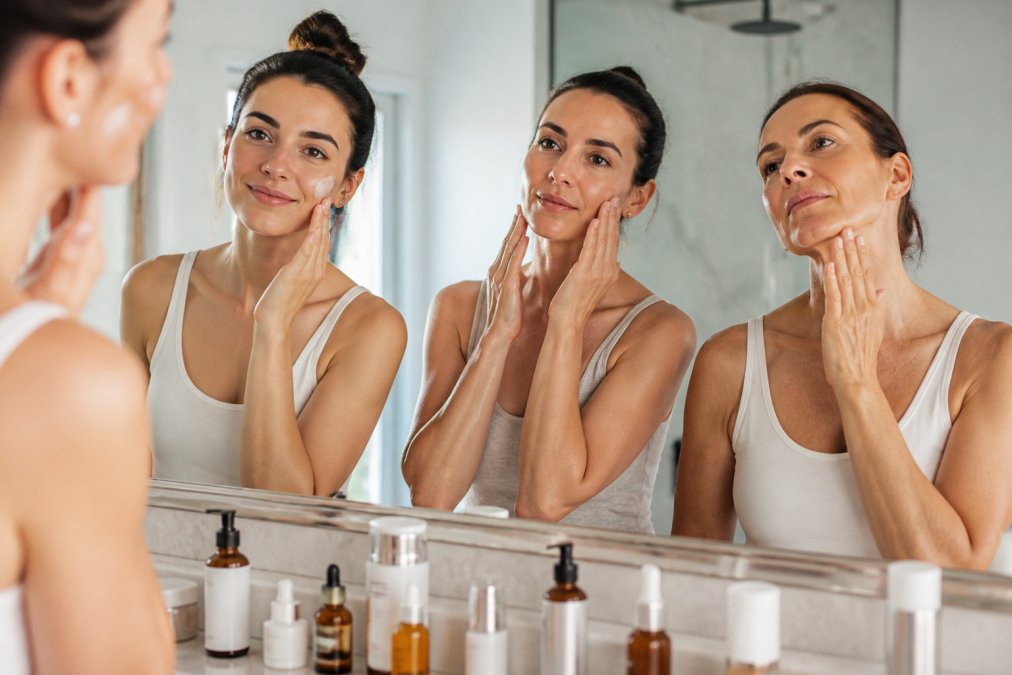
Preventative skin care evolves with your skin's changing needs. What works in your 20s won't be sufficient in your 40s, but the foundation you build early makes everything easier later.
Your 20s: Foundation and Protection
In your 20s, prevention is about establishing habits and protecting against future damage. Your skin is still producing adequate collagen, so the focus is on preventing photoaging and maintaining barrier health. A basic routine, cleanser, hydrating serum, moisturizer, and daily sunscreen, is sufficient for most people. Add a retinol 2-3 times per week if you're prone to breakouts or want to accelerate cell turnover.
Your 30s: Strengthening and Early Intervention
By your 30s, collagen production begins declining, and the first fine lines often appear. This is when preventative skin care becomes more active. Add a retinol to your routine 4-5 times per week, increase the concentration if your skin tolerates it, or consider a stronger retinoid like retinaldehyde. Hyaluronic acid serums become more important as skin naturally becomes drier.
Your 40s and Beyond: Maintenance and Enhancement
In your 40s and beyond, the goal shifts from prevention to maintenance and strategic enhancement. Your preventative routine should include a potent retinoid (prescription tretinoin if tolerated), vitamin C, hyaluronic acid, peptides, and ceramides. Professional treatments become more frequent, many people benefit from laser treatments 2-4 times per year and injectables every 3-4 months.
| Age Group | Primary Focus | Key Products | Professional Treatments | Frequency |
|---|---|---|---|---|
| 20s | Prevention & Protection | Cleanser, Hydrating Serum, Sunscreen, Retinol (optional) | Preventative consultation | As needed |
| 30s | Early Intervention | Retinol 4-5x/week, Vitamin C, Hyaluronic Acid | Laser, Preventative Botox | 2-4x per year |
| 40s+ | Maintenance & Enhancement | Prescription Retinoid, Peptides, Ceramides, Sunscreen | Laser + Injectables | 4-6x per year |
Common Mistakes in Early Aging Prevention
The most common mistake is inconsistency. A person using the best products sporadically will see worse results than someone using average products consistently. Skincare is a long-term commitment, not a quick fix. Results take 6-12 weeks to become visible, and people often abandon routines before seeing results.
Frequently Asked Questions
At what age should you start preventative skin care for early aging?
Starting preventative skin care in your 20s is ideal. Your skin's collagen production and cell turnover begin to slow in your mid-to-late 20s, making early intervention powerful. Even basic sun protection and hydration in your 20s prevent decades of photoaging damage. If you're already in your 30s or 40s, beginning now still delivers measurable results, it's never too late to slow the aging process.
What are the best anti-aging ingredients for beginners in their 20s?
Start with sunscreen (SPF 30+), hyaluronic acid for hydration, and a gentle antioxidant like vitamin C. Retinol for beginners should be introduced slowly, begin with a low concentration (0.25-0.3%) once or twice weekly to build tolerance. These ingredients address the core drivers of aging: UV damage, oxidative stress, and loss of skin elasticity. Avoid overloading your routine; a simple regimen you'll stick to beats a complex one you'll abandon.
How does sun protection impact long-term skin aging?
Daily sunscreen is the single most effective preventative tool. UV exposure causes photoaging, which accounts for 80% of visible skin aging, including fine lines, age spots, and loss of skin elasticity. Consistent sunscreen use prevents collagen breakdown, reduces free radicals, and protects your epidermal barrier. Studies show that people who apply daily SPF 15+ show significantly less skin damage over 15 years than those who don't. Reapply every two hours, especially outdoors.
What lifestyle factors contribute to premature skin aging?
Smoking, poor sleep, chronic stress, excessive alcohol, and a diet high in sugar accelerate aging. These habits increase oxidative stress, impair cell turnover, and reduce collagen production. Sun exposure without protection is the largest modifiable factor. Sleep deprivation disrupts skin barrier repair, which happens overnight. Managing stress, staying hydrated, eating antioxidant-rich foods, and limiting UV exposure work alongside topical treatments to slow visible aging.
How long do results from preventative skin care actually last?
Results depend on consistency. Daily sunscreen and hydration prevent ongoing damage, so benefits compound over months and years. Retinoids show visible improvement in fine lines and skin texture within 8-12 weeks with regular use. Professional treatments like laser skin rejuvenation deliver results lasting 6-12 months depending on the treatment type. The key is maintenance: stopping preventative care allows aging to accelerate again, so long-term benefits require ongoing commitment.
Is retinol for beginners safe, and how do I avoid irritation?
Retinol is safe when introduced gradually. Start with a low concentration (0.25-0.3%) once or twice weekly, increasing frequency as your skin adapts over 4-6 weeks. Apply to dry skin and use a moisturizer afterward to support your lipid barrier. Expect mild redness or peeling initially, this is normal. Avoid combining retinol with vitamin C, acids, or other active ingredients at first. If irritation persists beyond two weeks, reduce frequency or consult a skincare professional.
What makes medical spa treatments effective for early aging?
Medical spa treatments like laser skin rejuvenation and injectables address aging at a deeper level than topical products. Laser treatments stimulate collagen production and remove damaged skin cells, improving skin texture and reducing fine lines. Injectables restore facial volume and soften lines caused by expression and loss of elasticity. These professional treatments work best alongside a strong preventative routine with sunscreen, retinoids, and hydration for sustained, natural-looking results.