 how-to
Is Laser Hair Removal Permanent for Everyone?
Table of Contents
- How Laser Hair Removal Works
- Is Laser Hair Removal Permanent for Everyone?
- How Many Laser Hair Removal Sessions Are Needed
- Is Laser Hair Removal Safe for All Skin Types
- Laser Hair Removal Maintenance Sessions
- Preparation, Aftercare, and What to Expect
- Potential Side Effects and Risks
- Frequently Asked Questions
Last Updated: September 2, 2026
How Laser Hair Removal Works
Laser hair removal uses concentrated light energy to target and destroy hair follicles beneath the skin's surface. The laser emits a specific wavelength of light that's absorbed by melanin, the pigment that gives hair its color, delivering thermal damage that disables the follicle's ability to produce new hair growth.
The process works during the anagen phase of the hair growth cycle, when the hair is actively connected to its blood supply and melanin levels are highest. The laser's pulse delivers energy in milliseconds, heating the hair shaft and surrounding follicle tissue, while a cooling device protects the outer layer of skin from excessive heat.
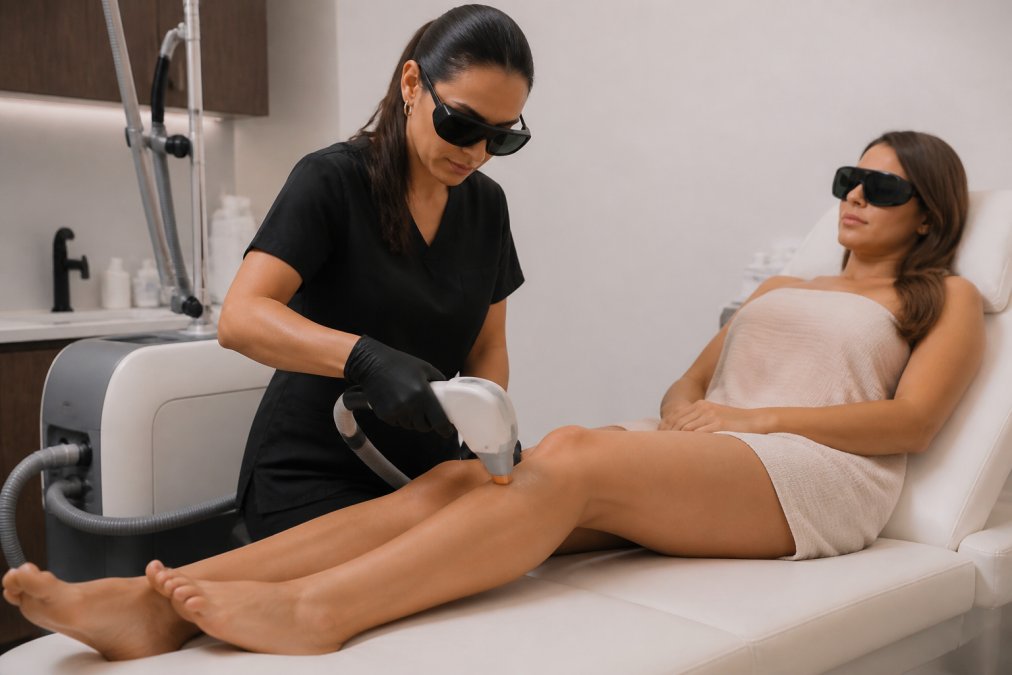
Different laser technologies work slightly differently. At Lumyn Medspa, we use advanced technology like Candela Nordlys® systems, which combine multiple laser wavelengths to treat a broader range of skin tones and hair types. The choice of laser matters because not all lasers work equally well on every skin type or hair color.
Treatment typically takes 15 to 60 minutes depending on the area being treated. Most people describe the sensation as a rubber band snapping against the skin, with the cooling system making it more comfortable.
Is Laser Hair Removal Permanent for Everyone?
Laser hair removal is not truly permanent for everyone, despite the term "permanent hair reduction" used in the industry. What actually happens is significant hair reduction, but regrowth is possible, especially over time.
Regrowth occurs because laser treatment only affects hair in the anagen (active growth) phase. Hair in the catagen (transition) and telogen (resting) phases is unaffected, which is why multiple sessions are necessary. Even after completing a full treatment series, dormant hair follicles will eventually enter the anagen phase and become visible again.
The Role of Hormonal Fluctuations
Hormones play a significant role in whether laser hair removal results remain stable long-term. Androgens, the hormones responsible for stimulating hair growth, can trigger dormant follicles to become active again. This is especially true for people with conditions like polycystic ovary syndrome (PCOS) or those experiencing hormonal changes due to aging, medication, or other factors.
Women often notice increased hair regrowth after pregnancy, during menopause, or when starting new medications. These hormonal shifts can reactivate follicles that were successfully treated. If you have a hormonal condition affecting hair growth, maintenance sessions become more important than for people with stable hormone levels. Your provider at Lumyn Medspa can discuss your individual hormonal profile and recommend a maintenance schedule tailored to your needs.
Hair Growth Cycle and Treatment Timing
The hair growth cycle is why laser hair removal requires multiple sessions spaced weeks apart. Each session targets only the hair currently in the anagen phase, typically 10 to 25 percent of total hair at any given time (peer-reviewed research).
Treatment intervals are typically 4 to 8 weeks apart, depending on the body area and your individual hair growth rate. This spacing allows new hair to enter the anagen phase so it can be treated in the next session. The duration of the hair growth cycle varies by location, facial hair cycles faster than body hair, which is why facial treatments might be spaced 4 to 6 weeks apart while leg treatments might be 6 to 8 weeks apart.
How Many Laser Hair Removal Sessions Are Needed
Most people need between 6 to 12 sessions to achieve significant hair reduction, with 8 to 10 sessions being the most commonly cited range for visible, lasting results (the FDA).
Several factors determine how many sessions you'll need: hair density, thickness, and color all affect the timeline. Thicker, coarser, darker hair is easier for the laser to target than fine, light hair. Your skin's response to treatment also influences the timeline, as some people's follicles are permanently disabled after fewer pulses while others require more energy.
Many people experience the most dramatic results in the first 3 to 4 sessions. By session 6 or 7, you'll likely see 80 to 90 percent hair reduction (peer-reviewed research). The remaining sessions target stubborn hairs and ensure long-term stability.
Is Laser Hair Removal Safe for All Skin Types
Laser hair removal is generally safe across many skin types, but the approach and settings must be customized. The primary safety concern is that the laser targets melanin, which exists in both hair and skin. Darker skin contains more melanin, which means the laser can absorb too much energy in the skin itself rather than just the hair follicle, risking burns or hyperpigmentation.
Modern laser technology has made treatment safer for darker skin tones. Newer systems use longer wavelengths and adjustable pulse durations that allow providers to treat darker skin safely. However, provider expertise matters enormously, a skilled provider using appropriate settings can treat any skin tone safely.
Fitzpatrick Scale and Treatment Adjustments
The Fitzpatrick scale is the standard classification system for skin tone, ranging from Type I (very light) to Type VI (very dark). It guides laser settings and helps predict which side effects are most likely.
For Fitzpatrick Types I to III (light to medium skin), most standard laser settings work well. For Types IV to VI (medium-dark to very dark skin), providers must use longer wavelengths, lower fluences (energy levels), and longer pulse durations to avoid damaging the skin. At Lumyn Medspa, our providers assess your Fitzpatrick type during consultation and select appropriate laser technology and settings. Candela Nordlys® systems offer multiple wavelengths specifically designed to treat darker skin safely. Darker skin isn't a contraindication to laser hair removal; it's a reason to use the right equipment and expertise.
Hair Color and Melanin Considerations
Hair color determines how well the laser works because the laser targets melanin in the hair shaft. Dark hair absorbs laser energy most efficiently, making it easiest to treat. Light brown and blonde hair are more challenging because they contain less melanin. Red hair presents a particular challenge because it contains a different type of melanin that doesn't absorb certain laser wavelengths as effectively. Gray and white hair contain no melanin, so laser hair removal doesn't work on unpigmented hair.
This doesn't mean people with light or red hair can't benefit from laser treatment; results will be slower and may require more sessions. Your hair color assessment during consultation helps set realistic expectations about timeline and results.
Laser Hair Removal Maintenance Sessions
Maintenance sessions are the reality of long-term laser hair removal, even though marketing often emphasizes "permanent" results. Most people need maintenance treatments 1 to 2 times per year after completing their initial series, though frequency varies.
New hair will eventually enter the anagen phase, and hormonal changes throughout life can reactivate dormant follicles. Maintenance sessions target these newly active hairs before they become visible. Some people need maintenance only every 18 to 24 months, while others need it every 6 months. People with hormonal conditions or those experiencing hormonal changes typically need more frequent maintenance. Think of maintenance sessions as preventive care rather than a failure of the initial treatment.
Preparation, Aftercare, and What to Expect
Successful laser hair removal depends partly on how you prepare before treatment and care for your skin afterward.
Pre-Treatment Preparation
Avoid sun exposure for at least 2 weeks before your appointment, as sun exposure darkens the skin and increases melanin levels, which can interfere with the laser's targeting. Using broad-spectrum sunscreen (SPF 30 or higher) during this pre-treatment period is essential.
Shave the treatment area the day before or morning of your appointment, but do not wax, pluck, or use depilatory creams. These methods remove the hair from the root, and the laser needs the hair shaft to be present beneath the skin's surface to work effectively.
Avoid caffeine, alcohol, and blood-thinning medications for 24 hours before treatment if possible. Wear loose, comfortable clothing to your appointment, as the treatment area may be sensitive afterward.

Post-Treatment Shedding and Recovery
After laser hair removal, you'll notice hair shedding over the next 1 to 3 weeks. This isn't regrowth; it's the treated hair being expelled from the follicle as part of the natural healing process. Gently exfoliating or using a washcloth can help remove this shedding hair.
Avoid sun exposure for at least 48 hours after treatment, and ideally for 2 weeks. Avoid hot water, saunas, steam rooms, and intense exercise for 24 to 48 hours after treatment, as heat can irritate the skin and increase inflammation.
Some redness and mild swelling are normal and typically resolve within a few hours to a day. Use gentle, fragrance-free skincare products for a few days after treatment. Avoid products with retinoids, vitamin C, or other active ingredients that might irritate treated skin. Cool compresses and fragrance-free moisturizer can soothe the area.
Potential Side Effects and Risks
Laser hair removal is generally safe, but like any medical procedure, it carries potential side effects. Most are temporary and mild.
The most common side effect is temporary redness and swelling, which typically resolves within hours to a day. Hyperpigmentation, darkening of the treated skin, can occur, especially in people with darker skin tones or those who don't avoid sun exposure before and after treatment. This is usually temporary and fades over weeks to months.
Folliculitis, an inflammation of hair follicles that looks like small red bumps, can develop after treatment and usually resolves within a few days. Scarring is rare with modern laser technology and proper technique. Blistering or burns can occur if the laser is used incorrectly, which is why choosing an experienced, qualified provider is crucial.
People with certain skin conditions, like active herpes simplex, should avoid treatment until the condition resolves. Those with a history of keloid scarring should discuss this with their provider before treatment.
Laser hair removal offers significant long-term hair reduction for most people, but it's not truly permanent for everyone. Results depend on your hair color, skin type, hormonal stability, and commitment to maintenance sessions. At Lumyn Medspa, our expert team customizes treatment plans using advanced technology like Candela Nordlys® systems to deliver results tailored to your unique needs. The key to success is choosing a qualified provider who understands how to adjust settings for your specific skin tone and hair characteristics. Schedule a consultation to discuss whether laser hair removal is right for you and what realistic expectations should be for your individual situation.
Frequently Asked Questions
Does laser hair removal work on all skin tones and hair colors?
Laser hair removal works best on darker hair with higher melanin content, as the laser targets pigment in the hair follicle. Fair skin with dark hair is the ideal combination. However, modern laser technology, including the Candela Nordlys® system, can treat a wider range of skin types safely when settings are adjusted appropriately. Very light blonde, red, or gray hair may respond poorly because they contain less melanin. If you have concerns about whether laser hair removal is suitable for your specific skin tone and hair color, a consultation with a qualified provider can determine the best approach for your needs.
How many laser hair removal sessions are needed to see permanent results?
Most people require 6-8 sessions spaced 4-8 weeks apart to achieve significant long-term hair reduction. The exact number depends on hair density, skin sensitivity, hair thickness, and your individual growth cycle. Because hair grows in phases (anagen, catagen, and telogen), the laser only effectively targets hairs in the active growth phase. This is why multiple sessions are necessary to catch all follicles as they cycle through growth. Your provider will assess your specific situation and recommend a customized treatment plan during your consultation.
Will I need maintenance sessions after my initial treatment course?
Yes, most people benefit from occasional laser hair removal maintenance sessions. While the initial series achieves significant long-term reduction, hormonal fluctuations, aging, and natural regrowth can stimulate some follicles over time. Many patients schedule maintenance treatments 1-2 times per year to maintain smooth skin. The frequency depends on your body's response, hormonal changes, and personal preference. Your provider can discuss a maintenance plan tailored to your needs and help you understand what to expect long-term.
What should I avoid before and after laser hair removal?
Before treatment, avoid sun exposure, tanning beds, and self-tanning products for at least 2 weeks, as they increase skin sensitivity. Shave the area but do not wax or pluck for 2 weeks prior, since the laser needs the hair root intact. After treatment, avoid sun exposure, hot baths, intense exercise, and certain skincare products for 24-48 hours. Use sunscreen (SPF 30+) for at least 2 weeks post-treatment to prevent hyperpigmentation. Your provider will give you detailed aftercare instructions to minimize side effects and optimize results.
This article was written using GrandRanker