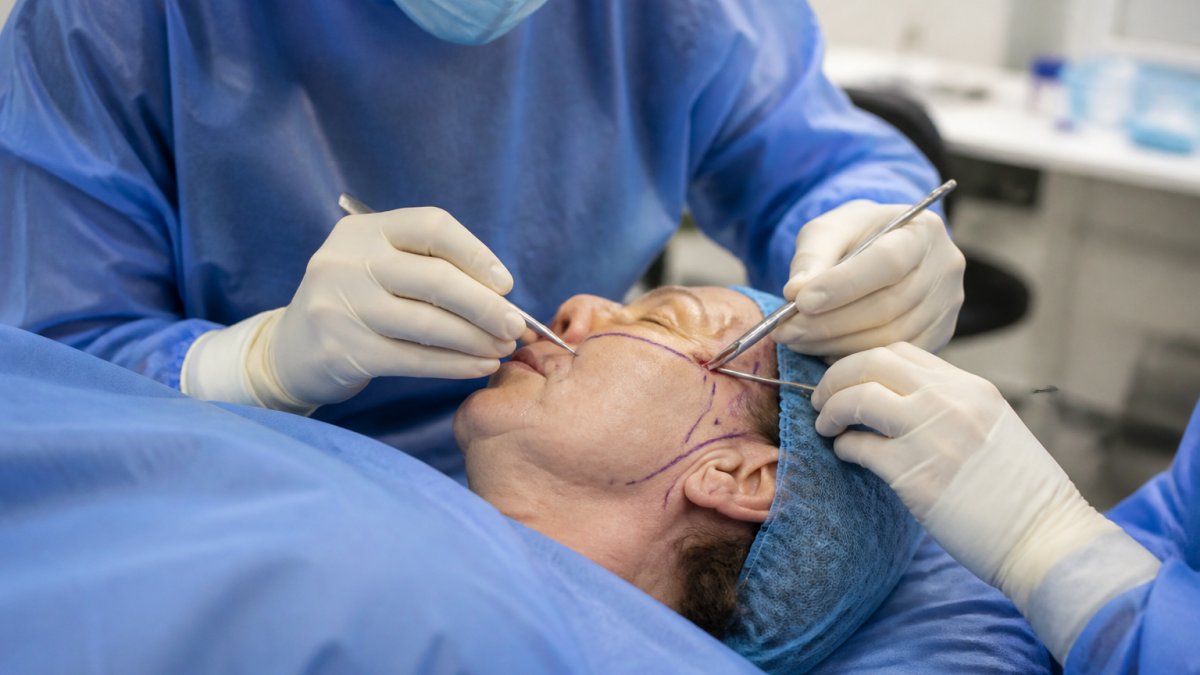
 comparison
Alternatives to Invasive Facelifts for Aging Skin
Table of Contents
- What Are Non-Surgical Facelift Alternatives?
- Nonsurgical Facelift Recovery Time: What to Expect
- Best Skin Tightening Treatments for Face: RF, Ultrasound, and Microneedling
- Injectables and Fillers: Restoring Volume Without Surgery
- Laser Resurfacing and Chemical Peels for Skin Rejuvenation
- How to Choose a Medspa for Aesthetic Treatments
- Maintenance, Cost, and Long-Term Planning
- Conclusion
- Frequently Asked Questions
Last Updated: September 30, 2026
What Are Non-Surgical Facelift Alternatives?
Non-surgical facelift alternatives are treatments that tighten, lift, and rejuvenate aging skin without incisions, general anesthesia, or extended recovery. They work by stimulating collagen production, restoring lost volume, and improving skin texture. This guide from Lumyn Medspa explains the leading options, what each one does well, and how to plan for lasting results.
The demand makes sense. Invasive facelifts remain the gold standard for significant lifting, but invasive facelifts come with surgery, anesthesia, and weeks of visible healing. For adults dealing with early to moderate signs of aging, that trade-off often feels too steep.
What most guides get wrong is treating every non-surgical option as interchangeable. They are not. Radiofrequency, ultrasound, injectables, lasers, and chemical peels each target a different layer of the face and a different type of aging. Choosing well means matching the treatment to your actual concern.
Below, we break down how each category works, what recovery looks like, and how to build a plan that holds up over years rather than months.
Nonsurgical Facelift Recovery Time: What to Expect
Recovery varies widely by treatment type, and understanding this upfront prevents scheduling surprises. Most non-surgical options involve minimal downtime, but "minimal" means different things across categories.
- Neuromodulators and fillers: Little to no downtime. Mild redness or swelling typically resolves within a day or two.
- Radiofrequency microneedling: Expect redness and swelling for a few days, similar to a moderate sunburn.
- Ultrasound tightening: No surface wound, though tenderness in the treated area can last a week or more.
- Laser resurfacing: Superficial treatments may heal in a few days; deeper resurfacing takes longer.
- Chemical peels: Light peels cause mild flaking; deeper peels involve more visible peeling for several days.
A common mistake is booking a treatment days before a major event. Even "lunchtime" procedures can leave temporary redness that makeup will not fully cover.
Best Skin Tightening Treatments for Face: RF, Ultrasound, and Microneedling
The best skin tightening treatments for the face are energy-based devices that stimulate collagen and elastin deep in the skin. The three main categories are radiofrequency, ultrasound, and microneedling, often combined with radiofrequency energy. What separates a good outcome from a wasted one is matching the device to the depth of your laxity, your skin tone, and your tolerance for downtime.
Radiofrequency (RF) delivers heat to the dermis, prompting collagen contraction and new collagen production over the following weeks. It suits mild to moderate skin laxity and works across most skin tones. A typical course is three to five sessions spaced about a month apart, with each session causing warmth and mild redness that fades within hours. Because RF energy is not absorbed by melanin the way light-based devices are, it is generally considered safe for darker skin tones, a meaningful advantage over lasers.
Ultrasound therapy reaches deeper structural layers. Ultherapy, for example, is an FDA-cleared non-invasive ultrasound procedure that lifts and tightens skin on the neck, chin, and brow by stimulating collagen production (FDA-cleared ultrasound skin tightening information). A single session is common, though some patients repeat at twelve months. Results develop gradually over two to three months, and tenderness or tingling in the treated area can linger for a week or more. Ultrasound does not rely on surface pigment, so it is also usable across skin tones.
Microneedling with RF, such as Morpheus8, combines controlled micro-injuries with radiofrequency energy to remodel skin and improve texture and mild sagging. It is the most aggressive of the three for texture and acne scarring, and the most likely to cause several days of redness and swelling. Because the needles bypass the epidermis, RF microneedling carries a lower risk of post-inflammatory hyperpigmentation than ablative lasers, but it is not risk-free on darker skin, a conservative provider will test a small area first.
| Treatment | Targets | Typical Sessions | Typical Downtime | Results Timeline |
|---|---|---|---|---|
| Radiofrequency | Skin laxity, firmness | 3-5 | Minimal | Several weeks |
| Ultrasound | Deeper lifting, jawline | 1-2 | None to mild | 2-3 months |
| RF microneedling | Texture, mild sagging, scars | 2-3 | A few days | 4-6 weeks |
Skin tone matters more than most guides admit. The Fitzpatrick scale classifies skin from Type I (very fair, always burns) to Type VI (deeply pigmented, never burns). Energy devices that target pigment, many lasers and IPL, carry a higher risk of burns, blistering, and post-inflammatory hyperpigmentation on Types IV through VI. Radiofrequency and ultrasound avoid that specific risk because they do not target melanin. If a provider does not ask about your skin tone and history of hyperpigmentation before recommending a device, that is a reason to pause.
Realistic expectations. Tightening devices improve firmness and contour; they do not remove excess skin or reposition tissue the way a surgical facelift does. Most patients see a modest, gradual improvement, often described as looking rested rather than lifted. Anyone promising surgical-level lifting from a device is overselling.
These treatments pair well with injectables and resurfacing. Tightening addresses laxity, fillers restore volume, and resurfacing addresses the surface, together they cover more ground than any single modality.
Injectables and Fillers: Restoring Volume Without Surgery
Injectables address two different problems: dynamic wrinkles and volume loss. Neuromodulators like Botox Cosmetic, Dysport, and Jeuveau relax the muscles that create expression lines, forehead lines, glabellar lines, and crow's feet. Dermal fillers restore fullness in areas that have deflated with age, most commonly the cheeks, temples, nasolabial folds, and lips.
Neuromodulators typically take effect within three to seven days, peak at about two weeks, and require refreshing every three to four months. They prevent wrinkles from deepening over time, which is why starting earlier often produces a better long-term result than waiting. They do not add volume and will not correct static lines that are present at rest.
Hyaluronic acid (HA) fillers, brands such as Juvéderm, Restylane, and RHA, are the most common choice because they are reversible with hyaluronidase and integrate naturally with facial tissue. Longevity depends heavily on the product, the area, and the patient's metabolism:
- Cheeks and midface: commonly 12 to 18 months
- Nasolabial folds: commonly 9 to 12 months
- Lips: commonly 6 to 12 months, since the area moves constantly
- Under-eyes (tear troughs): commonly 9 to 12 months, and a technically demanding area where provider skill matters most
Calcium hydroxylapatite (CaHA) fillers like Radiesse and poly-L-lactic acid fillers like Sculptra are biostimulatory, they work partly by prompting your own collagen production, so results build over weeks and can last up to two years.
Laser Resurfacing and Chemical Peels for Skin Rejuvenation
Laser resurfacing and chemical peels improve skin texture, tone, and fine lines by removing damaged surface layers and triggering renewal. They are the strongest non-surgical tools for sun damage, hyperpigmentation, and uneven texture.
How to Choose a Medspa for Aesthetic Treatments
A practical checklist:
- Confirm the provider's license and scope of practice
- Ask which brands of injectables and which devices they use
- Request a consultation before committing to a treatment package
- Ask what results are realistic for your skin type and age
- Get a written treatment plan with expected costs and timelines
- Check that follow-up care is included
At Lumyn Medspa, consultations start with your goals and history rather than a preset package. Our team uses advanced technology, including the Candela Nordlys® platform, and builds customized treatment plans around each patient's skin and concerns.
Maintenance, Cost, and Long-Term Planning
Non-surgical results are not permanent, and planning for maintenance is what separates a one-time experiment from a coherent long-term strategy. Neuromodulators typically need refreshing every three to four months. Fillers last months to over a year depending on the product and area. Energy-based tightening can hold for a year or more, though aging continues.
Conclusion
Aging skin does not require surgery to look refreshed, but it does require a plan. The right combination of tightening, injectables, resurfacing, and maintenance can soften lines, restore volume, and improve firmness without the downtime of an invasive facelift.
Frequently Asked Questions
What is the newest non-invasive facelift?
Newer options combine technologies like Morpheus8, which pairs microneedling with radiofrequency energy to stimulate collagen and elastin production. Ultherapy uses micro-focused ultrasound to lift the brow, chin, and neck. These treatments are FDA-cleared for skin tightening and offer gradual results over 2-3 months without surgical incisions. The best choice depends on your skin laxity, goals, and budget, so a consultation with a qualified provider is essential.
How long do results from non-invasive skin tightening last?
Results from treatments like Ultherapy or Morpheus8 typically last 12 to 18 months, depending on your age, skin condition, and maintenance routine. Collagen remodeling continues for months after treatment. To extend results, providers often recommend annual or biannual maintenance sessions plus daily sun protection and topical treatments that support collagen production.
What is the difference between dermal fillers and skin tightening treatments?
Dermal fillers restore volume loss by injecting hyaluronic acid or bio-stimulators into areas like cheeks and lips, softening folds and enhancing facial contouring. Skin tightening treatments such as radiofrequency, ultrasound, and microneedling work by heating deeper layers to stimulate collagen and elastin, improving firmness and reducing sagging skin. Fillers address volume; tightening addresses laxity. Many patients combine both for comprehensive rejuvenation.
How do I choose a medspa for aesthetic treatments?
Look for licensed medical providers, FDA-approved products, and transparent pricing. Ask about the provider's credentials, experience with your specific concern, and what technology they use. A reputable medspa will offer a consultation, discuss realistic expectations, and never pressure you. Check reviews and ask whether treatments are customized or one-size-fits-all. Your comfort and safety should always come first.