 how-to
Recovery Time for Medical Grade Facials: What to Expect
Table of Contents
- What Is a Medical Grade Facial and Why Recovery Varies
- Recovery Time by Treatment Intensity: A Day-by-Day Guide
- Medical Grade Facial Aftercare Tips for Faster Healing
- Downtime for Chemical Peels vs. Facials: What's the Difference?
- How Often to Get Medical Grade Facials for Best Results
- Skin-Type Specific Recovery: Sensitive, Mature, and Acne-Prone Skin
- Troubleshooting Complications: Normal Healing vs. When to Call Your Provider
- Conclusion
- Frequently Asked Questions
Last Updated: September 24, 2026
What Is a Medical Grade Facial and Why Recovery Varies
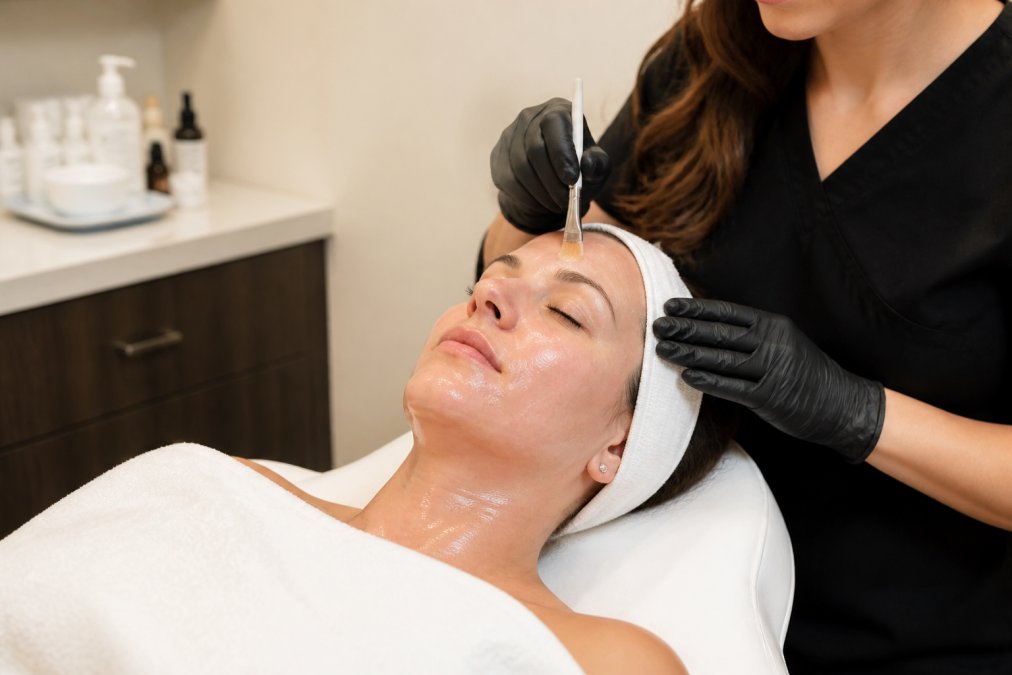
A medical grade facial is a professional skin treatment performed under clinical supervision that uses stronger active ingredients and devices than a standard spa facial. The recovery time for medical grade facials ranges from zero downtime to about two weeks, depending on how deep the treatment goes. The difference comes down to intensity, your skin type, and how well you follow aftercare.
Clinical Healing vs. Social Downtime
These are two different clocks, and most guides blur them together.
Recovery Time by Treatment Intensity: A Day-by-Day Guide
Recovery tracks closely with how deep a treatment reaches. Light treatments touch the surface. Medium treatments create controlled injury to trigger cell turnover. Deep treatments resurface skin and set off a full healing process. Below, each tier is broken into two clocks: clinical healing (what your skin is rebuilding underneath) and social downtime (what shows on your face and affects your calendar).
Light Treatments (Hydrating or Enzyme Facials)
Expect little to no downtime. Mild pinkness may last a few hours. These treatments work on the surface, hydration, gentle exfoliation, and temporary vasodilation, so the barrier is barely disturbed.
- Day 0: Slight warmth or tingling, sometimes faint redness that fades within 1-3 hours
- Day 1: Most people look completely normal and can wear makeup
- Day 2-3: Skin feels hydrated and smooth; no visible recovery
- Clinical healing: essentially complete within 24 hours
- Social downtime: 0-1 day; safe to schedule the day before a meeting or event
Medium Treatments (Chemical Peels, Microneedling)
Plan for three to seven days of visible recovery. Redness, tightness, and flaking are expected, not a sign that something went wrong. Medium-depth peels (such as a TCA peel in the 15-35% range) and microneedling at 0.5-1.5 mm both create controlled micro-injury that triggers a wound-healing cascade: inflammation first, then proliferation, then remodeling. That cascade is why the surface settles before the deeper collagen results show, collagen remodeling continues for 4-12 weeks after the skin looks normal.
- Day 1-2: Erythema (redness), mild swelling, skin feels tight; a sunburn-like sensation is common
- Day 3-5: Flaking and peeling begin as old cells shed; skin may look dull or patchy before it looks better
- Day 6-7: Fresh skin emerges; sensitivity fades and makeup sits more smoothly
- Clinical healing: 2-4 weeks for barrier recovery; collagen remodeling continues for months
- Social downtime: 3-7 days; plan around the flaking window, not the redness
Deep Treatments (Laser Resurfacing, Deep Peels)
Give yourself seven to fourteen days. These treatments create the most dramatic change and the most noticeable healing phase. Fractional ablative lasers, fully ablative resurfacing, and deep phenol peels remove or bypass the epidermis entirely, so the barrier has to rebuild from scratch.
- Day 1-3: Pronounced redness, swelling, and a sunburn-like feeling; eyes may be puffy if the treatment extended near them
- Day 4-7: Peeling in sheets, raw-feeling skin, high sensitivity; this is the peak of social downtime
- Day 8-14: New skin settles, redness fades to pink, texture improves
- Clinical healing: 2-4 weeks for surface closure; up to 3-6 months for full collagen remodeling and redness resolution
- Social downtime: 7-14 days; some patients see residual pinkness for 3-4 weeks
Quick Reference: Matching Treatment to Your Calendar
| Tier | Clinical Healing | Social Downtime | Safe Before an Event? |
|---|---|---|---|
| Light (hydrating/enzyme) | ~24 hours | 0-1 day | Yes, day before |
| Medium (peel, microneedling) | 2-4 weeks | 3-7 days | Allow 7-10 days |
| Deep (laser, deep peel) | 2-4 weeks surface; 3-6 months full | 7-14 days | Allow 3-4 weeks |
A common pattern is that patients underestimate the flaking window on medium treatments and overestimate the redness on deep ones. When in doubt, add a buffer week.
Medical Grade Facial Aftercare Tips for Faster Healing
Simple, consistent aftercare shortens recovery more than any single product. The goal is to protect the skin barrier while it rebuilds, and to separate what you do for clinical healing from what you do for social downtime.
The First 72 Hours: Barrier Protection
- Cleanse gently with a mild, fragrance-free cleanser and lukewarm water. Skip cleansing altogether on the evening of a deep treatment if your provider says it's fine.
- Skip exfoliation for at least a week, including scrubs, cleansing brushes, and at-home acids.
- Moisturize often with a fragrance-free, ceramide-containing cream. Ceramides (ceramide NP, ceramide AP) help rebuild the lipid barrier that treatments disrupt.
- Use a mineral SPF 30 or higher every day, even indoors near windows. Zinc oxide and titanium dioxide are gentler on compromised skin than chemical filters.
- Sleep on your back with a clean pillowcase to reduce friction and irritation.
- Avoid heat like saunas, hot yoga, and steam rooms for several days, heat increases blood flow and prolongs redness.
- Pause retinoids, AHAs, BHAs, and vitamin C until your provider clears you, typically 5-7 days for medium treatments and 10-14 days for deep ones.
Ingredients to Avoid Post-Treatment
| Ingredient | Why to Pause It | When to Resume |
|---|---|---|
| Retinoids (tretinoin, retinol) | Accelerates cell turnover on already-stressed skin | 5-14 days, per provider |
| AHAs/BHAs (glycolic, salicylic) | Strips the rebuilding barrier | 7-14 days |
| Vitamin C (L-ascorbic acid) | Can sting compromised skin | 5-7 days |
| Physical scrubs | Micro-tears on healing skin | 10-14 days |
| Fragrance and essential oils | Common irritant during healing | Until redness fully resolves |
Lifestyle Recovery: Can You Go to Work Tomorrow?
This is the question most guides skip. The answer depends on which clock you're asking about.
- Light treatments: Yes. Return to work the same day or next morning.
- Medium treatments: Remote work is fine day 1-2. In-person meetings are best after day 5, once flaking has settled. If you must be on camera, schedule for day 6 or later.
- Deep treatments: Plan 7-14 days away from in-person obligations. Video calls are more forgiving than in-person meetings, but redness reads clearly on camera. (Source: American Academy of Dermatology's patient care guidelines)
Downtime for Chemical Peels vs. Facials: What's the Difference?
Downtime for chemical peels vs facials depends on depth, not the label on the menu. A light "lunchtime" peel behaves like a hydrating facial. A medium or deep peel behaves like a resurfacing treatment.
| Treatment | Typical Downtime | What You'll See | Best For |
|---|---|---|---|
| Hydrating or enzyme facial | None to 1 day | Mild pinkness | Maintenance, events |
| Light chemical peel | 1-3 days | Light flaking | Dull skin, texture |
| Medium peel | 3-7 days | Peeling, redness | Pigmentation, fine lines |
| Microneedling | 3-5 days | Redness, tightness | Acne scarring, firmness |
| Deep peel or laser | 7-14 days | Swelling, sheet peeling | Sun damage, deep lines |
How Often to Get Medical Grade Facials for Best Results
Most people do best with a series of treatments spaced four to six weeks apart, then a maintenance schedule of every two to three months. Skin cell turnover runs on a roughly four-week cycle, so spacing treatments closer than that rarely helps and can irritate the skin barrier.
A common plan looks like this:
- Series phase: three to six sessions, four to six weeks apart
- Maintenance phase: one session every eight to twelve weeks
- Deep treatments: once or twice a year at most
Skin-Type Specific Recovery: Sensitive, Mature, and Acne-Prone Skin
The same treatment can heal differently on two people. Skin type changes the timeline, so plan around yours.
Troubleshooting Complications: Normal Healing vs. When to Call Your Provider
Some reactions are part of healing. Others need a call. Knowing the difference protects your results.
Normal healing looks like:
- Redness that fades a little each day
- Flaking that starts a few days in and resolves
- Mild swelling that peaks early and drops
- Warmth or tingling that eases within hours
Call your provider if you notice:
- Pain that gets worse instead of better
- Blisters, oozing, or a foul odor
- Spreading rash or fever
- Redness that deepens after day three
- Any sign of infection
Conclusion
Recovery from a medical grade facial is predictable once you know your treatment depth and skin type. Light treatments cost you an afternoon. Deep treatments cost you a week or two. Either way, the healing is temporary and the results are not.
Frequently Asked Questions
How long does redness last after a medical grade facial?
Redness (erythema) typically peaks in the first 24 to 48 hours and fades gradually. For light facials, it may resolve within a few hours. Medium treatments like chemical peels or microneedling can cause redness for 3 to 5 days. Deeper laser resurfacing may leave redness for 7 to 10 days or longer. Using gentle skincare and avoiding heat or strenuous exercise can help calm inflammation faster.
What should you avoid doing after a medical grade facial?
Avoid direct sun exposure without SPF 30 or higher, strenuous exercise, hot showers, and saunas for at least 48 hours. Skip retinoids, glycolic acid, salicylic acid, and topical vitamin C until your provider says it's safe, usually 3 to 7 days. Don't pick or peel flaking skin. Also avoid makeup for 24 hours if you had microneedling or a peel, as this can irritate the skin barrier.
Is there any downtime associated with chemical peels or microneedling?
Yes, but it varies. Light chemical peels and microneedling typically have 1 to 3 days of social downtime with mild redness and flaking. Medium-depth peels can cause 5 to 7 days of visible peeling and sensitivity. Deeper peels or aggressive microneedling may require 7 to 10 days before skin looks normal. Planning around work meetings is wise; your provider can advise based on your specific treatment.
How soon can I wear makeup after a medical grade facial?
For gentle facials, you can usually wear mineral makeup the next day. After microneedling or chemical peels, wait at least 24 to 48 hours to let the skin barrier begin healing. Deeper treatments may require 3 to 5 days without makeup. Always use clean brushes and avoid heavy foundations that could clog pores or irritate compromised skin. Your provider will give you a specific timeline.