 How-to
Chemical Peel Aftercare for Sensitive Skin: A Step-by-Step Guide
Quick Summary
Chemical peel aftercare for sensitive skin means calming the skin for the first 24 to 72 hours, using gentle fragrance-free cleansers, plain ointment if advised, and mineral sunscreen. Peeling usually begins around days 4 to 7, so moisturize carefully and avoid picking, scrubbing, or restarting actives until your clinician clears you.
- Cleanse with lukewarm water and a fragrance-free, non-foaming cleanser, then pat dry with a soft towel.
- Avoid hot water, saunas, steam rooms, and flushing exercise during the first 72 hours.
- Apply fragrance-free moisturizer two to three times daily starting around days 4 to 7.
- Use a mineral sunscreen with zinc oxide or titanium dioxide, since treated skin stays photosensitive for weeks.
- Contact your provider for worsening pain, blistering, pus, fever, or swelling that increases after day three.
Table of Contents
- Why Sensitive Skin Needs Extra Care After a Chemical Peel
- Step-by-Step Chemical Peel Aftercare for Sensitive Skin
- Chemical Peel Recovery Time: What to Expect Week by Week
- What to Avoid After a Chemical Peel
- Choosing a Moisturizer After a Chemical Peel
- When to Use Retinol After a Chemical Peel
- Booking Your Follow-Up Visit at Lumyn Medspa
- Frequently Asked Questions
Why Sensitive Skin Needs Extra Care After a Chemical Peel
Sensitive skin reacts faster and stays irritated longer after a chemical peel. A peel removes the outer layers of skin, which weakens your skin barrier for days or even weeks. (Source: U.S. Food and Drug Administration)
When the barrier is weak, water escapes and irritants get in. That is why redness, stinging, and tightness show up so often. Gentle care protects the new skin while it rebuilds.
Many people with sensitive skin also find that peeling starts later than expected. This can feel alarming, but it is a normal part of the process. The key is to avoid picking, scrubbing, or rushing the healing along.
Understanding why your skin needs more care makes the rest of this guide easier to follow.
Step-by-Step Chemical Peel Aftercare for Sensitive Skin
Sensitive skin needs a phased routine rather than a single set of rules. The steps below are organized by recovery window and by treatment intensity, because a superficial peel and a medium-depth peel do not heal on the same schedule. Your treating clinician's instructions take priority over general guidance.
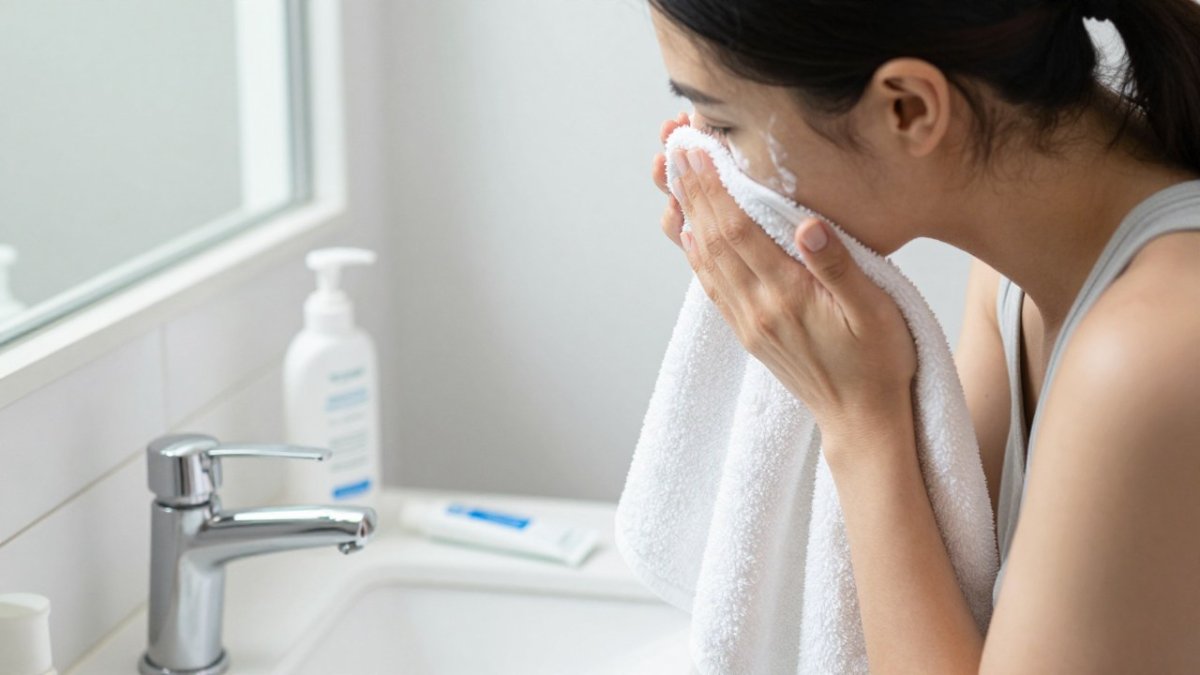
!Woman gently patting her face dry with a soft white towel at a bright bathroom sink, with a fragrance-free cleanser and tube of ointment on the counter
First 24 to 72 hours: calm and protect
This is the window when the skin barrier is most compromised. Keep the routine minimal.
- Cleanse with lukewarm water and a fragrance-free, non-foaming cleanser. Look for labels that say "sensitive skin" and list no fragrance, essential oils, or drying alcohols.
- Pat dry with a clean soft towel. Do not rub or use a washcloth.
- Apply a plain occlusive ointment such as petrolatum to treated areas if your clinician recommends it. A thin layer is enough; thick layers can trap heat.
- Use a mineral sunscreen with zinc oxide or titanium dioxide if you must be outdoors. Chemical sunscreens can sting freshly peeled skin.
- Sleep with your head slightly elevated if swelling worsens at night.
Watch out: Hot water, saunas, steam rooms, and vigorous exercise that causes flushing can intensify redness and stinging in the first 72 hours.
Days 4 to 7: rebuild moisture
Peeling and flaking often begin in this window. The goal is to keep the new skin supple without irritating it.
- Switch from ointment to a fragrance-free moisturizer with ceramides, glycerin, or hyaluronic acid. These ingredients support barrier repair.
- Apply moisturizer two to three times daily, and after every cleanse.
- Continue mineral sunscreen every morning, even indoors near windows.
- Avoid exfoliating acids, retinoids, scrubs, and toners until your clinician clears them.
Week 2 and beyond: reintroduce slowly
Once peeling has stopped and redness has faded, you can begin reintroducing products one at a time.
- Add back a gentle hydrating serum before actives.
- Reintroduce retinoids or exfoliating acids only when your clinician approves.
- Keep sunscreen as a daily habit; treated skin remains photosensitive for weeks.
How intensity changes the routine
Peels are commonly grouped into superficial, medium-depth, and deeper categories, and recovery differs between them. Ask your provider which category your peel falls into so you can set realistic expectations.
Product ingredients to look for and avoid
- Look for: ceramides, glycerin, hyaluronic acid, panthenol, colloidal oatmeal, squalane, and petrolatum.
- Avoid until cleared: fragrance, essential oils, alcohol denat, menthol, witch hazel, retinoids, alpha-hydroxy acids, beta-hydroxy acids, and physical scrubs.
The routine changes with each recovery window, so the key steps are summarised below.
| Window | What to do | Key note |
|---|---|---|
| First 24 to 72 hours | Cleanse gently, pat dry, use plain ointment if advised | Avoid hot water, saunas and steam |
| Days 4 to 7 | Switch to fragrance-free moisturizer, apply 2 to 3 times daily | Peeling and flaking often begin |
| Week 2 and beyond | Reintroduce products one at a time | Retinoids and acids only once cleared |
| Ongoing | Use mineral sunscreen every morning | Treated skin stays photosensitive for weeks |
Chemical Peel Recovery Time: What to Expect Week by Week
Recovery depends on peel depth, your skin type, and how closely you follow aftercare. The timeline below separates superficial, medium, and deeper peels so you can compare what is generally typical.
Superficial peels
- Days 1 to 2: Mild redness, tightness, and stinging.
- Days 3 to 5: Light flaking, especially around the nose and mouth.
- Week 1: Most flaking resolves; skin may look slightly pink.
- Week 2: Skin typically returns to baseline; makeup can usually resume once flaking stops.
Medium-depth peels
- Days 1 to 3: Noticeable redness, swelling, and sensitivity.
- Days 4 to 7: Peeling begins and may be more pronounced; keep skin moisturized.
- Weeks 2 to 3: Peeling finishes, but new skin may remain pink and sensitive.
- Week 4: Skin usually looks more even; sun protection remains essential.
Deeper peels
- First week: Significant redness and swelling; follow your clinician's wound-care instructions closely.
- Weeks 2 to 3: Peeling and sensitivity continue; avoid actives and makeup until cleared.
- Weeks 4 to 6: Skin continues to settle; some pinkness can persist longer in sensitive skin.
When to contact your clinician
Contact your provider if you notice any of the following:
- Pain that worsens instead of improving.
- Blistering, pus, or spreading redness.
- Fever or chills.
- Peeling that exposes raw, weeping skin.
- Swelling that increases after day three.
These signs can indicate infection or an unexpected reaction and warrant prompt evaluation.
How long results last
Results vary by peel type and skin care habits. Results vary by peel type, and sun exposure, aging, and home care all affect how long they last. Daily sunscreen and a gentle barrier-supportive routine help maintain results between treatments.
Planning maintenance
Many people benefit from clinician-led follow-up and periodic repeat sessions rather than a single peel. Ask your provider how often maintenance treatments are appropriate for your skin and goals, and whether your sensitive skin would do better with lower-strength, more frequent peels. Planning maintenance sessions around your skin’s recovery needs can help you discuss aftercare timing with your provider; Refine GlowLabs can help you consider how recovery care fits into that plan.
What to Avoid After a Chemical Peel
Some habits slow healing or cause lasting irritation. Avoid these in the weeks after your treatment.
Do:
- Use a mild, fragrance-free cleanser.
- Apply sunscreen every morning, even on cloudy days.
- Keep moisturizer on hand all day.
- Wear a wide-brimmed hat when outdoors.
Don't:
- Pick, peel, or scrub flaking skin.
- Use retinoids, exfoliating acids, or harsh scrubs too soon.
- Expose treated skin to direct sun without protection.
- Wear heavy makeup on fresh, raw skin.
- Use new products without checking with your provider first.
Choosing a Moisturizer After a Chemical Peel
Look for a moisturizer that is gentle, fragrance-free, and designed for sensitive skin. Ingredients like ceramides, glycerin, and hyaluronic acid help rebuild the skin barrier. Thick, simple ointments work well during the first few days.
Avoid products with added fragrance, alcohol, or strong acids until your skin feels calm again. A patch test on a small area is a smart step before using anything new across your whole face.
When to Use Retinol After a Chemical Peel
Retinol can irritate freshly peeled skin, so wait before restarting it. Most people with sensitive skin wait until peeling has stopped and redness has faded. Your provider can tell you when it is safe to begin again.
When you restart, use retinol only a few nights per week at first. Watch how your skin responds before increasing how often you apply it.
Booking Your Follow-Up Visit at Lumyn Medspa
Your follow-up visit helps your provider check healing and plan your next steps. At Lumyn Medspa, you can discuss your recovery and aftercare questions with our team during a follow-up visit. Book your appointment today to stay on track with your skin goals.
Frequently Asked Questions
How long does sensitive skin take to heal after a chemical peel?
Healing time depends on the depth of the peel, your skin type and how well you follow aftercare. Recovery time varies by peel depth, so ask your provider for an expected timeline. Redness and tightness typically fade gradually as new skin forms. Sensitive skin may stay pinker for longer, so keep products gentle and avoid picking at flaking skin. If redness, swelling or peeling seems to be worsening rather than improving, contact your provider. Your treatment team can give you a timeline based on your specific peel.
Is redness normal after a chemical peel?
Yes, some redness is an expected part of the healing process, especially on sensitive skin. It often appears within hours of treatment and may be accompanied by warmth, mild stinging and tightness. Cool compresses and a fragrance-free moisturizer can help you feel more comfortable. Redness that spreads, becomes intensely painful, or is accompanied by blistering, pus or fever is not typical and should be reported to your provider right away.
Can you use sunscreen after a chemical peel?
Sun protection is essential after a chemical peel because freshly treated skin is more vulnerable to UV damage and to pigment changes. Sun protection is important after a peel, so ask your provider which sunscreen and sun-protection habits are appropriate for your skin. Ask your provider when it is safe to start any other sun-sensitive products on your routine.
When should you contact a provider after a chemical peel?
Contact your provider if you notice signs of infection such as increasing pain, pus, spreading redness or fever, or if you develop severe swelling or blistering. Also reach out if your skin seems to be healing unusually slowly or if you have questions about which products are safe to use.